 comparison
Professional Driveway Cleaning vs DIY: What Works
Table of Contents
- Professional Driveway Cleaning vs DIY: The Key Differences
- Driveway Cleaning Equipment: What You Need for DIY
- How to Clean Block Paving Without Damage
- Remove Moss from a Driveway: DIY vs Professional Methods
- Time, Effort and Physical Demands of DIY Cleaning
- Risks of DIY Driveway Cleaning
- Why Professional Driveway Cleaning Delivers Better Results
- Which Option Should You Choose?
- Frequently Asked Questions
Last Updated: October 6, 2026
Professional Driveway Cleaning vs DIY: The Key Differences
When you're faced with a grimy driveway, the choice between professional driveway cleaning and tackling it yourself feels straightforward. But the reality is more nuanced. At Refresh Revive Exterior Cleaning, we've helped countless homeowners and property managers understand why one approach works far better than the other, and it's not always about the money.
Professional driveway cleaning uses surface-specific methods matched to your particular surface. DIY cleaning typically means hiring equipment and hoping the method works. The difference between these approaches determines whether your driveway looks restored or damaged.
This guide breaks down the practical realities of both options so you can make an informed decision for your property.
Driveway Cleaning Equipment: What You Need for DIY
Pressure Washer Hire and Costs
To clean your own driveway, you'll need to hire or purchase a pressure washer. Most DIY approaches start with a standard pressure washer from a hire shop. You'll need to understand pressure ratings, water flow rates, and nozzle types before you start, and that learning curve creates the first real problem.
Pressure washers come in different specifications. A domestic unit might deliver 1,500 PSI (pounds per square inch), whilst a commercial machine reaches 3,000+ PSI. The temptation is to hire the most powerful machine available, thinking "more power equals cleaner results." This logic fails spectacularly on block paving, natural stone, and concrete that's already showing wear.
You'll also need to source or purchase detergent, arrange transport, and factor in the time cost of collection and return. Most people underestimate how long the actual job takes once they're holding the equipment.
Cleaning Agents and Safety Gear
Beyond the pressure washer itself, you'll need appropriate cleaning agents. Choosing the wrong product can etch surfaces, strip protective coatings, or damage nearby plants and lawns. Safety gear is non-negotiable: eye protection, gloves, sturdy footwear, and hearing protection when operating high-pressure equipment.
Many DIY cleaners skip proper safety equipment or use inadequate gear. A pressure washer can cause serious injuries, the force is powerful enough to strip skin. Respiratory protection matters too if you're using chemical cleaners in an enclosed space or near vegetation.
The hidden cost here is knowledge. Professional cleaners understand which agents work on which surfaces and why. They know how to apply them safely and dispose of runoff responsibly. That expertise prevents costly mistakes.
How to Clean Block Paving Without Damage
Block paving is one of the most common driveway surfaces in the North West, and it's also one of the easiest to damage with high-pressure cleaning. Block paving sits on a sand bed, and aggressive pressure washing can dislodge the sand, causing individual blocks to shift or sink.
The correct approach to cleaning block paving involves lower pressure. You're aiming to remove algae, moss, and dirt without displacing the sand bed beneath.
A surface-specific method works better: soft washing with appropriate detergent, allowing contact time for the cleaning agent to break down organic growth, then rinsing gently. This approach takes longer than blasting everything with maximum pressure, but it preserves the structural integrity of your driveway.
Many DIY attempts fail because the operator doesn't know these distinctions. They hire a machine rated for maximum cleaning power, apply it at full strength, and end up with sunken blocks or eroded joints. Once that damage occurs, repair costs far exceed what professional cleaning would have cost.
Remove Moss from a Driveway: DIY vs Professional Methods
Moss and algae growth on driveways is a persistent problem in the damp North West climate. The DIY instinct is to remove moss by blasting it away with high pressure. This works in the moment, the moss disappears, but it doesn't address why it's growing there.
Moss grows where conditions favour it: moisture, shade, and nutrient-rich surfaces. Simply removing it with pressure doesn't change those conditions. Within weeks or months, the moss returns because the underlying problem remains unsolved.
Professional moss removal includes assessment of the site conditions. Is the driveway in shade? Does water pool there? Are there nearby trees or gutters contributing to dampness? Understanding these factors allows for treatment-based solutions that slow regrowth.
A professional service might apply a biocide treatment after cleaning, which inhibits moss and algae growth. This approach removes moss effectively and prevents rapid regrowth. The DIY alternative, pressure wash and wait for it to return, is a false economy.
Time, Effort and Physical Demands of DIY Cleaning
Cleaning a driveway yourself is physically demanding work. An average driveway takes 4-8 hours depending on size, condition, and your experience level. That's a full day of standing, holding equipment, and concentrating on technique.
Pressure washing is repetitive work that strains your arms, shoulders, and back. The equipment itself is heavy, and controlling a high-pressure nozzle requires sustained physical effort. If you're not accustomed to this type of work, fatigue sets in quickly, and that's when mistakes happen.
Most homeowners underestimate the time requirement. They plan a weekend project and find themselves still working into the evening. For property managers overseeing multiple properties, the time cost becomes prohibitive.
There's also the question of disruption. Your driveway is out of use whilst you're working on it. If you're a homeowner, that might mean parking elsewhere. If you're a commercial property manager, it means access issues for clients or staff.
Risks of DIY Driveway Cleaning
Surface Damage and Concrete Erosion
High-pressure cleaning damages concrete and stone surfaces. Concrete is porous and contains aggregate (sand and gravel) bound together. Excessive pressure forces water into the pores, and the impact can dislodge aggregate particles. Over time, this creates pitting and erosion.
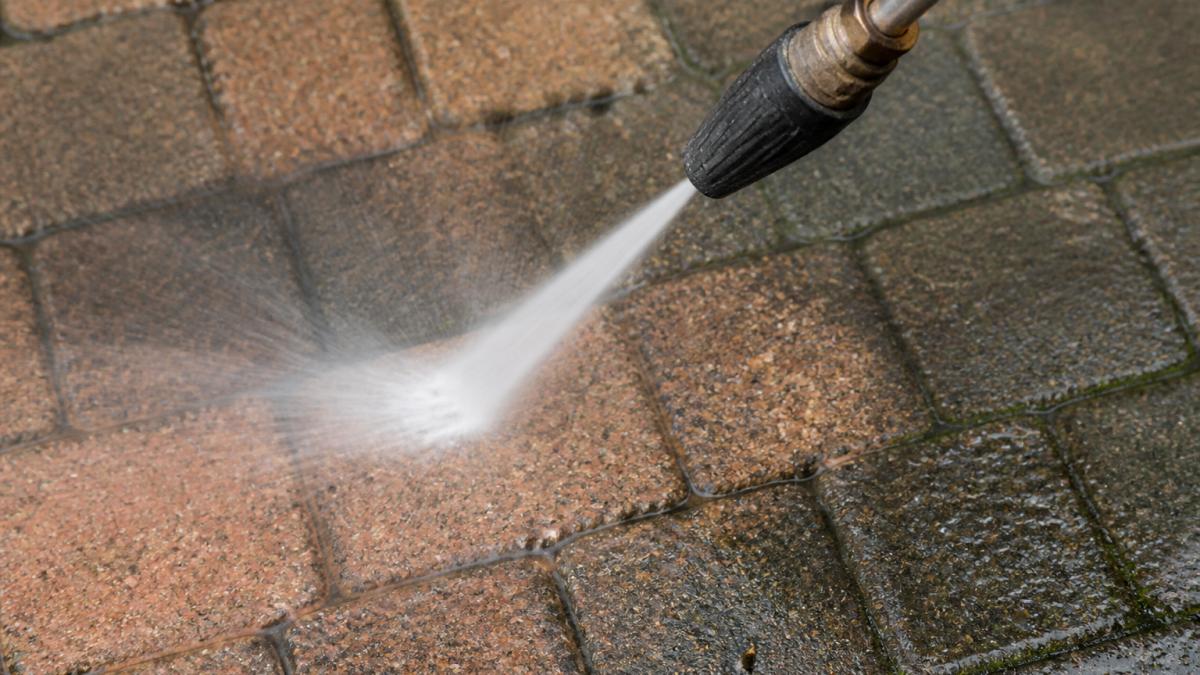
Decorative finishes and sealants are particularly vulnerable. If your driveway has been sealed or treated, high-pressure washing can strip that protective layer. Once the seal is gone, the surface deteriorates faster and becomes more susceptible to staining and moss growth.
Natural stone driveways are especially at risk. Sandstone, slate, and other natural materials have varying hardness and porosity. A pressure washer setting that's safe for one type of stone can damage another. Without expertise in identifying your stone type and its vulnerabilities, you're guessing.
Concrete erosion isn't immediately obvious. The damage accumulates with each pressure-washing session. After several DIY cleans, your driveway looks noticeably worn.
Personal Safety Hazards
Pressure washer injuries are common and often severe. The force of the water can cause deep lacerations and tissue damage. Even brief contact with a high-pressure stream causes injury, you don't need to be hit directly; the spray can cause harm.
Slips and falls are another significant risk. You're working on a wet surface whilst holding heavy equipment and concentrating on the nozzle position. One loss of footing and you're down, potentially with the pressure washer still running.
Chemical exposure is a lesser-discussed but real hazard. Cleaning agents can irritate skin and eyes. Inhalation of chemical fumes or aerosolised particles causes respiratory irritation. Proper ventilation and protective equipment are essential, but most DIY cleaners don't use them correctly.
Noise exposure matters too. Pressure washers are loud, sustained exposure can damage hearing. If you're working for hours without hearing protection, you're risking noise-induced hearing loss.
Why Professional Driveway Cleaning Delivers Better Results
Surface-Specific Cleaning Methods
Professional driveway cleaning starts with assessment. What surface are you cleaning? Is it concrete, block paving, natural stone, or a composite? What's the condition? Are there existing sealants or treatments?
Based on this assessment, a professional selects the appropriate cleaning method. For block paving, that might be soft washing at controlled pressure with appropriate detergent. For sealed concrete, it might be hot water cleaning at moderate pressure. For natural stone, it might be treatment-led cleaning with minimal mechanical action.
This surface-specific approach is why professional results look different. The surface is genuinely clean, without the pitting, erosion, or damage that high-pressure DIY cleaning causes.
Refresh Revive Exterior Cleaning uses controlled soft washing and professional pressure washing methods matched to your specific surface. We assess site conditions, drainage, shade, vegetation, to recommend not just cleaning but prevention strategies too.
Long-Term Protection and Prevention
Professional cleaning includes consideration of what happens after the cleaning is complete. A properly cleaned driveway should stay cleaner for longer.
Surface sealing is one prevention strategy. After professional cleaning, a protective sealant can be applied to concrete or stone. This seal repels water and reduces staining, whilst slowing algae and moss growth.
Moss and algae growth can be slowed with biocide treatments applied after cleaning. These treatments don't eliminate the underlying conditions that favour moss growth, but they inhibit regrowth.
Professional services also include maintenance planning. Rather than waiting until your driveway looks terrible, regular maintenance cleans prevent heavy buildup. Regular maintenance cleans prevent heavy buildup.
Which Option Should You Choose?
The decision depends on your circumstances. If you have a small, simple driveway, no health or mobility limitations, and you're comfortable with physical work and equipment operation, DIY cleaning is technically possible. You'll need to invest time in learning proper technique, hire or purchase equipment, and accept the risk of mistakes.
If your driveway is large, complex, or made from delicate surfaces like natural stone or sealed concrete, professional cleaning is the better choice. The risk of damage far outweighs the cost savings of DIY.
For property managers and commercial property owners, professional cleaning is almost always the right decision. The time cost of DIY work, combined with the liability risks and the disruption to operations, makes professional services the practical choice.
If you've had a bad experience with aggressive pressure washing in the past, if you've seen driveways damaged by cowboys using maximum pressure on everything, you understand why method matters. Professional driveway cleaning uses surface-appropriate techniques. Low-pressure soft washing removes algae and dirt without stripping protective finishes or eroding surfaces.
The question isn't really "professional vs DIY", it's "do I want this done right, or do I want to do it myself and risk damage?" For most homeowners and all commercial property managers, the answer is professional driveway cleaning.
If you're considering professional driveway cleaning for your property in Bolton or the surrounding areas, Refresh Revive Exterior Cleaning can help. We assess your specific driveway surface and recommend the cleaning method that delivers results without damage. Our surface-specific approach, whether soft washing, controlled pressure washing, or treatment-led cleaning, protects your property whilst restoring its appearance.
Request a free quote from Refresh Revive Exterior Cleaning today. Send photographs of your driveway to our team at https://refreshrevivecleaning.co.uk, and we'll provide a no-obligation assessment and recommendation tailored to your surface and site conditions.
Frequently Asked Questions
Is it better to clean a driveway yourself or hire a professional?
Professional driveway cleaning delivers superior results with less risk of damage. Professionals use surface-specific methods, soft washing for delicate surfaces, controlled pressure for concrete, and apply treatments that prevent regrowth. DIY cleaning requires equipment hire, takes several hours, and risks surface damage if pressure or technique is incorrect. For block paving, render, or moss-covered drives, professional cleaning is the safer, more effective choice.
Can a pressure washer damage block paving?
Yes. Excessive pressure or incorrect technique can dislodge jointing sand, crack pavers, and erode the surface. Block paving is more vulnerable than solid concrete because water can penetrate between pavers and weaken the base. Professional cleaners use lower pressures, adjust nozzle distance, and often prefer soft washing with chemical treatment for block paving. If you hire a pressure washer, keep the nozzle at least 30 cm away and use the lowest effective pressure setting.
How often should a driveway be professionally cleaned?
Most driveways benefit from regular professional cleaning, depending on local climate and tree coverage. Areas with high rainfall and shade encourage algae and moss growth, requiring more frequent attention. Professional treatments can slow regrowth. A professional assessment will recommend the right frequency for your specific driveway and environment.
What should I check before hiring a driveway cleaning company?
Verify they are fully insured, use surface-appropriate methods (not just maximum pressure), and can assess your specific surface type before quoting. Ask whether they offer follow-up treatments to prevent regrowth, and check their approach to protecting plants and lawnss. A reputable company will visit to inspect your driveway and explain their method rather than offering a generic quote.