 comparison
Commercial vs Residential Cleaning: Key Differences
Table of Contents
- Commercial Building Cleaning vs Residential Cleaning: Core Differences
- Scale, Frequency and Service Scope
- Soft Washing vs Pressure Washing: Method Differences
- Equipment and Technology Requirements
- COSHH and RAMS for Commercial Cleaning Compliance
- Insurance, Liability and Documentation
- Exterior Property Maintenance for Businesses
- Comparison Table: Commercial vs Residential Cleaning
- Choosing the Right Service for Your Needs
- Frequently Asked Questions
Last Updated: September 22, 2026
Commercial Building Cleaning vs Residential Cleaning: Core Differences
The difference in commercial vs residential cleaning goes far beyond scale. When you're managing a commercial property in Bolton or across Greater Manchester, you're dealing with different regulatory requirements, equipment demands, and cleaning frequencies than a homeowner would face. Understanding these distinctions helps you choose the right service and budget accordingly.
At Refresh Revive Exterior Cleaning, we work with both residential and commercial clients, and the approach to each is fundamentally different. Commercial properties require compliance with specific health and safety standards, whilst residential cleaning prioritises protection of personal outdoor spaces and landscaping. The methods, timescales, and expertise required are distinct in ways that directly affect the quality and longevity of your results.
Scale, Frequency and Service Scope
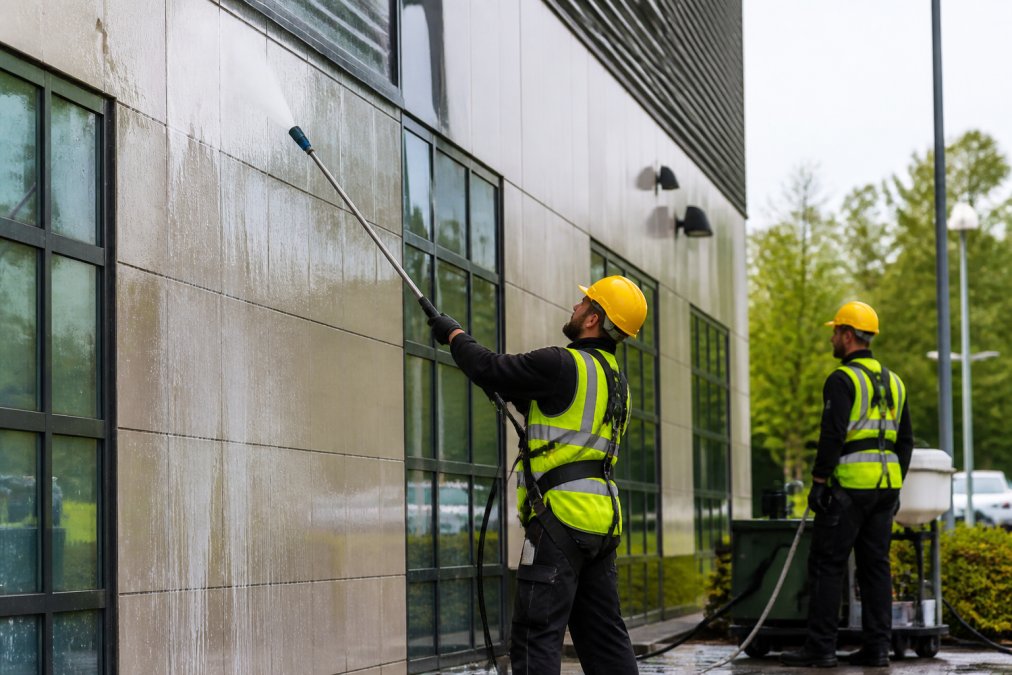
Commercial cleaning operates on an entirely different schedule and scope compared to residential work. A retail property in Altrincham might require weekly or fortnightly external maintenance to maintain customer-facing standards, whilst a residential driveway in Wigan typically needs cleaning once or twice per year.
Commercial properties demand consistency and predictability. Facilities managers need reliable scheduling that works around business hours, regular maintenance contracts to prevent deterioration, and documented evidence of work completed. Residential cleaning, by contrast, is often reactive, homeowners call when they notice moss on the roof or algae on the patio, rather than scheduling preventative maintenance months in advance.
The scope also differs significantly. Commercial contracts often include multiple surface types across large areas: car park cleaning, building façade maintenance, gutter and fascia work, and sometimes internal courtyard or loading bay cleaning. Residential work typically focuses on one or two key areas, a driveway, patio, or roof, and the client relationship is usually transactional rather than ongoing.
Soft Washing vs Pressure Washing: Method Differences
The choice between soft washing and pressure washing differs markedly between commercial and residential applications. In residential settings, many homeowners assume higher pressure means better results, but this assumption can damage render, strip roof granules, or harm newly established lawns.
Commercial properties demand method precision matched to surface type and regulatory compliance. A hotel's rendered exterior in Chorley requires soft washing with controlled application rates to preserve the finish and prevent water ingress. A warehouse concrete apron might tolerate higher pressure, but even then, surface-specific assessment is essential.
Soft washing uses lower pressure combined with chemical treatment to break down algae, moss, and biological growth at source. This method protects delicate surfaces and provides longer-lasting results because it addresses the underlying cause of contamination rather than simply blasting it away. Pressure washing applies force to remove surface dirt and debris quickly, but without addressing biological growth, regrowth occurs faster.
For commercial properties, soft washing is often the preferred method for building façades, render, and roof work because it minimises risk of damage claims and ensures compliance with building maintenance standards. Pressure washing suits hard surfaces like concrete and tarmac where durability is proven and biological growth is minimal.
Equipment and Technology Requirements
Commercial cleaning requires professional-grade equipment designed for scale, consistency, and safety. Residential cleaning often uses smaller, more portable equipment suitable for individual properties.
Commercial operations typically invest in hot water pressure washing systems, gutter vacuums with camera inspection capability, and soft washing rigs with precise chemical metering. These tools enable rapid coverage of large areas whilst maintaining quality standards and gathering documentation for compliance records. Refresh Revive's commercial capability includes high-reach gutter vacuum systems and camera inspection to assess internal blockages before clearing, ensuring thorough results and preventing future issues.
Residential equipment is generally lighter-duty and designed for occasional use. Pure water window cleaning systems, portable pressure washers, and handheld soft washing equipment are sufficient for driveways, patios, and single-storey properties. The focus is on portability and ease of use rather than industrial throughput.
Technology integration also differs. Commercial operations use scheduling software, job tracking, and compliance documentation systems to manage multiple sites and provide proof of work to facilities managers. Residential services typically rely on simpler booking and communication systems.
COSHH and RAMS for Commercial Cleaning Compliance
This is where commercial and residential cleaning diverge most sharply from a regulatory standpoint. Commercial cleaning in the UK must comply with Control of Substances Hazardous to Health (COSHH) regulations and Risk Assessment and Method Statements (RAMS) requirements.
COSHH compliance means documenting all chemical products used, their hazard classifications, safe handling procedures, and exposure controls. Any cleaning company working on commercial properties must maintain up-to-date safety data sheets, train staff on chemical handling, and ensure proper personal protective equipment (PPE) is used.
RAMS documentation requires a detailed assessment of risks associated with each cleaning task, the methods used to mitigate those risks, and the qualifications of personnel involved. For example, gutter cleaning at height requires fall protection assessment, access equipment specification, and documented competency of operatives. A commercial property manager in Prestwich needs this documentation for insurance purposes and to demonstrate duty of care to staff and visitors.
Residential cleaning is not exempt from health and safety law, but the regulatory burden is significantly lighter. Homeowners don't typically require COSHH documentation or RAMS assessments, they simply need assurance that the work is done safely and competently. A residential client might ask whether you're insured and whether you'll protect their plants; a commercial facilities manager will request COSHH sheets, method statements, and proof of staff competency.
Insurance, Liability and Documentation
Commercial contracts demand comprehensive insurance and detailed liability frameworks. A facilities manager responsible for a care home or school in Bury needs proof that the cleaning contractor carries professional indemnity insurance, public liability cover, and employer's liability insurance where staff are employed.
Documentation is central to commercial cleaning relationships. Contracts specify service levels, frequency, quality standards, and remedies if standards are not met. Invoicing must align with agreed schedules and scope. Progress is often recorded with photographs or site reports. Insurance certificates must be current and cover the specific work being undertaken.
Residential cleaning relationships are typically informal by comparison. A homeowner might ask for a quote, agree terms verbally or via email, and receive an invoice after completion. Insurance is important, any reputable residential cleaner will carry public liability cover, but the documentation burden is minimal.
For commercial work, liability extends to damage caused during cleaning. If soft washing removes paint from a building façade, or pressure washing damages a client's vehicle, the contractor's insurance must cover the loss. Residential liability is similar in principle but usually involves smaller claim values and simpler resolution.
Exterior Property Maintenance for Businesses
Commercial exterior maintenance is strategic and preventative. A business property in Wilmslow or Knutsford is a customer-facing asset, and its condition reflects on the organisation. Regular maintenance prevents deterioration, extends the life of surfaces, and maintains professional appearance.
Facilities managers typically plan maintenance on an annual or multi-year cycle. Roof moss removal in autumn, gutter clearing before winter, and render cleaning on a three-year rotation are common schedules. This preventative approach reduces emergency repairs and maintains consistent property condition.
Residential exterior maintenance is often reactive. Homeowners notice moss on the roof or algae on the patio and arrange cleaning, rather than planning ahead. This reactive approach is understandable for individual properties but means problems often progress further before being addressed.
Commercial properties also benefit from maintenance contracts that include regular inspections, early identification of issues, and scheduled remedial work. A property manager can budget predictably because maintenance is scheduled and documented. Residential clients typically budget for cleaning only when they notice a problem.
Comparison Table: Commercial vs Residential Cleaning
| Aspect | Commercial | Residential |
|---|---|---|
| Typical frequency | Weekly to monthly scheduled contracts | Once or twice yearly, often reactive |
| Regulatory compliance | COSHH and RAMS documentation required | Insurance and competence required |
| Equipment | Professional-grade, high-capacity systems | Portable, lighter-duty equipment |
| Methods | Surface-specific, often soft washing for delicate areas | Varied, pressure washing common for driveways |
| Documentation | Detailed contracts, service level agreements, proof of work | Simple quote and invoice |
| Insurance scope | Professional indemnity, public liability, employer's liability | Public liability cover standard |
| Relationship | Ongoing contract with multiple touchpoints | Transactional, typically one-off or annual |
| Cost structure | Contract-based, predictable monthly or quarterly cost | Per-job pricing, varies by scope |
| Property types | Offices, retail, hotels, care homes, schools, warehouses | Homes, small residential properties |
| Quality focus | Consistency, compliance, brand protection | Visual improvement, surface protection |
Choosing the Right Service for Your Needs
If you manage a commercial property, whether a care home in Ramsbottom, an office in Bury, or a retail site in Chorley, you need a cleaning contractor experienced in commercial compliance and capable of delivering scheduled maintenance. Look for evidence of COSHH and RAMS competency, comprehensive insurance, and a track record of working with commercial facilities managers.
Refresh Revive Exterior Cleaning holds the expertise and documentation required for commercial contracts. We provide COSHH-compliant cleaning, detailed method statements for complex work, and scheduled maintenance that fits around your business operations. Our gutter vacuum and camera inspection capability, soft washing systems, and hot water pressure washing equipment are specified for commercial-scale work. We work with facilities managers, property managers, and business owners across Greater Manchester and Lancashire to maintain properties to professional standards.
For residential clients in Bolton, Wigan, Altrincham, and surrounding areas, the priority is different. You need a reliable, insured cleaner who understands surface protection, someone who won't blast your new render or strip granules from your roof tiles. Residential cleaning should be straightforward, affordable, and protective of your home and garden.
Whether you're a facilities manager seeking a commercial cleaning partner or a homeowner protecting your property investment, the key is matching your needs to a contractor's actual capability. Commercial work demands compliance, documentation, and scheduled reliability. Residential work demands competence, care, and value.
If you're managing a commercial property and need reliable exterior maintenance with full compliance documentation, contact Refresh Revive Exterior Cleaning for a free assessment. Send photographs of the areas requiring attention, and we'll provide a detailed quote and method statement tailored to your site. For residential clients seeking professional exterior cleaning without the risk of damage, request a quote and discover how our surface-specific approach protects your property whilst delivering brilliant results.
Frequently Asked Questions
What are the main differences between commercial and residential exterior cleaning?
Commercial exterior cleaning operates at a larger scale with frequent, scheduled maintenance across multiple surfaces and access points. It requiress formal documentation, compliance with UK health and safety regulations, and specialised equipment to handle high-traffic areas. Residential cleaning focuses on individual properties with bespoke surface care, often addressing specific issues like moss or algae. Commercial work demands RAMS (Risk Assessment and Method Statements) and COSHH compliance, whilst residential cleaning prioritises protection of gardens and personal landscaping.
Why is soft washing preferred over high-pressure washing for commercial buildings?
Soft washing uses low-pressure water combined with biodegradable treatments to clean delicate surfaces without causing damage to render, brick, or protective coatings. High-pressure washing can strip protective granules from roofing materials, erode mortar joints, and damage facade finishes. For commercial properties, soft washing protects the building's structural integrity whilst delivering thorough cleaning results. It's particularly effective for moss, algae and lichen removal without the risk of surface degradation that concerns property managers.
Are there specific health and safety regulations for commercial cleaning in the UK?
Yes. Commercial cleaning must comply with the Control of Substances Hazardous to Health (COSHH) regulations and requires documented Risk Assessment and Method Statements (RAMS). These ensure safe handling of cleaning chemicals, equipment operation, and working at height. The Health and Safety at Work etc. Act 1974 applies to all commercial cleaning operations. Professional contractors must maintain public liability insurance, provide method statements to property managers, and follow industry-specific guidelines. Residential cleaning has fewer formal compliance requirements, though professional operators still maintain insurance and follow best practices.
How often should commercial buildings be cleaned compared to residential properties?
Commercial buildings typically requires scheduled maintenance ranging from weekly to monthly, depending on foot traffic, weather exposure, and facility type. High-traffic retail or office exteriors need more frequent attention. Residential properties are usually cleaned annually or as needed, with maintenance visits to prevent regrowth of moss and algae. Commercial contracts often include seasonal deep cleans and regular preventative treatments, whilst residential work focuses on restoring appearance and addressing specific problems when they arise.
What equipment differences exist between commercial and residential cleaning services?
Commercial cleaning requiress industrial-grade equipment including high-capacity soft wash systems, gutter vacuum technology with camera inspection, hot water pressure washing, and mobile treatment tanks. Residential cleaning uses versatile, surface-specific equipment scaled for individual properties. Commercial operations need redundancy and backup systems to meet service schedules, whilst residential providers prioritise precision and surface protection. Commercial teams typically carry safety harnesses, fall protection, and specialist tools for working at height on larger facades.