 comparison
Driveway Stain Removal: Protecting Plants vs Surface Brilliance
Table of Contents
- The Core Challenge: Driveway Stain Removal Without Damaging Your Garden
- Soft Washing vs Pressure Washing for Driveways
- How to Protect Plants During Pressure Washing
- Treatment-Led Cleaning: Restoring Brilliance Without Aggression
- Jet Wash Driveways Near Me: When Professional Cleaning Becomes Essential
- Comparing Your Options: DIY, Chemical Treatment, and Professional Service
- Long-Term Protection: Preventing Stains and Regrowth
- Conclusion
- Frequently Asked Questions
Last Updated: September 28, 2026
The Core Challenge: Driveway Stain Removal Without Damaging Your Garden
Driveway stain removal presents a genuine dilemma for property owners in Bolton and across the North West. You want your driveway to look pristine, but the methods that restore surface brilliance can threaten the plants, lawns, and landscaping you've worked to establish. This tension between cleaning power and property protection defines how you should approach the job.
At Refresh Revive Exterior Cleaning, we've spent years helping homeowners and commercial property managers navigate this exact problem. The question isn't whether you can remove stains, it's which method protects what matters most to you.
Most driveway stain removal approaches fall into two camps: aggressive methods that deliver dramatic results but risk collateral damage, or gentler techniques that safeguard your garden but leave stubborn marks behind. Understanding the real differences between these approaches, and when each makes sense, is what separates a successful restoration from a costly mistake.
Soft Washing vs Pressure Washing for Driveways
The fundamental choice in driveway stain removal comes down to pressure and chemistry. These two methods represent opposite philosophies, and understanding when each works is essential.
How Soft Washing Protects Surrounding Property
Soft washing is a treatment-led approach that uses specialised solutions applied at low pressure, typically under 500 PSI, to break down organic stains and growth at the molecular level. Rather than blasting away dirt, soft washing dissolves it.
This method works exceptionally well on driveways colonised by moss, algae, or lichen. The solution does the heavy lifting; the low pressure simply rinses away what's already been chemically weakened. For property protection, soft washing is superior. Water applied at such gentle pressure poses minimal risk to delicate plants, newly established lawns, or nearby borders. The solutions themselves, when properly diluted and managed, break down naturally without leaving harmful chemical residues in your soil.
The real advantage emerges over time. Because soft washing neutralises the spores and root structures of organic growth, regrowth tends to be slower and less aggressive than after high-pressure cleaning alone. You're not just removing what's visible; you're addressing why it returned in the first place.
The trade-off is patience. Soft washing requires time for the chemicals to work, often 24 to 48 hours before a final rinse. For homeowners accustomed to instant results, this can feel like a delay. It isn't. It's the difference between a clean that lasts months and one that looks good for weeks.
When High-Pressure Washing Is Appropriate
High-pressure washing, typically 3000 PSI or above, excels at removing stubborn stains that soft washing alone cannot shift: heavy oil marks, rust deposits, and deeply ingrained dirt on concrete that's seen years of vehicle traffic.
The method works by sheer force. Water at extreme pressure physically dislodges particles from the surface. On mature concrete or asphalt that's already weathered, this approach can deliver dramatic before-and-after transformations. It's fast, visible, and satisfying.
The risk is real, though. High-pressure water can etch concrete, strip protective sealant, and damage softer materials like render or certain types of paving. More critically for this discussion, overspray and runoff pose genuine hazards to surrounding plants. Water at 3000+ PSI, even as runoff, can damage tender foliage and saturate soil in ways that stress or kill young plantings.
High-pressure washing makes sense when:
- The stain is primarily mineral or inorganic (rust, heavy oil on industrial concrete)
- Surrounding vegetation is mature and strong
- You're willing to implement serious containment measures
- The driveway surface is proven to withstand high pressure
It makes less sense when protecting delicate landscaping is a priority.
How to Protect Plants During Pressure Washing
If you've decided that high-pressure washing is necessary for your driveway stain removal, protecting your garden requires deliberate preparation and professional-grade containment.
Pre-Cleaning Preparation for Garden Safety
Begin several days before the work. Water your plants thoroughly, well-hydrated plants are more resilient to accidental exposure. Trim back any branches or foliage that overhangs the driveway edge. This removes temptation to spray near them and reduces the surface area at risk.
For herbaceous borders and low-growing plants immediately adjacent to the driveway, consider temporary physical barriers. Plywood sheets, heavy plastic sheeting, or purpose-made barriers can be positioned to shield plants from direct spray and runoff. This isn't overkill; it's the difference between a precaution and a problem.
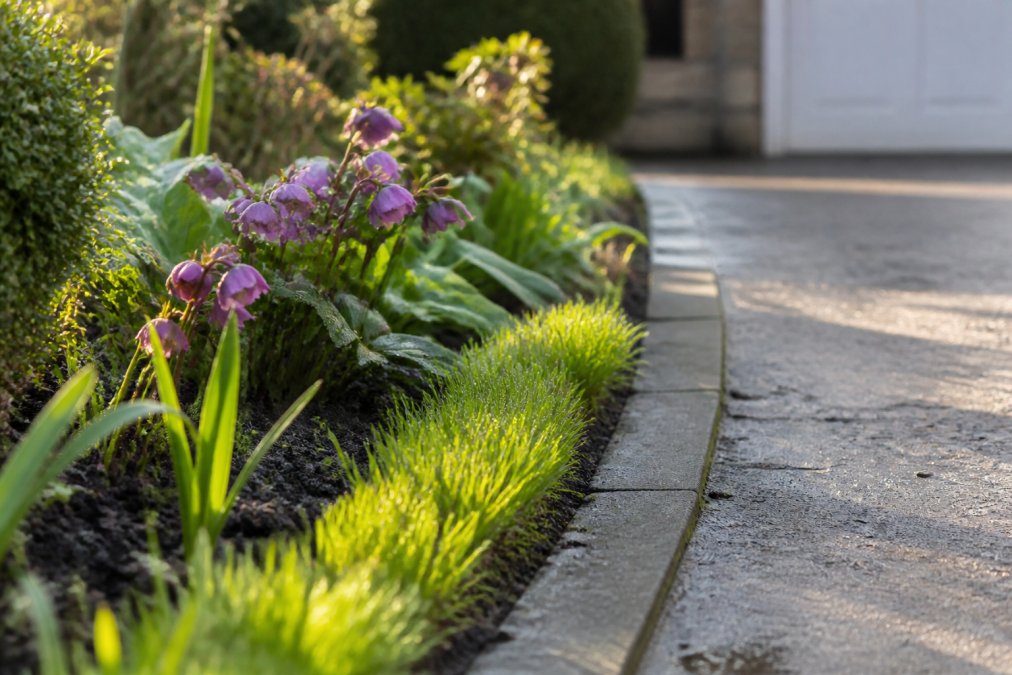
Identify drainage patterns on your property. Where does water naturally flow after leaving the driveway? If it runs toward planted areas or a vegetable garden, you'll need to manage that runoff. A shallow trench with straw or landscape fabric can redirect water away from sensitive planting zones.
Professional Containment and Chemical Management
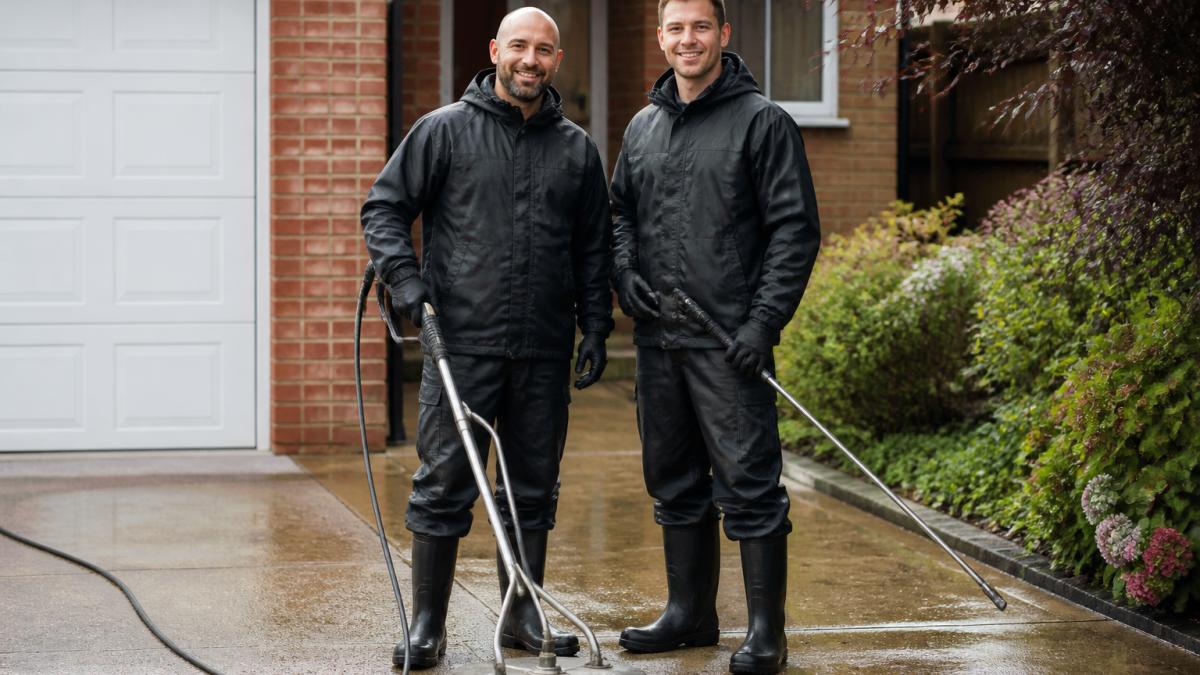
This is where professional driveway stain removal services distinguish themselves from DIY attempts. Refresh Revive Exterior Cleaning uses controlled soft washing and professional-grade containment protocols specifically designed to protect surrounding property.
Our approach includes:
- Targeted application: Solutions are applied only where needed, not broadcast across the entire driveway
- Spill containment: Temporary barriers and drainage management prevent runoff from reaching planted areas
- Pressure control: We adjust pressure dynamically based on the surface and stain type, never defaulting to maximum force
- Chemical selection: We use solutions that break down safely in the environment, with particular attention to areas near planting
For commercial properties in Greater Manchester or Lancashire with extensive landscaping, this level of control becomes essential. A facilities manager responsible for a retail park or office complex cannot afford the risk of damaging the planted screens that define the property's appearance.
Professional teams also carry the insurance and expertise to handle unexpected complications. That protection matters.
Treatment-Led Cleaning: Restoring Brilliance Without Aggression
Treatment-led driveway stain removal is the methodology Refresh Revive Exterior Cleaning has developed to solve the core tension : delivering genuine surface brilliance whilst protecting your property and planting.
Rather than choosing between soft washing's gentleness and pressure washing's power, treatment-led cleaning uses chemistry first, pressure as a supporting tool. A specialised solution is applied to the driveway, left to work for a defined period, then rinsed away at controlled, low pressure.
The results are striking. Stains that seemed permanent, oil marks, rust, deep algae growth, dissolve rather than resist. The driveway emerges bright and renewed. Crucially, because the solution does the work, pressure remains low throughout. Surrounding plants experience minimal risk. Soil isn't disrupted. Sealant isn't stripped.
This approach takes longer than high-pressure blasting. It requires precision in chemical selection and application timing. It demands professional knowledge of how different solutions interact with different surfaces and stains. It's not a commodity service; it's a craft.
For homeowners in Wilmslow, Hale, Bowdon, and other premium residential areas where both the driveway and the garden matter, treatment-led cleaning often delivers the best outcome. You get the brilliance you want without the anxiety about what you might have damaged.
Jet Wash Driveways Near Me: When Professional Cleaning Becomes Essential
Searching for "jet wash driveways near me" usually reflects a moment of frustration, the driveway looks poor, and you want it fixed quickly. That urgency is understandable. But it's also where many property owners make decisions they later regret.
Professional driveway stain removal becomes essential when:
- The stain is stubborn or extensive: DIY approaches have failed, and the marks are affecting your property's kerb appeal
- Surrounding vegetation matters: You have mature landscaping, a newly seeded lawn, or delicate planting that you're unwilling to risk
- The surface is valuable: Your driveway is sealed, decorative, or made from a material that's easily damaged
- You lack the equipment or knowledge: Pressure washers, soft-washing solutions, and containment systems require investment and expertise
- Regrowth prevention is important: You want the clean to last, not just look good for a few weeks
In Bolton and across Greater Manchester, professional teams bring several advantages over DIY:
- Access to commercial-grade solutions and equipment
- Knowledge of which method suits which stain and surface
- Insurance and accountability if something goes wrong
- Ongoing maintenance plans to prevent regrowth
- Speed and efficiency that minimise disruption to your property
A homeowner with a small oil stain might successfully use a degreaser and a consumer pressure washer. A property manager with a large commercial car park, surrounded by landscaping, absolutely needs professional intervention.
Comparing Your Options: DIY, Chemical Treatment, and Professional Service
Each approach to driveway stain removal has genuine advantages and real limitations. The right choice depends on your specific situation, not on cost alone.
DIY Methods and Their Limitations
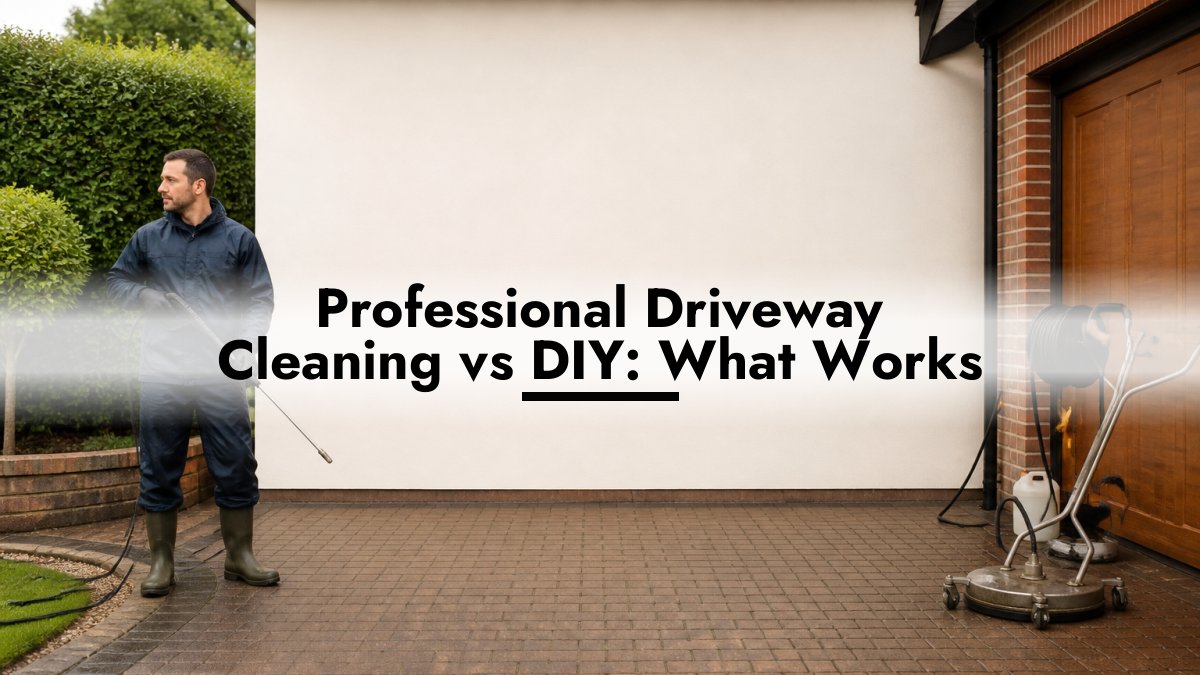
DIY driveway cleaning typically means renting or purchasing a consumer pressure washer (1500-2500 PSI) and applying it yourself. The appeal is clear: you control the timing and save money.
The limitations emerge quickly. Consumer pressure washers lack the precision of professional equipment. You're likely to apply too much pressure to some areas and too little to others. Overspray is difficult to control, especially near planting. If you're using chemical treatments, dilution ratios are easy to get wrong, leading to either ineffective solutions or chemical residue in your soil.
Regrowth is common after DIY cleaning because the approach typically removes what's visible without addressing spore structures or root systems. You'll find yourself repeating the job every few months.
For small, isolated stains on a driveway surrounded by mature, strong landscaping, DIY can work. For anything more complex, the risks outweigh the savings.
Chemical Pre-Treatment Approaches
Using a chemical pre-treatment like an alkaline degreaser (such as Zep Concentrated Driveway and Concrete Degreaser) before rinsing is more effective than pressure alone. The chemistry does real work, breaking down oil and grease at the molecular level.
The challenge is execution. Dilution matters enormously, too weak and the treatment doesn't work; too strong and you risk damaging the surface or leaving harmful residue. Application timing matters; the solution needs sufficient contact time to be effective. Rinsing must be thorough to prevent chemical buildup.
For homeowners willing to invest time in learning the process, chemical pre-treatment can deliver good results on oil and grease stains. For moss, algae, and lichen, it's less effective than soft washing, which uses solutions specifically designed for organic growth.
The environmental consideration is real. Runoff from chemical treatments can affect soil and nearby plants if not managed carefully. Professional teams understand these dynamics; DIY operators often don't.
Professional Low-Pressure Restoration
Professional driveway stain removal using controlled soft washing and treatment-led methods represents the highest standard. You're paying for knowledge, equipment, containment, and accountability.
The investment varies based on driveway size, stain complexity, and the level of containment required. For a large commercial property with complex landscaping, the investment is justified by the reduced risk and superior results.
The real advantage is this: professional teams deliver brilliance without anxiety. Your garden is protected. Your driveway is restored. Regrowth is slower. And if anything unexpected happens, you have recourse.
| Approach | Best For | Speed | Plant Safety | Regrowth Prevention | Skill Required |
|---|---|---|---|---|---|
| DIY pressure washing | Small stains, strong surroundings | Fast | Moderate risk | Low | Low |
| Chemical pre-treatment | Oil and grease, willing DIYer | Moderate | Moderate risk | Moderate | Moderate |
| Professional soft washing | Complex stains, valuable landscaping | Moderate | High | High | Professional |
| Professional treatment-led | Premium results, maximum protection | Moderate | Very high | Very high | Professional |
Long-Term Protection: Preventing Stains and Regrowth
The most overlooked aspect of driveway stain removal is what happens after the cleaning is complete. A brilliant driveway that returns to stained within weeks is a wasted investment.
Regrowth prevention begins with understanding what causes stains. Organic growth, moss, algae, lichen, thrives in damp, shaded conditions. Oil stains return if the source (leaking vehicles, poor drainage) isn't addressed. Rust marks reappear if the underlying cause (metal fixtures, soil minerals) persists.
Professional driveway stain removal services often include or recommend maintenance treatments. A soft-washing solution can be reapplied periodically to suppress organic growth. Surface sealing can protect concrete from oil penetration. Drainage improvements can reduce the moisture that encourages moss.
Refresh Revive Exterior Cleaning offers maintenance visits as part of our service philosophy. Rather than waiting for your driveway to become stained again, we monitor it and apply preventative treatments. For commercial properties with multiple sites, this approach is far more cost-effective than reactive cleaning.
For residential properties, even an annual soft-wash maintenance visit, far gentler and quicker than a full restoration, keeps your driveway looking pristine whilst protecting your garden.
The investment in prevention is small compared to the cost of allowing stains to become entrenched and regrowth to establish itself.
Conclusion
Driveway stain removal doesn't have to be a choice between a brilliant surface and a protected garden. The right method, matched to your stain type, surface, and surroundings, delivers both.
For properties across Bolton, Greater Manchester, and Lancashire where both kerb appeal and careful landscaping matter, Refresh Revive Exterior Cleaning delivers professional restoration using our signature White Glove Standard™ methodology. Our controlled soft washing and treatment-led approach restores driveway brilliance whilst safeguarding your planting and lawns. We're fully insured, responsive, and committed to results that last.
If you're weighing your options for driveway stain removal, send us photographs of the affected area and details of your property's surroundings. We'll provide a no-obligation quotation and honest assessment of which approach will work best for your specific situation. Get in touch at Refresh Revive Exterior Cleaning to request your free quote today.
Frequently Asked Questions
How can I remove driveway stains without damaging nearby plants?
Professional soft washing uses low-pressure application of specialised solutions rather than high-pressure jets, significantly reducing risk to surrounding vegetation. Before cleaning, delicate plants should be protected with temporary barriers or shielding. Professional services apply containment protocols to prevent chemical runoff into garden beds. Bicarbonate of soda treatments are safest for minor stains if you're concerned about plant safety, though they require considerable manual effort and work only on light discolouration.
What is the difference between soft washing and pressure washing for driveways?
Soft washing uses low-pressure delivery combined with specialised cleaning solutions that break down algae, moss, and organic stains at the source, making it safer for surrounding property and planting. Pressure washing applies high-force jets to physically remove stains and grime, which is highly effective on heavy soiling but risks damaging delicate surfaces and harming nearby gardens. The choice depends on your driveway material, the type and severity of staining, and how much you prioritise protecting surrounding landscaping.
Is high-pressure washing safe for my lawn and flower beds?
High-pressure washing can damage newly seeded or established lawns, compact soil, and strip foliage from delicate plants if the pressure or runoff isn't carefully managed. Professional services mitigate this risk through proper containment, water diversion, and pre-cleaning site assessment. If you have a new lawn or valuable planting, soft washing or treatment-led cleaning are significantly safer alternatives that still deliver excellent results without the risk of collateral damage.
Can driveway cleaning chemicals harm my garden soil?
Alkaline degreasers and some cleaning solutions can affect soil pH if they run off into garden beds, potentially harming sensitive plants. Professional services manage this through careful rinsing, chemical containment, and selection of solutions appropriate to your specific surface and surroundings. Bicarbonate of soda and natural treatments pose minimal soil risk. Always ensure proper drainage and runoff management, and discuss any concerns about neighbouring planting with your cleaning provider before work begins.
How long does professional driveway stain removal last?
Results depend on the cleaning method and your driveway's exposure to moisture and organic growth. Soft-washed surfaces typically remain clean longer because the treatment neutralises spores that cause moss and algae regrowth, often lasting several months to over a year. High-pressure cleaning removes visible stains but doesn't prevent regrowth, so resoiling can occur within weeks in damp climates. Professional maintenance visits help extend results and prevent heavy regrowth, making planned upkeep more cost-effective than repeated deep cleaning.