 listicle
Professional Driveway Cleaning Prices 2026
Table of Contents
- Professional Driveway Cleaning Prices in 2026
- Factors Affecting Driveway Cleaning Costs
- How Long Does Driveway Cleaning Take
- Benefits of Low-Pressure Driveway Cleaning
- Driveway Cleaning and Sealing Cost
- What Is Included in Professional Driveway Cleaning
- Vetting a Professional Driveway Cleaning Contractor
- Conclusion
- Frequently Asked Questions
Last Updated: August 20, 2026
Professional Driveway Cleaning Prices in 2026
When homeowners and property managers in the North West start looking at professional driveway cleaning prices, the first shock is usually the range. A small residential driveway might cost considerably less than a large commercial property, yet the difference between a basic clean and a premium service can be just as dramatic as the size variation itself. Understanding what drives these costs, and what separates a bargain quote from genuine value, is essential before you commit to any contractor.
At Refresh Revive Exterior Cleaning, we've analysed how driveway cleaning prices break down across the region, and the picture is more nuanced than most guides suggest. The cost isn't just about square metres. It's about surface material, how badly the driveway is soiled, what method the contractor uses, and whether you're paying for a one-off clean or investing in protection against regrowth.
Below, we'll walk you through every factor that affects pricing, show you what's typically included in a professional service, and help you identify a contractor worth paying for, not just the cheapest option available.
Factors Affecting Driveway Cleaning Costs
The price you'll be quoted depends on several interconnected variables. Get these wrong, and you'll either overpay for unnecessary work or book a contractor who can't handle your specific situation.
Driveway size and surface area
Size is the most obvious cost driver, and it's usually measured in square metres. A small residential driveway, say, 20-30 square metres, costs significantly less than a double drive at 60+ square metres. However, the relationship isn't linear. Larger jobs often benefit from economies of scale; a contractor's equipment and labour become more efficient across a bigger area.
According to [MyBuilder's driveway pressure washing(https://refreshrevivecleaning.co.uk/blog/soft-washing-vs-pressure-washing) cost guide | mybuilder.com], a standard 40-50 square metre driveway typically falls into the mid-range price bracket, with heavily soiled areas commanding higher rates per square metre than lightly soiled ones. The key takeaway: don't assume a 60 square metre driveway costs exactly twice as much as a 30 square metre one.
For commercial properties or very large residential drives, some contractors offer day rates instead of per-square-metre pricing. This can be more economical if the area is extensive, but it requires a clear understanding of how long the job will take.
Surface material and condition
Not all driveways are created equal. Block paving, tarmac, resin-bound, imprinted concrete, and natural stone all respond differently to cleaning methods and require different approaches.
Block paving is durable but porous, meaning moss and algae embed themselves deeply. Tarmac is softer and can be damaged by aggressive pressure, so contractors must use lower pressure or soft-washing methods. Resin-bound surfaces are delicate and require specialist knowledge. Natural stone varies wildly depending on the type, some is resilient, others (like sandstone) can be damaged by harsh chemicals or high pressure.
A contractor who quotes the same price for all materials is either inexperienced or planning to use a one-size-fits-all approach, which usually means poor results on some surfaces. Refresh Revive Exterior Cleaning uses surface-specific cleaning methods precisely because each material demands different treatment.
The condition of the driveway also matters. A lightly soiled surface requires less time and less aggressive treatment than one covered in thick moss, deep algae staining, or oil marks.
Dirt, moss, algae, and stain severity
A driveway with light surface dust cleans quickly and cheaply. One covered in thick moss, stubborn algae blooms, or oil stains requires more time, more passes, and sometimes chemical treatment before the pressure washing begins.
Moss removal often requires a pre-treatment to kill the growth before washing, which adds cost and time. Algae treatment similarly may involve a biocide application to prevent rapid regrowth. Oil stains on tarmac or concrete sometimes need specialist degreasers, which again increases the job's complexity and price.
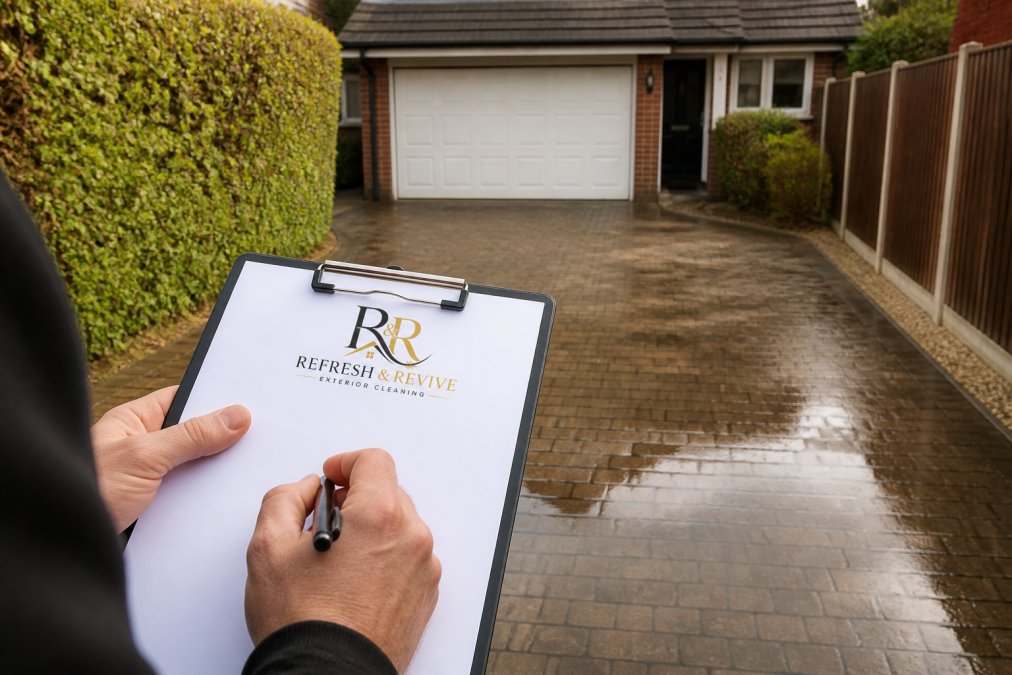
This is why reputable contractors insist on a site survey before quoting. They need to see what they're dealing with. A quote given over the phone, without inspection, is likely to be either unrealistically low (and the contractor will cut corners) or padded with contingency costs.
How Long Does Driveway Cleaning Take
Understanding the timeline helps you evaluate whether a quoted price is reasonable. A contractor working at a snail's pace might charge less per hour but take three times longer, making the total cost higher. Conversely, a fast, professional job with modern equipment might seem expensive per hour but delivers better value overall.
A small residential driveway (20-30 square metres) in light to moderate condition typically takes 1-2 hours with professional equipment. A medium drive (40-50 square metres) usually requires 2-3 hours. Large driveways (70+ square metres) or heavily soiled surfaces can take 4-6 hours or even require a second visit for sealing.
These timescales assume low-pressure cleaning methods, which are gentler on surfaces but take longer than aggressive high-pressure approaches. The time also depends on the contractor's equipment quality. Modern, powerful soft-washing systems clean faster than older equipment, which is one reason why established contractors with newer kit often deliver better value than newcomers with budget-grade tools.
If a contractor quotes an unrealistically short timeframe, say, 30 minutes for a 60 square metre driveway, they're either planning to do a superficial job or they're underestimating the work. Either way, the results will likely disappoint.
Benefits of Low-Pressure Driveway Cleaning
High-pressure jet washing has a reputation for delivering fast results, but it comes with real risks. Over-aggressive pressure can strip protective sealant from block paving, damage the surface of tarmac, or even dislodge mortar from pointing. On delicate surfaces like natural stone or render, high pressure can cause permanent damage.
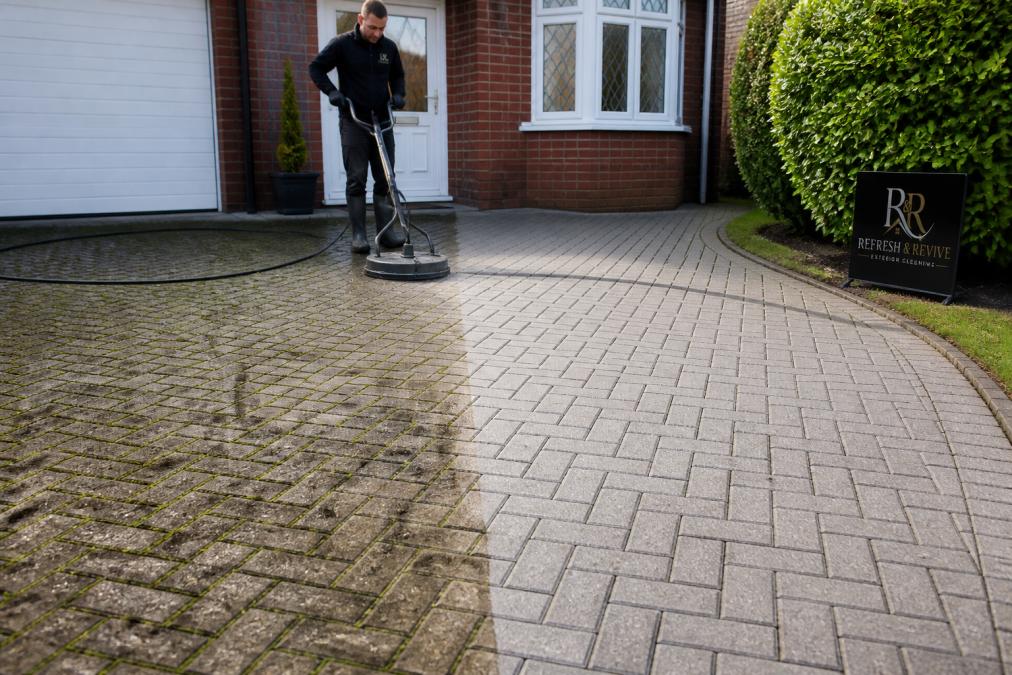
Low-pressure cleaning, sometimes called soft washing, uses specialist detergents and lower water pressure to dissolve and lift dirt, moss, and algae rather than blast them away. The results are often superior to high-pressure work because the cleaning is more thorough and the surface is protected.
For homeowners with established planting, young lawns, or delicate landscaping near the driveway, low-pressure methods are essential. High-pressure water can damage plants, strip bark from trees, and create erosion in nearby soil. Low-pressure treatment leaves your garden untouched whilst restoring your driveway.
The process also tends to prevent regrowth more effectively. Because low-pressure methods often include a chemical treatment (applied according to the product label and COSHH controls), the conditions for moss and algae return more slowly. High-pressure cleaning, by contrast, often leaves the surface in a state where regrowth happens within weeks.
Driveway Cleaning and Sealing Cost
Many homeowners treat cleaning and sealing as separate decisions, but they work best together. A freshly cleaned driveway is the ideal time to apply a protective sealant, which extends the life of the surface and delays regrowth of moss and algae.
Sealing adds to the overall cost but delivers long-term value. A sealed driveway stays cleaner for longer and is easier to maintain. Without sealing, you're essentially starting the regrowth clock the moment the clean is finished.
Different sealant types suit different materials. Block paving often benefits from a penetrating sealer that protects the stone without changing its appearance. Tarmac and concrete may use different formulations. Natural stone requires specialist sealers chosen for the specific type of stone.
The cost of sealing varies based on the driveway size and the quality of the sealant used. Budget options are cheaper upfront but may need reapplication after 1-2 years. Premium sealants last longer and provide better protection. A contractor should explain the options and let you choose based on your priorities.
What Is Included in Professional Driveway Cleaning
Not all professional cleaning services include the same elements. Understanding what's typically included, and what costs extra, helps you compare quotes fairly.
A standard professional driveway clean usually includes:
- Initial site survey and assessment of the driveway condition
- Pre-treatment of moss, algae, or stubborn stains (using methods appropriate to the surface material)
- Low-pressure washing using specialist equipment and detergents
- Cleaning of joints and edges to remove trapped debris
- Removal and disposal of waste water and debris
- Before and after documentation (photos showing the transformation)
What's often charged extra:
- Sealing or protective treatment (applied after cleaning)
- Oil stain removal or specialist chemical treatments
- Re-sanding of block paving joints (if joints have eroded)
- Gutter or roof cleaning (if booked alongside the driveway)
- Additional treatments to prevent regrowth (biocide application)
- Return visits for maintenance (to address any regrowth)
A reputable contractor will itemise what's included in their quote and what's extra. If the quote is vague, "driveway clean" with no breakdown, ask for clarification before booking.
Refresh Revive Exterior Cleaning includes detailed documentation with every job, showing the before and after state of your driveway. This isn't just for your records; it demonstrates the quality of the work and provides evidence of the transformation if you're planning to sell your property or claim on insurance.
Vetting a Professional Driveway Cleaning Contractor
The cheapest quote isn't always the best value, and the most expensive isn't always the safest choice. Vetting a contractor properly takes a little effort but saves you from costly mistakes.
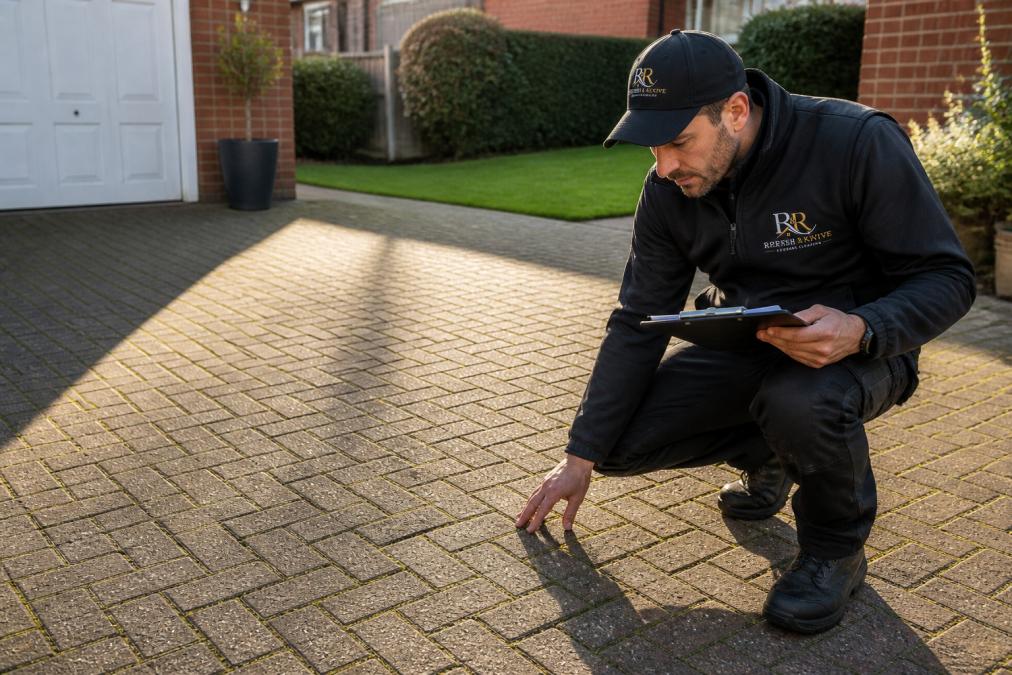
Start by asking whether the contractor is fully insured. This matters more than many homeowners realise. If something goes wrong, damage to your property, injury to a worker, or contamination of your garden, insurance protects you from liability. Ask to see proof of insurance and check that it covers the specific work they're quoting for.
Next, ask for references or recent examples of their work. A contractor confident in their results will happily show you before-and-after photos of similar jobs. If they're evasive or claim they can't share examples due to client confidentiality, that's a red flag.
Enquire about their approach to surface-specific cleaning. Do they use the same method for block paving, tarmac, and natural stone? If so, they're not adapting their approach to your surface, which suggests they prioritise speed over results. A contractor who asks detailed questions about your driveway material, condition, and any concerns (like nearby plants) is taking the job seriously.
Ask about chemical safety. How do they dispose of waste water? Do they follow COSHH controls? Do they use products appropriate to your surface type? A professional will be able to explain their approach and reference the safety data sheets for any products they use. They won't improvise with household chemicals or dangerous mixtures.
Check whether they offer maintenance visits. A contractor who suggests a follow-up visit 3-6 months later to prevent regrowth is thinking long-term about your driveway's condition. This is a sign they stand behind their work.
Finally, trust your instinct about communication. A contractor who responds quickly to enquiries, answers questions clearly, and provides a detailed written quote is likely to be professional and reliable throughout the job. One who's vague, slow to respond, or pressures you into a quick decision is worth avoiding.
Conclusion
Professional driveway cleaning prices in 2026 reflect the complexity of the job, the contractor's expertise, and the methods they use. Comparing quotes based on price alone misses the real value: a properly cleaned driveway that's protected against regrowth, your plants and lawn left undamaged, and work backed by insurance and professionalism.
The lowest quote often masks corner-cutting. The highest might include unnecessary extras. The right choice is a contractor who understands your surface, explains their approach, provides a detailed quote, and stands behind their work with insurance and references.
Refresh Revive Exterior Cleaning delivers exactly this approach across the North West. Our White Glove Standard™ means surface-specific, low-pressure cleaning methods tailored to your driveway's material and condition. We're fully insured, provide detailed before-and-after documentation, and offer responsive quotations with no obligation. If regrowth becomes an issue, we're available for maintenance visits to keep your driveway looking brilliant year-round.
Get a free quote from Refresh Revive Exterior Cleaning and see how professional cleaning and protection can transform your property.
Frequently Asked Questions
What factors influence the cost of professional driveway cleaning?
Driveway cleaning prices depend on several key factors: the total surface area (measured in square metres), the material type (block paving, tarmac, resin-bound, or natural stone), and the current condition. Heavy moss, algae, oil stains, and weeds increase costs because they require additional chemical treatment or extended labour. A site survey from a professional contractor will identify these factors and determine the final quotation.
How long does driveway cleaning take for an average property?
A standard 40-50 square metre driveway typically takes 2-4 hours for professional pressure washing or soft washing. Larger driveways (70+ square metres) or heavily soiled surfaces with extensive moss, algae, or oil stains may take a full day. The exact timeline depends on the cleaning method used, surface material, and whether additional treatments like chemical application or protective sealing are included.
Is professional driveway cleaning worth the cost compared to DIY?
Professional cleaning offers significant advantages over DIY methods. Contractors use commercial-grade equipment, surface-specific techniques, and proven chemical treatments that deliver superior results and longer-lasting protection. Low-pressure methods protect your driveway material, surrounding plants, and lawns from damage. Professional services also include waste disposal and often provide maintenance visits to prevent regrowth, making the investment worthwhile for durability and curb appeal.
Does driveway cleaning and sealing cost significantly more than cleaning alone?
Adding a protective sealant after cleaning increases the total cost, but the investment extends the life of your driveway and slows regrowth of moss and algae. Sealing creates a barrier that makes future cleaning easier and less frequent. The combined cost depends on your driveway material and size, but many homeowners find the added protection justifies the extra expense, particularly for block paving and resin-bound surfaces.