 listicle
5 Best Low-Pressure Cleaning Solutions for Sandstone
Table of Contents
- Why Low-Pressure Cleaning Is Essential for Sandstone
- Quick Comparison: 5 Low-Pressure Cleaning Solutions
- 1. Refresh Revive Exterior Cleaning: Professional Low-Pressure Service
- 2. Benz Lightning Cleanze: Professional Biocide for Soft Washing
- 3. Benz Tornado Cleanze: Deep Cleaning for Weathered Stone
- 4. Patio Black Spot Remover: Targeted Treatment for Lichen
- 5. Bosch Universal Aquatak 135 and Nilfisk Core 140: DIY Pressure Washers
- Professional Sandstone Cleaning in Bolton: What to Expect
- Conclusion
- Frequently Asked Questions
Last Updated: September 29, 2026
Why Low-Pressure Cleaning Is Essential for Sandstone
Sandstone is a soft, porous sedimentary stone, and low-pressure cleaning is the only safe way to remove algae, lichen and black spot from it without stripping the surface. In this guide, Refresh Revive Exterior Cleaning breaks down the five best low-pressure cleaning solutions for sandstone, from professional treatment-led services in Bolton to DIY pressure washers with adjustable settings.
The stakes are higher than most homeowners realise. Sandstone paving is expensive to replace, and once the surface has been etched or blasted, no amount of cleaning brings it back. Choosing the right method matters more than choosing the strongest one.
How High Pressure Damages Sandstone
Sandstone is cemented together by minerals that soften when wet. A high-pressure jet does two things at once: it blasts away the dirt, and it blasts away the binder holding the stone together.
The damage rarely shows on day one. It appears weeks later as a fuzzy, grainy surface, then as pitting and flaking. The Stone Federation guidance on cleaning natural stone is clear that abrasive and high-pressure methods should be avoided on softer sedimentary stones for exactly this reason.
There is also the joint problem. Mortar and pointing are softer than the stone itself, so pressure washing opens gaps that let water sit against the slab. In a damp North West climate, that trapped moisture feeds the very algae you were trying to remove.
The Benefits of Low-Pressure Cleaning for Sandstone
Low-pressure cleaning removes organic growth without touching the stone's structure. That single difference changes everything downstream.
- Surface stays intact. The binder minerals survive, so the paving keeps its texture and colour.
- Regrowth slows down. A clean, intact surface dries faster, and dry stone grows less algae.
- Pointing lasts longer. Joints stay sealed, so water runs off rather than soaking in.
- Plants and lawns are protected. Controlled application means less runoff onto borders.
Quick Comparison: 5 Low-Pressure Cleaning Solutions
Here are the five options at a glance, ranked for sandstone specifically.
| Solution | Type | Best For | Handles Black Spot? |
|---|---|---|---|
| Refresh Revive Exterior Cleaning | Professional service | Full restoration, no risk to stone | Yes |
| Benz Lightning Cleanze | Professional biocide | Soft washing sandstone patios | Yes |
| Benz Tornado Cleanze | Deep-clean solution | Heavily weathered stone | Partly |
| Patio Black Spot Remover | Targeted treatment | Persistent lichen spots | Yes |
| Bosch / Nilfisk DIY washers | Equipment | Rinsing after treatment | No |
The pattern is worth noting. The treatments do the killing; the pressure washer only rinses. That is the opposite of how most people approach the job.
1. Refresh Revive Exterior Cleaning: Professional Low-Pressure Service
For most sandstone owners in Bolton and the wider North West, the safest and most thorough option is a professional low-pressure service rather than a DIY attempt.
Refresh Revive Exterior Cleaning specialises in exterior cleaning only, which matters here. Sandstone needs a method matched to its porosity, its age and its surroundings, not a generic jet wash. The team works across Bolton, Bury, Wigan, Chorley, Horwich, Westhoughton, Ramsbottom, Whitefield, Prestwich, Worsley, Altrincham, Hale, Bowdon, Wilmslow, Knutsford, Lymm, Alderley Edge and Prestbury.
The White Glove Standard™ Approach
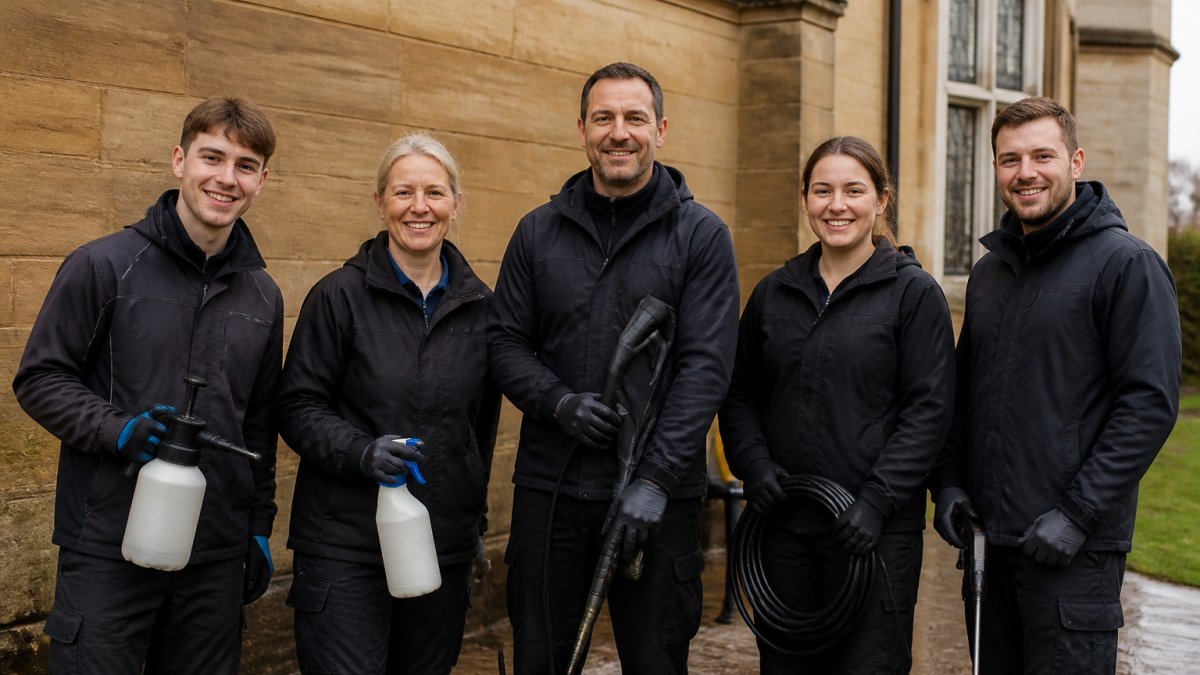
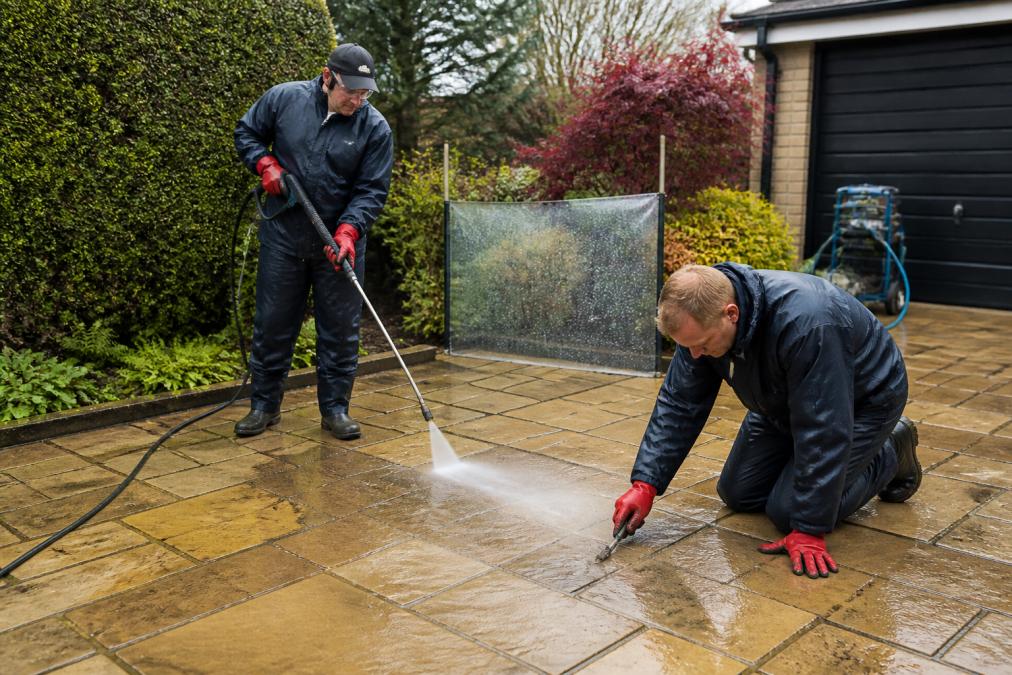
The White Glove Standard™ is Refresh Revive's surface-specific method: controlled soft washing, treatment-led cleaning and low-pressure rinsing, with the pressure matched to the stone rather than set to maximum.
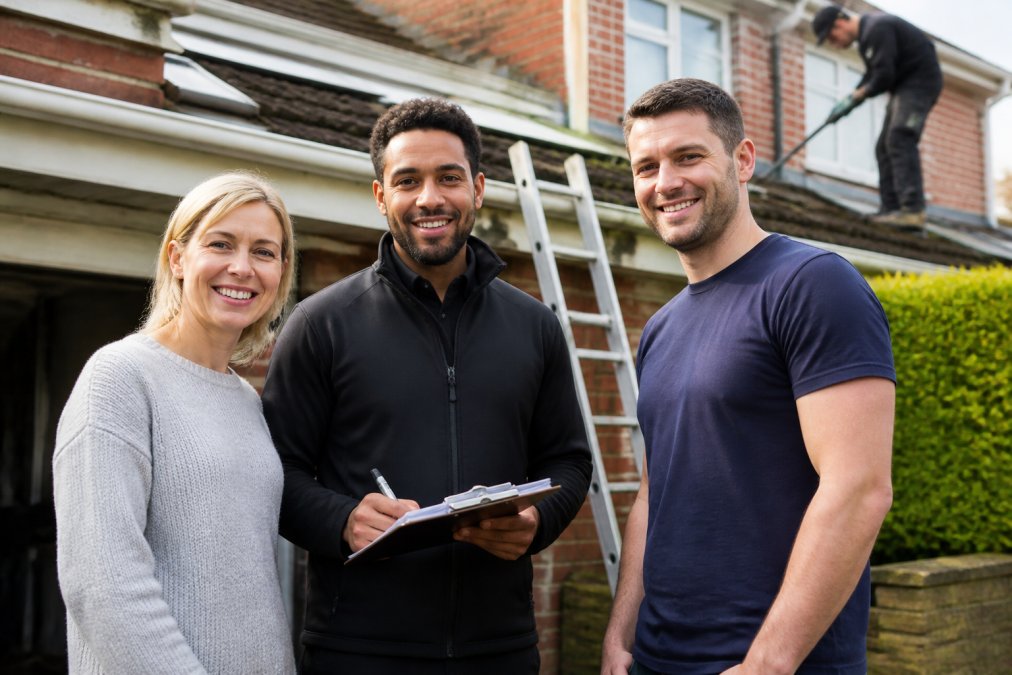
In practice, that means a survey first. The team checks the sandstone type, the condition of the pointing, and how much organic growth is present. Delicate planting and new lawns are covered before any treatment is applied, and the surrounding area is protected so runoff does not reach borders. Work is fully insured, and commercial clients get RAMS and COSHH documentation as standard.
Pros and Cons
Pros:
- Method matched to the stone, so no risk of etching or stripping
- Covers the full job: treatment, rinse, and advice on preventing regrowth
- Fully insured, with proper documentation for commercial sites
- Handles the surrounding risks too, including plants, lawns and drainage
Cons:
- Requires an investment, because you are paying for method and protection
- Requires booking ahead
- Not the right choice if you only want a quick cosmetic rinse
2. Benz Lightning Cleanze: Professional Biocide for Soft Washing
Benz Lightning Cleanze is a professional-grade biocide used in soft washing to kill algae, lichen and black spot on sandstone without aggressive scrubbing.
The appeal is that it works on contact with the organism rather than the stone. Applied at low pressure and left to dwell, it breaks down the growth at the root, which is why regrowth is slower than with a simple rinse. It also leaves a residual effect that keeps working after the initial clean.
Where it falls short is handling. This is not a consumer product. It needs correct dilution, PPE and careful control around planting, drains and neighbouring surfaces. That is precisely why it sits in the professional category rather than the DIY one.
3. Benz Tornado Cleanze: Deep Cleaning for Weathered Stone
Benz Tornado Cleanze is a high-strength solution formulated for heavily soiled or neglected stone, designed to work alongside soft washing techniques rather than replace them.
It suits the sandstone that has been left for years: dark, uniformly stained, with deep-seated grime rather than just a green film. Applied at low pressure, it lifts contamination that a standard biocide would need several passes to shift, and it reduces the temptation to reach for mechanical abrasion.
The trade-off is caution. Because it is stronger, it needs more care around sensitive surrounding materials such as mortar, painted surfaces and nearby planting. On a moderately soiled patio, it is more than you need.
4. Patio Black Spot Remover: Targeted Treatment for Lichen
Patio Black Spot Remover is a non-acidic treatment engineered specifically to eliminate black lichen spots from natural stone paving, including sandstone.
Black spot is the hardest growth to shift on sandstone. It embeds into the pores, survives most rinses, and returns if the spores are not killed rather than just loosened. A targeted treatment addresses that directly, restoring the stone's original colour without acid, which protects the integrity of the surface.
The catch is timing. These treatments work best in specific conditions, typically when the stone is dry and rain is not forecast for a period afterwards. Apply it before a wet week and you have wasted both the product and the afternoon.
5. Bosch Universal Aquatak 135 and Nilfisk Core 140: DIY Pressure Washers
DIY pressure washers with adjustable pressure settings can be suitable for the rinse stage of sandstone cleaning.
Neither should be used as the primary cleaning method on sandstone. Used at full output, either machine can strip pointing and etch the surface. Used correctly, at low pressure and after a treatment has done the work, they are useful for washing away dead organic matter.
Some DIY pressure washers are compact and easy to store, while others offer finer pressure regulation, which matters when you are trying not to damage a soft stone. Treat any DIY machine as the final step rather than the whole job.
Professional Sandstone Cleaning in Bolton: What to Expect
A professional sandstone clean in Bolton follows a predictable sequence, and knowing it helps you judge any quote you receive.
- Survey. The contractor identifies the stone type, checks pointing and notes any existing damage.
- Protection. Plants, lawns, drains and neighbouring surfaces are covered or shielded.
- Treatment. A suitable biocide or black spot treatment is applied at low pressure and left to dwell.
- Rinse. Dead growth is washed away with controlled low pressure, not a high-pressure jet.
- Review. The surface is checked, and any stubborn areas are re-treated.
- Aftercare. Advice on sealing and maintenance intervals to slow regrowth.
If you are searching for "sandstone cleaning near me", ask whether the quote includes protection of planting and whether the contractor is insured. Those two questions separate a specialist from a generalist.
Conclusion
Sandstone rewards patience and punishes force. Every option on this list works on the same principle: kill the growth with the right treatment, then rinse at low pressure. Skip the treatment and reach for the jet wash, and you will be back where you started within a season.
Frequently Asked Questions
Is pressure washing safe for Indian sandstone?
High-pressure washing can erode the surface of Indian sandstone, stripping away its natural finish and widening pores. Low-pressure cleaning, combined with appropriate treatments, is much safer. It removes dirt and organic growth without forcing water into the stone. For best results, use a dedicated sandstone cleaner and a fan jet at a shallow angle, or hire a professional who understands the material.
What is the best way to clean sandstone without damaging it?
The safest method is soft washing: apply a suitable biocide or specialist cleaner, allow it to dwell, then rinse with low pressure. Avoid wire brushes and high-pressure jets. For black spots and lichen, use a targeted remover like Patio Black Spot Remover. Always test a small area first and protect surrounding plants. If unsure, consult a professional sandstone cleaning service.
Can I use bleach on sandstone paving?
Household bleach is not recommended for sandstone. It can discolour the stone, harm nearby plants, and may not fully remove black spot lichen. Instead, use a purpose-made sandstone cleaner or biocide such as Benz Lightning Cleanze, which is designed to be biodegradable and safe when used correctly. Always follow the manufacturer's instructions and wear appropriate PPE.
How do professionals clean sandstone in damp climates like Lancashire?
In damp climates, organic growth like algae and lichen thrives. Professionals often use a two-stage approach: first, apply a soft-washing biocide to kill growth, then rinse with controlled low pressure. For black spots, a specialist remover is used. They also may apply a protective sealant to slow regrowth. This method preserves the sandstone and delivers long-lasting results.
What is soft washing and why is it better for natural stone?
Soft washing uses low pressure and specialised cleaning solutions to break down dirt and organic growth. It is better for natural stone because it avoids the surface damage caused by high-pressure washing. The chemicals do the work, so the stone's integrity is maintained. Soft washing is ideal for sandstone, limestone, and other porous materials, and it often includes a residual treatment to prevent rapid regrowth.
Sandstone that has been etched or stripped is expensive to put right, and regrowth returns fast when the method is wrong. Refresh Revive Exterior Cleaning handles this properly: a survey first, controlled soft washing and treatment-led cleaning matched to your stone, full insurance, and protection for planting, lawns and drainage throughout. If you would like a free quote, send us a few photographs of your sandstone and we will assess it and advise on the right approach for your surface.