 listicle
Cost to Seal Block Paving Driveway: 2026 Guide
Table of Contents
- What Determines the Cost to Seal Block Paving Driveways
- How to Clean Block Paving Before Sealing
- Block Paving Sealer Benefits Explained
- How Long Does Driveway Sealing Take
- DIY vs Professional Sealing: Cost and Quality
- Comparing Popular Block Paving Sealers
- Long-Term Value: How Often to Reseal
- Getting an Accurate Quote for Sealing Block Paving
- Frequently Asked Questions
Last Updated: September 25, 2026
What Determines the Cost to Seal Block Paving Driveways
The cost to seal block paving driveways depends on several interconnected factors that vary significantly between properties. Understanding what drives pricing helps you budget accurately and avoid underestimating the investment needed for a quality finish.
Driveway size and surface condition
The square meterage of your driveway is the primary cost driver. Larger driveways require more sealer, more labour, and longer application time.
Surface condition matters equally. A newly cleaned driveway in good condition requires straightforward sealing. An older driveway with moss regrowth, staining, or uneven wear demands deeper cleaning before sealing can begin. Some surfaces need treatment-led cleaning to remove embedded algae or oil marks. Others require high-pressure washing where the surface is strong enough to handle it. This preparation work adds significantly to the overall project cost.
At Refresh Revive Exterior Cleaning, we assess each driveway individually because no two surfaces are identical. What looks like a simple sealing job often reveals underlying issues during the cleaning phase. Moss-laden driveways in Bolton and surrounding areas like Bury and Wigan frequently need specialist treatment rather than aggressive pressure washing, which can force water into the sub-base and cause future problems.
Sealer type and quality grade
Block paving sealers fall into distinct categories, each with different performance and cost profiles. Polyurethane-based sealers offer superior durability and joint stabilisation. Acrylic-based sealers provide good protection but may require more frequent reapplication.
The choice between these types depends on your priorities. If you want maximum longevity and minimal maintenance, polyurethane is often considered a premium option. If you're willing to reseal every few years, acrylic can deliver acceptable results.
Professional-grade sealers formulated for trade application differ significantly from consumer products. They penetrate deeper, cure more reliably, and maintain protection longer. The sealer quality directly influences how long your driveway remains protected and how often you'll need to repeat the process.
Labour and professional application
Professional application costs reflect expertise, equipment, and insurance. A qualified team understands surface-specific techniques, drying times, and environmental conditions that affect curing. They carry public liability insurance, which protects your property if anything goes wrong during the work.
DIY application introduces risk. Uneven application, inadequate surface preparation, or poor timing during wet weather can result in patchy coverage or premature failure.
Professional teams also have access to specialist equipment. Refresh Revive Exterior Cleaning uses controlled soft-washing systems that clean thoroughly without damaging the surface or forcing water into the sub-base. This precision prevents the long-term problems that cheap, aggressive pressure washing often creates.
How to Clean Block Paving Before Sealing
Proper cleaning before sealing is non-negotiable. It determines whether the sealer bonds effectively to the surface and how long protection lasts.
Why proper preparation matters
Block paving sealer cannot adhere properly to dirty, algae-covered, or moss-laden surfaces. Any dirt, growth, or contaminants between the paving and sealer acts as a barrier, preventing the protective layer from forming. The result is sealer that flakes off within months rather than lasting years.
It's the unglamorous part that separates professional results from disappointing outcomes. Rushing this stage to save time or money is false economy.
Surface-specific cleaning methods
Different surfaces respond to different approaches. Concrete block paving tolerates controlled soft washing with biocide treatment to kill moss and algae at the root. Stone or clay pavers require gentler handling. Pressure washing works on strong concrete surfaces but risks damaging softer materials or forcing water into joints.
The cleaning method must match the paving type and condition. A driveway covered in established moss needs treatment-led cleaning with appropriate biocides, followed by soft washing to remove dead growth. A surface with light algae might respond to soft washing alone. An oil-stained driveway may need hot water pressure washing combined with degreasing agents.
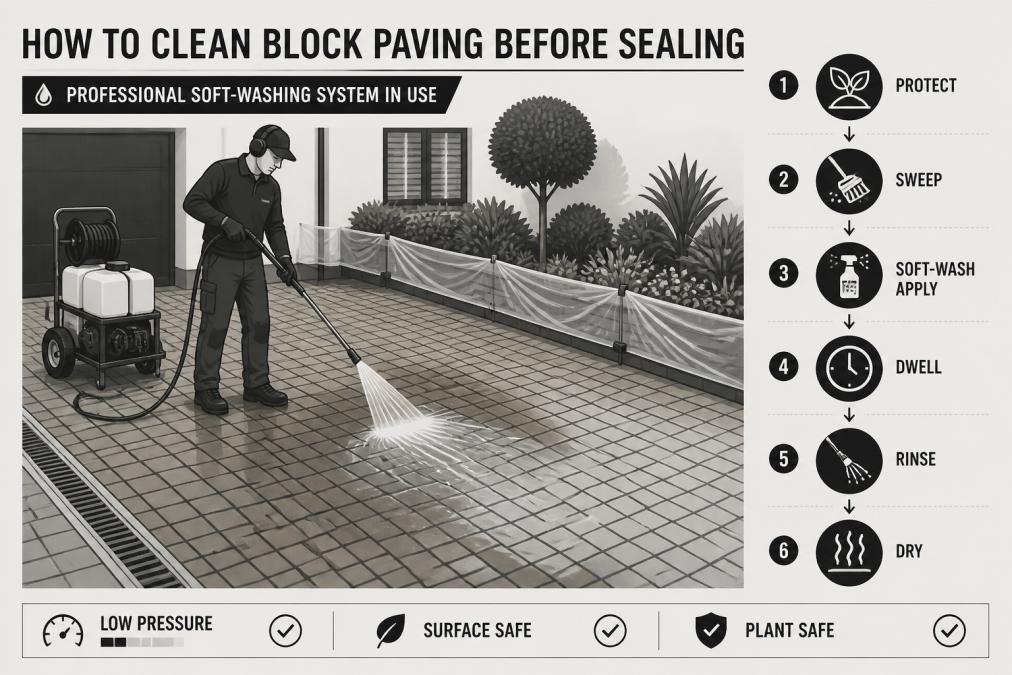
At Refresh Revive Exterior Cleaning, we assess each driveway and choose the appropriate method rather than applying one-size-fits-all pressure washing. This approach prevents damage and ensures the surface is genuinely clean, not just surface-level wet.
Block Paving Sealer Benefits Explained
Understanding what sealer actually does helps justify the investment and explains why proper application matters.
Protection against staining and weathering
Sealed block paving resists oil spills, tyre marks, and general staining far better than unsealed paving. The sealer creates a barrier that prevents liquids from penetrating the porous surface. This is particularly valuable on driveways where vehicles park and minor spills occur regularly.
Weathering protection is equally important. Unsealed paving gradually darkens as moisture penetrates and algae colonises the surface. Sealed paving maintains its colour and appearance because water runs off rather than soaking in. This visual benefit alone justifies sealing for homeowners concerned with curb appeal.
Preventing weed growth and sand erosion
Weeds establish themselves in the sand between paving blocks. Sealer binds this jointing sand together, making it far harder for weed seeds to germinate. Combined with regular maintenance, sealed driveways experience significantly less weed growth than unsealed ones.
Sand erosion is a chronic problem in unsealed driveways. Rain washes sand away, joints become loose, and the paving becomes unstable. Sealed driveways maintain joint integrity because the sand is locked in place. This prevents the gradual subsidence and uneven surfaces that develop over years in unsealed installations.
Extending driveway lifespan
The cumulative effect of protection, stain resistance, and structural integrity is extended lifespan. A sealed driveway properly maintained can look good and function reliably for an extended period. Unsealed paving can deteriorate noticeably over time as moss, algae, and weathering take their toll.
This longevity benefit makes sealing a sound investment. You're not just improving appearance; you're protecting your property's value and avoiding premature replacement costs.
How Long Does Driveway Sealing Take
The timeline varies depending on driveway size, condition, and environmental factors. Understanding the process helps you plan accordingly.
Preparation and drying time
Cleaning a 50 square metre driveway typically requires 3-5 hours depending on moss and algae presence. Heavily soiled driveways take longer. After cleaning, the surface must dry completely before sealing begins. In dry weather, this takes 24-48 hours. Wet or humid conditions extend drying time to 72 hours or more.
This drying period is critical. Applying sealer to damp surfaces traps moisture, preventing proper curing and adhesion. Rushing this stage causes the sealer to fail prematurely, negating the entire investment.
Application timeline
Sealing itself is relatively quick. A 50 square metre driveway typically takes 2-4 hours to seal, depending on the sealer type and application method. Polyurethane-based sealers generally cure within 24-48 hours, though full hardness develops over a week. Acrylic sealers cure faster but may require a second coat for optimal protection.
Total project duration from first assessment to completion is typically 5-7 days for average-sized driveways. This accounts for cleaning, drying, sealing, and initial curing. During this period, the driveway should not be used by vehicles.
DIY vs Professional Sealing: Cost and Quality
The decision between DIY and professional application involves genuine trade-offs worth considering carefully.
What DIY sealing involves
DIY sealing requires purchasing sealer, acquiring or renting application equipment, and dedicating substantial time to the work. You'll need to clean the driveway thoroughly, wait for complete drying, and apply the sealer carefully. The learning curve is real. First-time applicators often achieve patchy coverage, uneven colour, or inadequate adhesion.
Equipment rental costs can add up. If you need to repeat the work because the first attempt failed, overall costs can quickly increase.
Advantages of professional application
Professional teams bring expertise, proper equipment, and accountability. They understand how environmental conditions affect curing, can diagnose surface issues that require specialist treatment, and guarantee their work. If something goes wrong, they address it.
Insurance is another advantage. Professional companies carry public liability cover. If damage occurs during the work, you're protected. DIY work carries personal liability risk if anything goes wrong.
Quality and longevity are often differentiators. Professional sealing, done correctly, can last significantly longer because the surface preparation is thorough and the application is precise. This extended protection can make the upfront investment economical over time.
Comparing Popular Block Paving Sealers
Several sealers dominate the market. Understanding their characteristics helps you make an informed choice.
Polyurethane-based sealers
Resiblock Superior Block Paving Sealer is a solvent-based polyurethane formulation designed specifically for block paving joint stabilisation. It prevents weed growth, binds jointing sand, and resists oil and staining.
The key advantage is durability. Polyurethane sealers can maintain protection for an extended period under normal conditions. The downside is application difficulty. Polyurethane often requires precise environmental conditions, careful surface preparation, and attention to curing times. Mistakes can be harder to correct.
Acrylic-based sealers
Everbuild Block Paving Seal is a clear acrylic coating that enhances block colour whilst providing protective barriers against water and oil penetration. It's easier to apply than polyurethane and dries quickly. For homeowners wanting a relatively straightforward DIY project, acrylic is more forgiving.
The trade-off is durability. Acrylic sealers typically require reapplication more frequently. If you're willing to reseal regularly, acrylic can be a cost-effective option. If you prefer a longer interval between maintenance, polyurethane may be a better choice.
Smartseal Block Paving Sealer offers professional-grade acrylic in matt or silk finishes. It includes UV stabilisers to prevent colour fading and helps bind jointing sand. This sits between budget acrylic and premium polyurethane in terms of performance and price.
Thompson's Drive Seal is an accessible acrylic option available in most UK hardware stores. It's quick-drying and suitable for both block paving and concrete. For budget-conscious homeowners, this represents the entry-level choice.
Long-Term Value: How Often to Reseal
Resealing frequency depends on sealer type, climate, and usage. Understanding this helps you plan long-term maintenance budgets.
Polyurethane-sealed driveways typically need resealing less frequently than acrylic-sealed driveways in the North West climate, where rainfall is frequent and UV exposure is moderate. This difference in frequency reflects acrylic's faster degradation under weathering.
Heavy use accelerates degradation. Driveways with frequent vehicle traffic or high exposure to salt spray may need resealing sooner. Regular maintenance, including cleaning to prevent moss regrowth, extends intervals between resealing.
The long-term cost of acrylic can be higher due to more frequent resealing. Over an extended period, the cumulative cost may exceed the initial investment for polyurethane.
Getting an Accurate Quote for Sealing Block Paving
Requesting a quote requires providing clear information about your driveway so professionals can assess accurately.
Provide the approximate square meterage or dimensions. Describe the current condition: is it recently cleaned, heavily moss-covered, stained, or in good order? Mention any specific concerns like oil marks or algae growth. Include photos showing the overall driveway and close-ups of problem areas.
Be specific about your goals. Do you want maximum durability and minimal maintenance, or are you prioritising lower upfront cost? This influences sealer recommendations. A professional team will explain which sealer suits your priorities and explain the long-term implications of each choice.
Refresh Revive Exterior Cleaning provides no-obligation quotations for driveway sealing across Bolton and surrounding areas including Wilmslow, Altrincham, Hale, and wider Greater Manchester. We assess each property individually, explain the cleaning method required, recommend appropriate sealers, and provide transparent timelines and expectations.
Sealing block paving is a worthwhile investment that protects your property and maintains kerb appeal. The key is understanding what drives costs, choosing the right sealer for your priorities, and ensuring proper preparation and professional application. If you're considering sealing your driveway in Bolton or the North West, contact Refresh Revive Exterior Cleaning for a free assessment. Send photographs of your driveway and describe any concerns, and we'll provide a detailed quotation explaining the method, materials, and timeline for your specific property.
Frequently Asked Questions
Is it worth sealing a block paving driveway?
Yes, sealing block paving offers genuine long-term protection. A quality sealer stabilises jointing sand, prevents weed growth, resists oil and water stains, and extends your driveway's lifespan by several years. The cost is recovered through reduced maintenance and delayed replacement. Professional sealing also enhances appearance and protects against UV fading. Without sealing, block paving deteriorates faster, requiring more frequent cleaning and eventual reconstruction.
How often should you seal block paving?
The lifespan of block paving sealers varies, depending on climate, traffic, and sealer type. Polyurethane-based sealers typically outlast acrylic alternatives. You'll notice when resealing is needed when water no longer beads on the surface or weeds return more frequently. Regular maintenance cleaning extends sealer life. Professional application and quality products can help reduce resealing frequency compared to DIY approaches.
How long does block paving sealer last?
High-quality polyurethane sealers can offer extended protection under typical UK weather conditions. Acrylic sealers may last for a shorter period. Durability depends on foot traffic, vehicle weight, UV exposure, and rainfall. Shaded driveways often perform better than sun-exposed ones. Professional-grade application can ensure better adhesion and longevity. Maintenance cleaning without harsh pressure washing helps preserve the sealer's protective layer.
Can I seal my own block paving driveway?
You can apply sealer yourself, but success depends on thorough surface preparation and ideal weather conditions. The surface must be completely dry, clean, and free of moss, algae, and debris. Many DIYers underestimate preparation time or apply sealer unevenly, resulting in patchy protection. Professional application ensures consistent coverage and proper curing time. For larger driveways, professional sealing can often deliver better long-term value.