 ultimate-guide
Patio Cleaning Services: A 2026 Expert Guide
Table of Contents
- What Patio Cleaning Services Actually Do
- Why DIY Patio Cleaning Often Fails
- Patio Moss and Algae Removal That Lasts
- Soft Washing vs Pressure Washing for Patios
- Block Paving Cleaning and Sealing Explained
- Protecting Plants, Lawns and Drainage
- How Often Should You Book Patio Cleaning Services?
- Choosing Patio Cleaning Services in Bolton
- Frequently Asked Questions
Last Updated: September 26, 2026
What Patio Cleaning Services Actually Do
Patio cleaning services are professional treatments that remove moss, algae, black spot and ingrained dirt from outdoor paving using methods matched to the surface rather than brute force. At Refresh Revive Exterior Cleaning, we treat every patio as a different material with different tolerances, which is why our White Glove Standard™ avoids the one-size-fits-all approach.
The work usually breaks down into four stages:
- Survey - identifying the stone type, joint condition and drainage before anything is touched
- Pre-treatment - applying a controlled solution to kill organic growth at the root
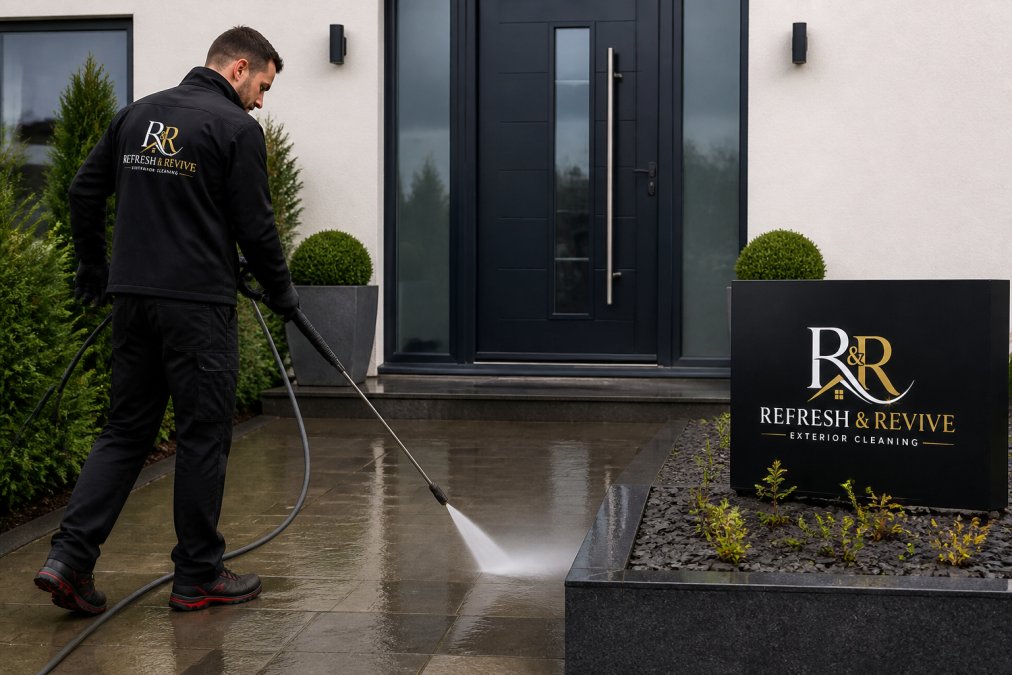
- Cleaning - pressure washing, soft washing or hot water cleaning depending on the surface
- Protection - re-sanding joints and applying a sealer where it suits the material
A proper clean is a treatment process, not a quick blast with a jet washer. That distinction matters more than most homeowners realise, and it's the reason two quotes for the same patio can describe completely different jobs.
Why DIY Patio Cleaning Often Fails
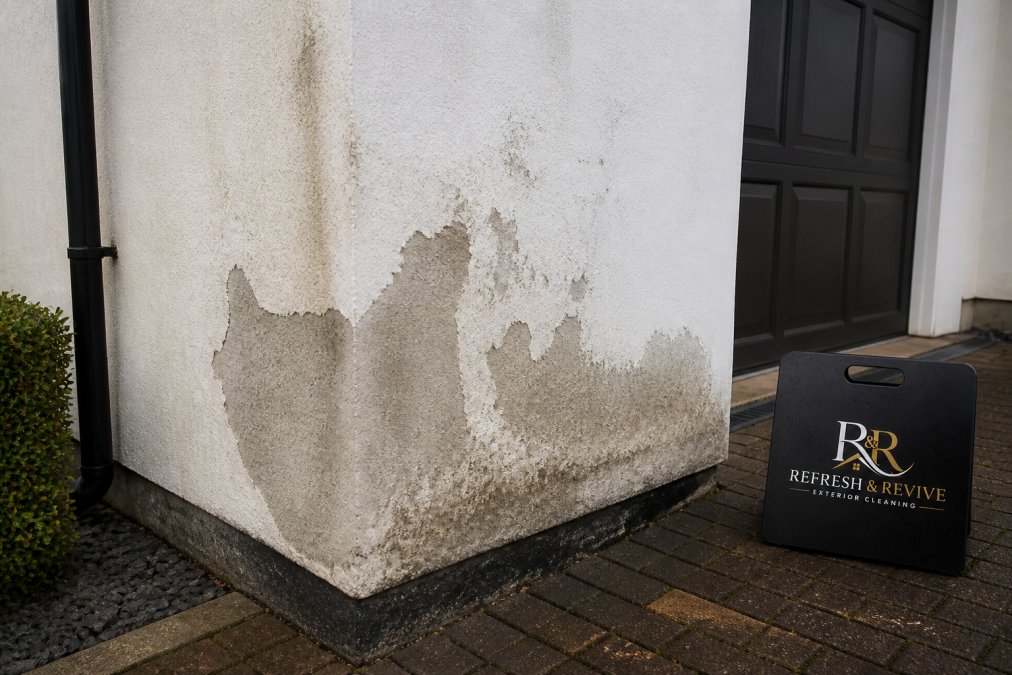
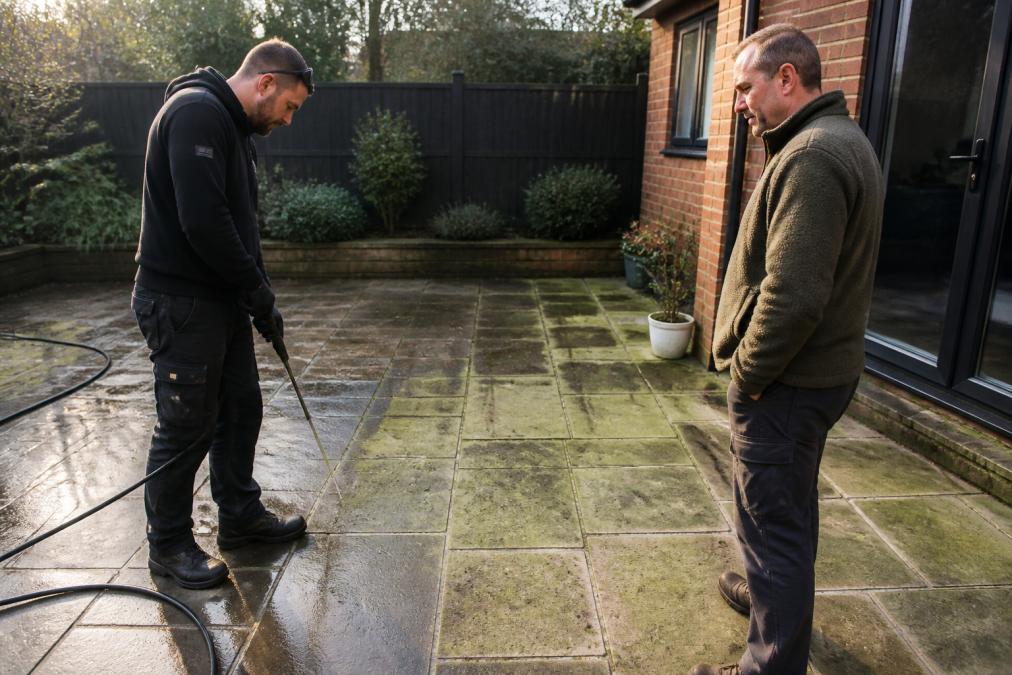
Most DIY patio cleaning fails because it removes the visible growth without killing what's underneath. Moss and algae regrow from spores and roots left in the joints, so the patio looks clean for a few weeks and then reverts.
The other common problem is damage. A domestic pressure washer run at full power strips the surface layer from block paving, blasts the pointing out of joints, and etches natural stone. Once that happens, the patio holds dirt more easily than before.
A common mistake is cleaning on a wet day. Water carries the dislodged algae across the slabs and into the joints, spreading the problem rather than solving it. Professionals clean when the surface and forecast allow the treatment to work properly.
What most guides miss is that the jointing is half the job. Re-sanding with a kiln-dried or polymeric sand after cleaning blocks the regrowth pathway and stabilises the paving. Skip that step and you're back where you started.
Patio Moss and Algae Removal That Lasts
Lasting moss and algae removal depends on treatment, dwell time and prevention, not on how hard you spray. Professional patio moss and algae removal starts with a biocide or specialist cleaner applied at the correct dilution and left to work before any washing begins.
Timing matters. In the North West, moss establishes fastest through autumn and winter, when damp conditions and low light suit it. Cleaning in late spring, once growth is active but before it seeds heavily, tends to give the longest results.
Three things separate a lasting result from a temporary one:
- Killing growth at the root rather than scrubbing the surface
- Clearing the joints completely, not just the slab faces
- Re-sanding and, where appropriate, sealing to slow recolonisation
Maintenance visits extend the result further. A light treatment every 12 to 18 months keeps regrowth from establishing.
Treating Black Spots and Lichen
Black spot is a lichen, not dirt, and it anchors itself into the stone with root-like structures. Standard washing removes the surface colour but leaves the organism behind, so it returns within a season.
Treatment-led cleaning is the only reliable approach. A specialist cleaner is applied and allowed to dwell, breaking the lichen down over days rather than minutes. Some spotting fades over the following weeks as the treatment continues working, which surprises people who expect an instant result on the day.
Lichen on natural stone often needs a repeat application. That's normal.
Soft Washing vs Pressure Washing for Patios
Soft washing uses low pressure with specialist cleaning solutions, while pressure washing uses high-pressure water alone. For most patios, soft washing is the safer and more effective choice because it cleans by chemistry rather than force.
Pressure washing still has a place. Concrete and some strong paving respond well to controlled pressure washing, and hot water pressure washing lifts greasy or stubborn soiling that cold water won't touch. The skill is in matching pressure, nozzle and technique to the material.
Which Method Suits Which Surface
| Surface | Best Method | Why |
|---|---|---|
| Natural sandstone | Soft washing | Pressure strips the surface and opens the grain |
| Limestone | Soft washing | Soft stone marks and etches easily |
| Block paving | Controlled pressure plus re-sand | Joints need clearing and refilling |
| Concrete slabs | Pressure washing | Hard-wearing and tolerant of pressure |
| Porcelain | Soft washing or low pressure | Grout lines and edges chip under force |
| Indian stone | Soft washing | Delicate surface, heavy organic growth |
The pattern is consistent: the softer and more porous the stone, the more the job depends on treatment rather than pressure. Get this wrong and the damage is permanent.
Block Paving Cleaning and Sealing Explained
Block paving cleaning and sealing is a three-part process: clean the blocks, replace the jointing sand, then seal the surface. Each stage does a different job, and skipping one undermines the others.
Cleaning removes the biological growth and ingrained dirt. Re-sanding fills the joints that cleaning has opened, locking the blocks together and blocking the main regrowth pathway. Sealing then coats the surface to slow dirt ingress and make future cleaning easier.
Not every patio needs sealing. It's most worthwhile on block paving, imprinted concrete and porous stone where staining and weed growth are recurring problems. On some natural stone, a breathable sealer is essential; a non-breathable one can trap moisture and cause problems. This is where surface knowledge matters more than product marketing.
Protecting Plants, Lawns and Drainage
Protecting plants, lawns and drainage is a core part of professional patio cleaning, not an afterthought. Cleaning solutions, run-off and displaced dirt all have to go somewhere, and a careless job can scorch borders or clog drainage runs.
The practical safeguards are straightforward:
- Pre-wetting and covering beds and lawns before treatment
- Controlling run-off so it doesn't flood borders or pool on the lawn
- Directing dirty water away from drains that could block
- Rinsing thoroughly once the treatment has done its work
New lawns and young planting need the most care. If you've recently laid turf or planted a border, tell the company before the visit so they can plan around it. A reputable firm will ask anyway.
How Often Should You Book Patio Cleaning Services?
Most patios benefit from professional cleaning every 12 to 24 months, with shaded or north-facing surfaces often needing more frequent attention. Patios under trees, or those that stay damp, will often need more frequent attention than a sunlit, open patio.
The signs it's time to book are easy to read:
- Green film or dark patches returning across the slabs
- Moss or weeds pushing up through the joints
- Jointing sand washing out or visibly low
- The surface staying damp long after rain
- Slippery patches, particularly on shaded stone
Treating these early keeps the job small. Left for several seasons, growth works its way into the joints and under the edges of the paving, and restoration takes longer.
Choosing Patio Cleaning Services in Bolton
Choosing patio cleaning services in Bolton comes down to method, insurance and whether the company treats your patio as a specific material. Price matters, but a cheap job that damages the paving costs far more to put right.
When you compare quotes, ask what method will be used, whether joints will be re-sanded, and what happens if something goes wrong. A company that can answer those questions clearly is usually the one worth booking.
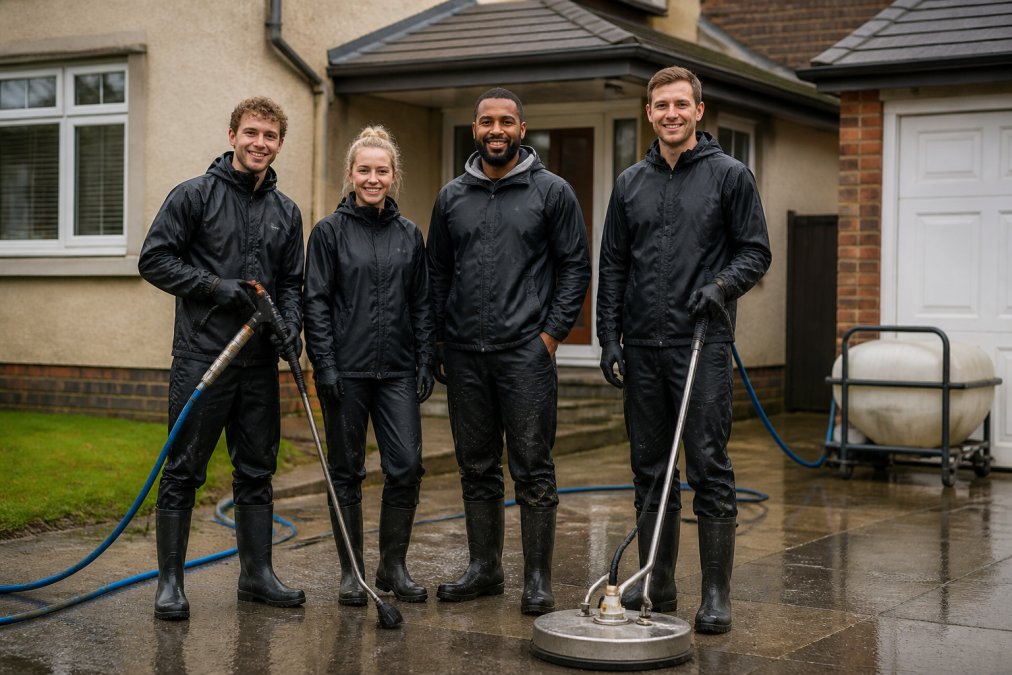
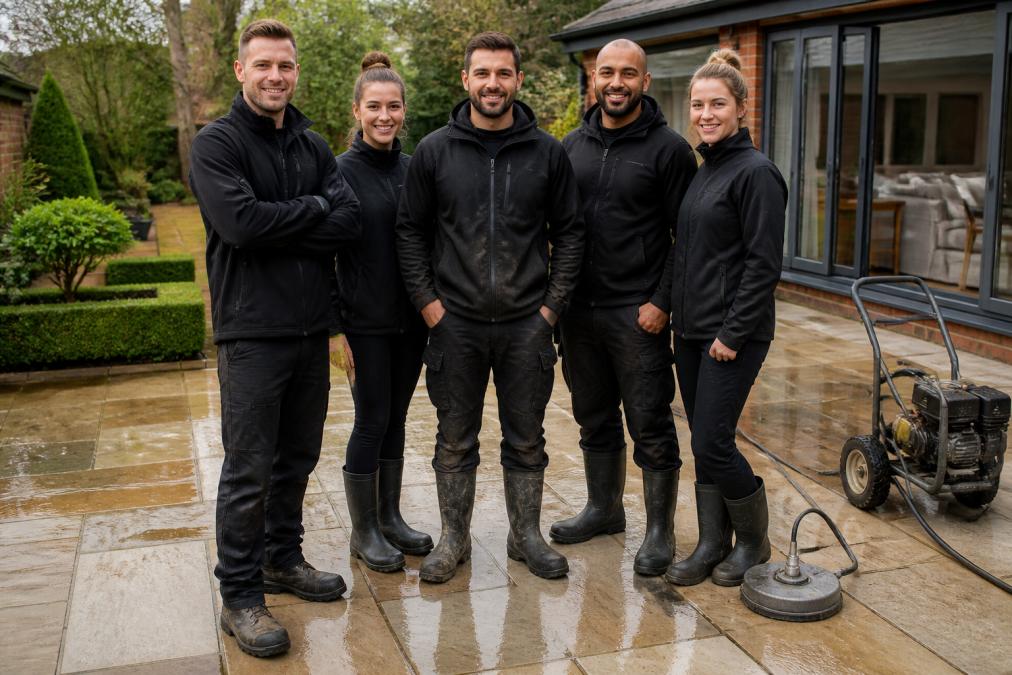
Refresh Revive Exterior Cleaning works across Bolton and the surrounding areas, including Bury, Wigan, Chorley, Horwich, Westhoughton, Ramsbottom, Whitefield, Prestwich and Worsley, along with the wider Cheshire towns of Altrincham, Hale, Bowdon, Wilmslow, Knutsford, Lymm and Alderley Edge. We're fully insured, and our team handles both residential patios and commercial exterior cleaning for property managers, care homes, schools and retail sites.
If you're searching for patio cleaning near me, the sensible first step is a photo assessment. Send a few pictures of the patio, note any problem areas, and you'll get an honest view of what the surface needs rather than a generic quote.
Damp, shaded patios across Greater Manchester and Lancashire often grow moss and algae, and no single clean stops that permanently. The difference is between a surface clean that fades by autumn and a treatment-led approach that holds its result. Refresh Revive Exterior Cleaning combines controlled soft washing, professional pressure washing where the surface allows, and treatment-led moss and algae removal, all backed by our White Glove Standard™ and full insurance. Send us photographs of your patio through refreshrevivecleaning.co.uk and we'll assess the surface and quote for the right method.
Frequently Asked Questions
How often should I have my patio professionally cleaned?
Most patios benefit from professional cleaning every 12 to 18 months. North West weather, with its damp winters and shaded gardens, encourages moss and algae to return faster on north-facing or tree-covered patios. If you have block paving, sealing after cleaning can extend the results. Regular maintenance visits from a patio cleaning service prevent heavy build-up and keep the surface safer underfoot.
What is the difference between pressure washing and soft washing for patios?
Pressure washing uses high-pressure water to blast away dirt, which suits robust concrete but can erode pointing and damage softer stone. Soft washing applies low-pressure water with a treatment that kills moss, algae and lichen at the root. For most natural stone and block paving, soft washing is the safer choice because it cleans without stripping the surface or widening joints.
Can professional patio cleaning remove black spots and lichen?
Yes. Black spots are usually a type of algae that embeds in the stone, and lichen bonds tightly to the surface. A treatment-led approach, where a biocide is applied and allowed to work before a controlled rinse, breaks down both. High pressure alone often spreads spores and leaves roots behind, so the growth returns within weeks.
How do you protect my plants and lawn during patio cleaning?
Before any work starts, we cover or saturate nearby planting and lawns, and we control run-off so treatment water does not pool on borders. We use low-pressure methods and direct water away from beds. If you have a new lawn or delicate shrubs, let us know when you request a quote so we can adjust the approach.