 ultimate-guide
Choosing a Reliable Exterior Cleaning Service: 2026 Guide
Table of Contents
- What Makes an Exterior Cleaning Service Reliable?
- Exterior Cleaning Methods Explained: What Should Be Used Where
- Which Method Suits Which Surface?
- What Questions Should I Ask Before Hiring an Exterior Cleaner?
- How to Check Insurance, Reviews and Credentials
- How Long Does Exterior Cleaning Take?
- What Affects the Quote You Receive?
- Protecting Plants, Lawns and Surrounding Property
- Red Flags and Common Mistakes When Hiring
- How Refresh Revive Exterior Cleaning Approaches Every Job
- Commercial Exterior Cleaning: What Property Managers Should Expect
- Maintenance Visits and How Quickly Growth Returns
- Conclusion: Getting a Free Exterior Cleaning Quote in Bolton
- Frequently Asked Questions
Last Updated: September 11, 2026
What Makes an Exterior Cleaning Service Reliable?
Choosing a reliable exterior cleaning service comes down to three things: the company assesses your surface before quoting, it uses a method matched to that surface, and it carries proper insurance with a clear record you can check. Everything else, the van livery, the glossy website, the low headline figure, is noise.
At Refresh Revive Exterior Cleaning, we work on the principle that no two surfaces should be treated the same way. Block paving, render, roof tiles and UPVC all respond differently to water pressure, heat and cleaning agents. A firm that turns up with one machine and one setting for every job is not cleaning your property properly, even if it looks better on the day.
That distinction matters more than most homeowners realise. The Health and Safety Executive guidance on working at height applies to any firm sending someone onto a roof or up a ladder, and a company that has not thought about that is unlikely to have thought about your planting, your drainage or your neighbour's wall either.
Below, we break down the methods, the questions worth asking, the red flags, and how to compare quotes fairly in Bolton and across Greater Manchester.
Exterior Cleaning Methods Explained: What Should Be Used Where
Exterior cleaning methods explained properly come down to matching pressure, temperature and treatment to the material in front of you. There is no single best method, only the right one for a given surface.
Here is what most guides get wrong: they rank methods from "gentle" to "aggressive" as if gentle is always safer. In practice, a low-pressure wash that leaves algae behind is not doing you a favour. The goal is the least aggressive approach that actually removes the contamination.
Pressure Washing and Hot-Water Cleaning
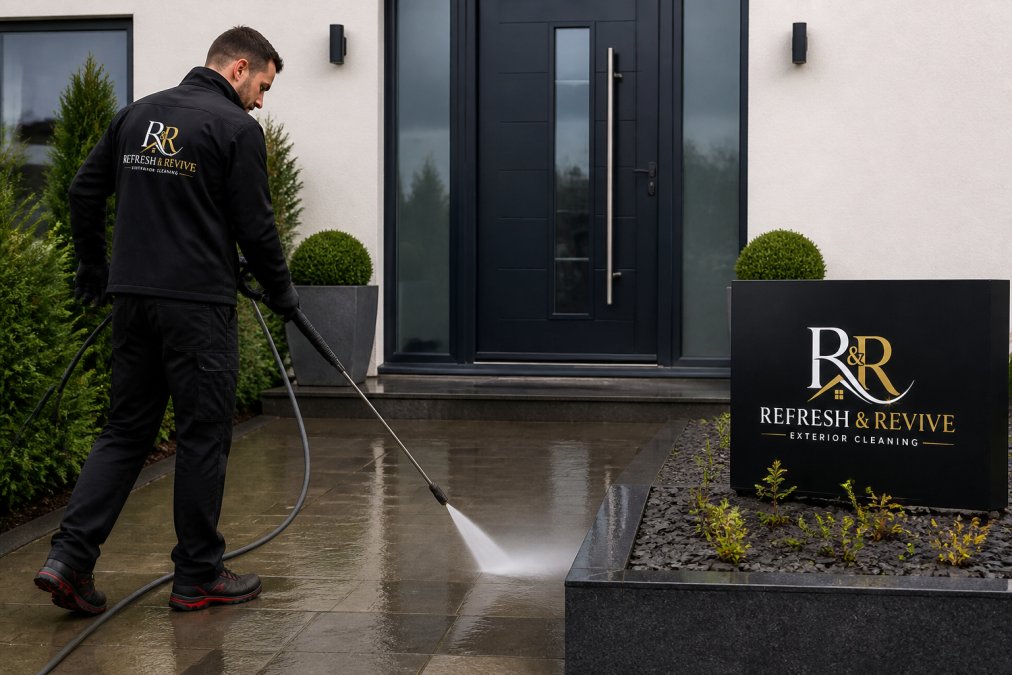
Pressure washing uses controlled water pressure and flow on suitable hard surfaces. Hot water may help break down dirt, grease and organic contamination more effectively than cold on certain materials.
The key word is controlled. A machine's maximum output tells you very little about the pressure reaching your driveway. Nozzle choice, distance from the surface, flow rate and technique all change what the surface actually receives. This is why two firms with similar equipment can produce very different results, and very different levels of risk.
Hot-water cleaning suits concrete, some paving and heavily soiled hard surfaces where grease or organic matter has built up. It is not automatically appropriate for every driveway, and it is rarely the right first choice for render or roofing.
Soft Washing and Low-Pressure Treatment
Soft washing uses lower-pressure application with an appropriate treatment to tackle algae, moss and lichen. The cleaning action comes largely from the treatment and dwell time rather than force.
This approach may be more suitable for render, delicate coatings, older masonry and surfaces where high pressure risks forcing water into places it should not go. It is not chemical-free, and any firm claiming otherwise is oversimplifying. Treatments should be applied according to the manufacturer's label and relevant safety data, with care for plants, pets, drainage and watercourses.
Manual Removal and Biocide Treatment
Manual methods may suit roofs and delicate surfaces where pressure or chemical application would be inappropriate. On a typical roof, this can mean scraping moss by hand, collecting the debris, clearing gutters that have filled with it, and applying a professional biocide treatment where appropriate.
Not every roof receives the same process. Tile type, age, condition, previous coatings and access all change the plan. A responsible firm will tell you what it intends to do and why, rather than applying a standard package.
Which Method Suits Which Surface?
The right method is chosen by surface type, age, condition, previous treatments, contamination and access. Get that assessment wrong and you either leave the surface dirty or cause damage you cannot undo.
| Surface | Likely Approach | Watch Points |
|---|---|---|
| Block paving | Controlled pressure washing, then kiln-dried sand once dry | Re-sanding is not a permanent weed guarantee |
| Concrete and paving | Controlled pressure or hot-water cleaning | Joint condition, drainage, surrounding levels |
| Indian sandstone and natural stone | Lower pressure with care over jointing and finish | Some stone marks are weathering, not dirt |
| Porcelain and imprinted concrete | Method selected after inspection | Sealer condition affects what is safe |
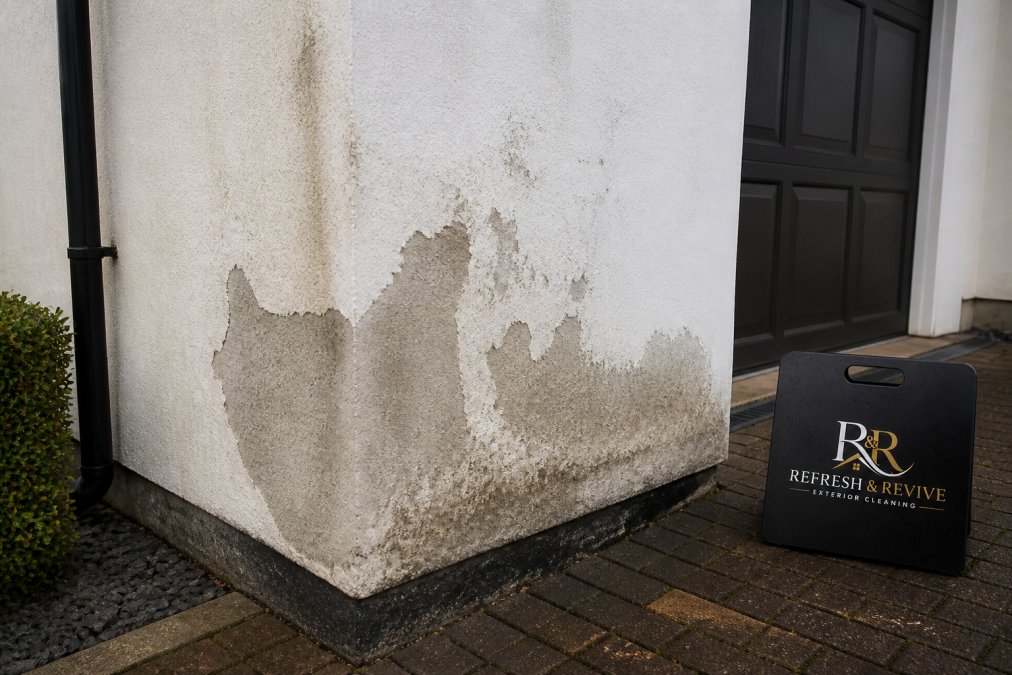
| Render | Low-pressure treatment where suitable | Some staining is defect or mineral, not grime |
| Roofs | Manual moss removal, debris collection, biocide where appropriate | Tile type and condition decide the plan |
| UPVC, fascias and soffits | Cleaning matched to the plastic and its age | Old, brittle panels need a gentler approach |
| Gutters | Ground-level vacuum with inspection camera | Clearance is not a repair service |
A firm that cannot explain why it has chosen a method for your specific surface is guessing. Ask, and listen to whether the answer references your property or a generic script.
What Questions Should I Ask Before Hiring an Exterior Cleaner?
Ask about method, insurance, preparation and aftercare before you book, not after. The answers tell you more than any advert will.
Work through this list when you speak to any firm:
- Which method will you use on my surface, and why that one?
- Are you insured, and can you confirm the cover in writing?
- How will you protect my plants, lawn and neighbouring property?
- What happens if something is damaged during the clean?
- Is re-sanding, treatment or sealing included, or quoted separately?
- How will you manage run-off and drainage?
- Will you document the work before and after?
- Do you offer maintenance visits, and what would they involve?
The Citizens Advice guidance on hiring tradespeople is a sensible starting point for anyone who wants to understand their rights before work begins. Getting answers in writing, even by message, saves arguments later.
How to Check Insurance, Reviews and Credentials
Check insurance first, reviews second, and directory listings third. Insurance protects you if something goes wrong; reviews tell you how the firm behaves when it does.
For insurance, ask for a certificate and check that the cover is current and relevant to the work. Public liability cover is the one that matters most to a homeowner, because it responds if your property is damaged. If a firm is vague about this, treat it as a serious warning sign.
For reviews, look for patterns rather than individual comments. One bad review is normal in any trade. A recurring theme about damage, no-shows or surprise charges is not.
Directories can help you verify a firm's background. Checkatrade vets tradespeople and monitors customer feedback, while Which? Trusted Traders runs an assessment process including credit checks and interviews. Neither is a guarantee of quality on an individual job, but both raise the floor. Review platforms such as Trustpilot are useful for spotting recurring issues, provided you read the substance rather than the star rating.
How Long Does Exterior Cleaning Take?
How long exterior cleaning takes depends on the surface, its condition, the contamination and the access. A straightforward driveway may be done in a few hours; a roof with heavy moss, blocked gutters and awkward access can take considerably longer.
Rather than promising a time before seeing the property, a reputable firm will assess first and then give you a realistic window. Weather matters too. Rain, wind and low temperatures affect what can be done safely and how well treatments perform. Drying time matters for block paving if re-sanding is needed, because the joints need to be sufficiently dry before sand goes back in.
Here is a rough sense of what drives the timescale:
- Area size. Larger drives, patios and roofs take longer, but the relationship is not perfectly linear because setup time is fixed.
- Contamination level. Light algae is quick; years of moss, lichen and compacted debris are not.
- Access. Narrow side returns, locked gates, conservatories in the way and steep ground all add time.
- Treatment dwell time. Some treatments need to sit and work, which adds time but improves the result.
- Drying and aftercare. Re-sanding and any sealing depend on the surface being dry enough.
Never accept a firm completion time quoted before anyone has seen the property. It is a sign they are quoting from a template rather than from your job.
What Affects the Quote You Receive?
Your quote reflects the work required, not just the size of the area. Two driveways of identical dimensions can need very different amounts of time, equipment and care.
The main factors are:
- Surface material and condition. Delicate or worn surfaces need gentler methods and more attention.
- Level and type of contamination. Moss, algae, lichen, oil, grease and chewing gum all behave differently.
- Access and working height. Roofs, gutters and upper render add complexity and safety considerations.
- Drainage and run-off management. Water needs somewhere sensible to go, and that may need planning.
- Treatment, re-sanding or sealing. These are separate steps and are not automatically included.
- Time and equipment. Specialist equipment and additional labour both feed into the figure.
At Refresh Revive Exterior Cleaning, quotes are no-obligation and based on what we actually find. That is why we ask for photographs and a postcode before we visit, so the first conversation is grounded in your property rather than a guess. We offer responsive, no-obligation quotations.
Protecting Plants, Lawns and Surrounding Property
Protecting plants, lawns and neighbouring property is part of doing the job properly, not an optional extra. Run-off, overspray and foot traffic all affect what surrounds the surface you are cleaning.
A careful approach covers the following:
- Pre-wetting and covering. Plants and lawns near the work area may be pre-wetted or covered where appropriate.
- Run-off control. Water should be directed away from borders, drains and watercourses where possible.
- Neighbour consideration. Overspray and noise affect next door, and a good firm plans for that.
- Pet and access management. Pets should be kept inside while work is underway, and gates secured.
- Product handling. Treatments are applied per the manufacturer's label and safety data, never mixed on site.
If you have a newly laid lawn, young planting or a pond, say so before the visit. It changes how the job is planned.
Red Flags and Common Mistakes When Hiring
The most common mistakes when hiring are choosing on price alone, skipping the insurance check and accepting a method that was never matched to the surface. Each one is avoidable with a five-minute conversation.
Red flags worth taking seriously:
- No written quote, or a quote that changes once work begins.
- No insurance certificate available on request.
- A single method offered for every surface, with no assessment.
- Pressure washing recommended for a roof without any inspection.
- Claims that a treatment is chemical-free or that results are permanent.
- No interest in your plants, drainage or neighbouring property.
- Pressure to book immediately or pay a deposit before any site visit.
- Vague answers about what happens if something is damaged.
A common mistake is assuming a firm is insured because it says so on a website. Ask for the certificate. Another is accepting a very low figure without asking what has been left out, because treatment, re-sanding and aftercare are often the difference.
How Refresh Revive Exterior Cleaning Approaches Every Job
Every job at Refresh Revive Exterior Cleaning starts with an assessment of the surface, not a sales pitch. We look at the material, its age, its condition, any previous treatments, the contamination and the access, then choose the treatment that suits it.
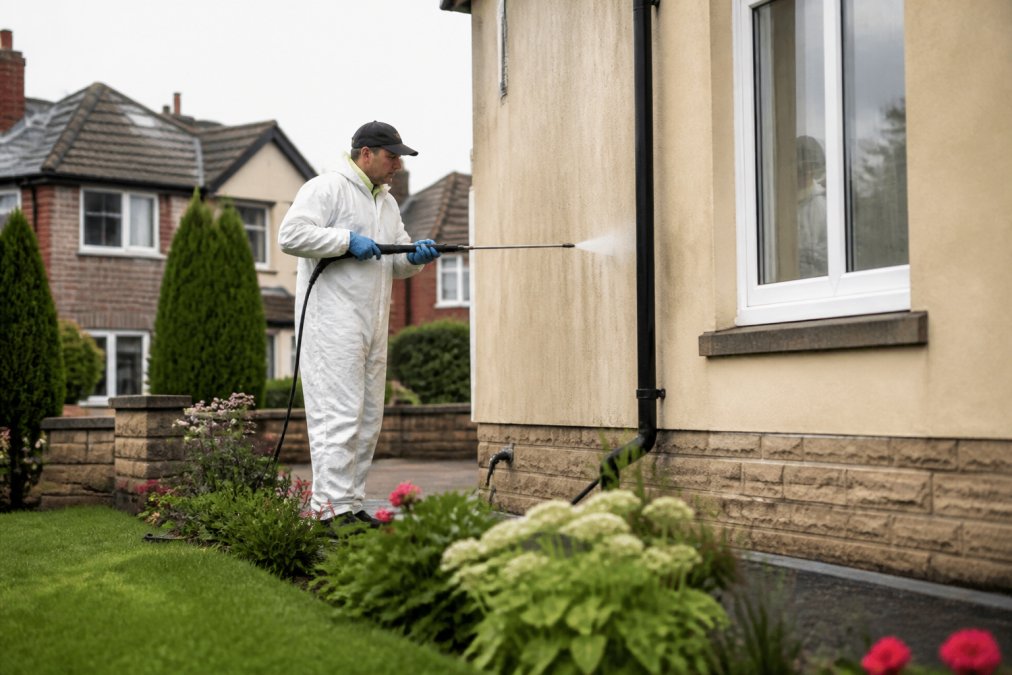
That assessment shapes everything that follows. Low-pressure treatment may be more suitable for render and roofs, while controlled pressure or hot-water cleaning may suit durable hard surfaces. Where a roof needs manual moss removal, debris collection and a professional biocide treatment, that is what we plan for, and we tell you why.
Our signature White Glove Standard™ ensures meticulous, surface-specific, low-pressure cleaning methods that protect your property, planting, and lawns while restoring brilliant results. Fully insured and committed to quality, we offer responsive, no-obligation quotations and maintenance visits to prevent regrowth, ensuring your home or business always looks its best. We also provide before & after documentation.
If you have had a bad experience before, tell us. It helps us explain what we will do differently and where the limits are.
Commercial Exterior Cleaning: What Property Managers Should Expect
Commercial exterior cleaning for property managers is about consistency and scheduling, not one-off visits. Forecourts, entrances, loading bays, bin stores and signage all feed into how a site is perceived, and they get dirty on a predictable cycle.
What a property manager should expect from a competent contractor:
- A written scope covering each area and the method for each surface.
- A schedule that fits around trading hours and site access.
- Method statements and risk assessments where the site requires them.
- Clear reporting, including photographic records of before and after.
- A maintenance option so surfaces do not return to square one between visits.
Refresh Revive Exterior Cleaning works with commercial clients across Bolton, Bury and the wider North West on forecourts, entrances, bin stores and hard landscaping. For multi-site portfolios, the practical answer is usually a planned maintenance schedule rather than reactive call-outs.
Maintenance Visits and How Quickly Growth Returns
Regrowth depends on shade, moisture, drainage, weather, nearby trees, orientation and the condition of the surface. There is no honest single answer to how long a clean lasts, and any firm quoting an exact figure is guessing.
What we can say is that the conditions around your property drive the timeline. A north-facing drive under trees will recolonise faster than a sunlit patio with good drainage. Algae and moss are patient, and they return when the conditions suit them.
That is why maintenance visits exist. A lighter, more frequent clean is usually easier on the surface than letting growth establish and starting over. For block paving, that also means joints stay in better condition between re-sanding.
If you want to slow regrowth yourself, keep gutters clear, deal with shaded damp patches and avoid letting debris build up in corners and channels. None of that is a permanent fix, but it all helps.
Conclusion: Getting a Free Exterior Cleaning Quote in Bolton
We assess the surface, choose the right treatment and clean it properly. That is the whole approach at Refresh Revive Exterior Cleaning, and it is backed by our signature White Glove Standard™ which ensures meticulous, surface-specific, low-pressure cleaning methods that protect your property, planting, and lawns while restoring brilliant results. We are fully insured and provide before & after documentation. We also offer maintenance visits available for regrowth prevention.
Send photographs of the areas you want cleaned along with your postcode by WhatsApp, and we will come back to you with a free, no-obligation quote. We cover Bolton, Bury, Westhoughton, Horwich, Farnworth, Little Lever, Radcliffe, Whitefield, Prestwich, Worsley, Leigh, Atherton and the surrounding Greater Manchester area.
Refresh Revive Exterior Cleaning Telephone and WhatsApp: 07549 064190 Website: refreshrevivecleaning.co.uk
Frequently Asked Questions
How do I know if an exterior cleaning company is insured?
Ask to see their certificate of insurance before any work starts, and check the policy is current and covers exterior cleaning work at your property. A genuine company will send this without hesitation. If they dodge the question or say it is not needed for domestic jobs, treat that as a warning sign. Refresh Revive Exterior Cleaning is fully insured and happy to confirm cover when you request your free quote.
What is the difference between pressure washing and soft washing?
Pressure washing uses controlled water pressure and flow to lift dirt from durable hard surfaces such as concrete and paving. Soft washing applies a treatment at lower pressure to tackle algae, moss and lichen on render, roofs and more delicate materials. Neither suits every surface. The right exterior cleaning service will assess the material, age and condition first, then choose the method that carries the least risk to your property.
Should I hire a professional for roof moss removal?
Roof moss is best handled with a method matched to the roof material and condition. That often means manual removal, debris collection, clearing gutters and a suitable biocide treatment rather than blasting the roof with high pressure. Working at height also carries real risks. A reliable exterior cleaning service will explain what your specific roof needs and what results to expect, without promising the moss will never return.
How often should I have my driveway and patio cleaned?
Most homes benefit from a clean every 12 to 24 months, but the right interval depends on shade, moisture, drainage, nearby trees and how the surface is used. North-facing driveways in Bolton and Bury often green over faster than sunny ones. If moss and algae return quickly, a maintenance visit can keep on top of regrowth between full cleans. Ask the company what schedule suits your property.
What questions should I ask before hiring an exterior cleaner?
Ask which method they will use and why, whether re-sanding or treatment is included, how they protect plants, lawns and drainage, and what happens if something goes wrong. Request proof of insurance and recent local work. A company that answers clearly and puts things in writing is usually the safer choice. Vague answers, cash-only requests or pressure to book on the spot are reasons to walk away.
Can exterior cleaning damage my block paving or render?
It can if the wrong method is used. High pressure on render can force water behind the surface, and too much pressure on block paving can disturb the jointing sand. Controlled pressure, correct nozzle choice and sensible cleaning distance reduce the risk on paving, while low-pressure treatment is often more suitable for render. A careful operator adjusts the approach to the surface rather than using one setting everywhere.
Meta title: Choosing a Reliable Exterior Cleaning Service: 2026 Guide
Meta description: How to choose a reliable exterior cleaning service in Bolton. Methods explained, questions to ask, red flags to avoid, and what affects your quote.
URL slug: /choosing-a-reliable-exterior-cleaning-service