 comparison
Jet Washing vs Soft Washing: Which Method Suits Your Property?
Table of Contents
- Jet Washing vs Soft Washing: Key Differences
- Surface-Specific Damage Risks: Why Method Matters
- Render Cleaning Services: Why Soft Washing Protects Your Investment
- Roof Cleaning Methods: Pressure vs Low-Pressure Approaches
- When to Use Each Method: Driveways, Patios, and Block Paving
- COSHH Compliant Cleaning: Chemical Safety and Environmental Standards
- Professional Equipment vs DIY: What Actually Makes a Difference
- Long-Term Results: Maintenance Schedules and Regrowth Prevention
- Frequently Asked Questions
Last Updated: August 23, 2026
Jet Washing vs Soft Washing: Key Differences
When deciding how to restore your property's exterior, the choice between jet washing and soft washing fundamentally shapes the outcome. Both clean surfaces, but they work in entirely different ways, and choosing the wrong one can damage what you're trying to restore.
High-pressure jet washing uses mechanical force to blast away dirt, algae, and grime. Low-pressure soft washing applies chemical treatment to dissolve organic growth, then rinses gently. Understanding this distinction is critical because some surfaces simply cannot tolerate high-pressure treatment without permanent damage.
At Refresh Revive Exterior Cleaning, we've found that most property owners initially assume all cleaning works the same way. In practice, the method you choose determines whether your surfaces emerge restored or compromised. Below, we'll show you exactly how each method works, where each excels, and the specific damage risks that make method selection essential.
How High-Pressure Jet Washing Works
Jet washing relies on mechanical force. A pump pressurises water to between 150 and 250 bar (roughly 2,200-3,600 PSI), then forces it through a narrow nozzle (hse.gov.uk). The concentrated stream physically dislodges dirt, loose paint, algae, and debris.
The process is fast and visually dramatic. For heavily soiled concrete driveways, block paving, and patios where the substrate is strong, high-pressure cleaning delivers immediate results. However, this speed comes with a critical trade-off: high-pressure water is indiscriminate. It removes not only dirt but also protective coatings, mortar between pavers, surface granules on roof tiles, and the weathered patina that protects older materials. On delicate surfaces, this becomes a liability.
How Low-Pressure Soft Washing Works
Soft washing inverts the approach. It applies specially formulated cleaning agents at low pressure (typically 0.5-1.5 bar, or roughly 7-22 PSI) (hse.gov.uk). The chemical treatment dissolves organic growth, moss, algae, lichen, and biofilm, at the molecular level.
After application, the chemical works for several hours or overnight, breaking down biological material. Once dissolved, a gentle rinse removes the residue. The substrate itself is never subjected to damaging force; chemistry does the work instead.
This method excels on surfaces where high pressure would cause harm: render, roof tiles, natural stone, and aged mortar. Because the cleaning agent targets biological growth specifically, it's highly effective on properties with persistent algae, moss, or lichen problems. Results are also more durable; because the substrate remains intact, regrowth takes longer to establish.
Surface-Specific Damage Risks: Why Method Matters
Choosing the wrong cleaning method causes permanent damage that no amount of repair can fully reverse. The risk varies dramatically by surface type.
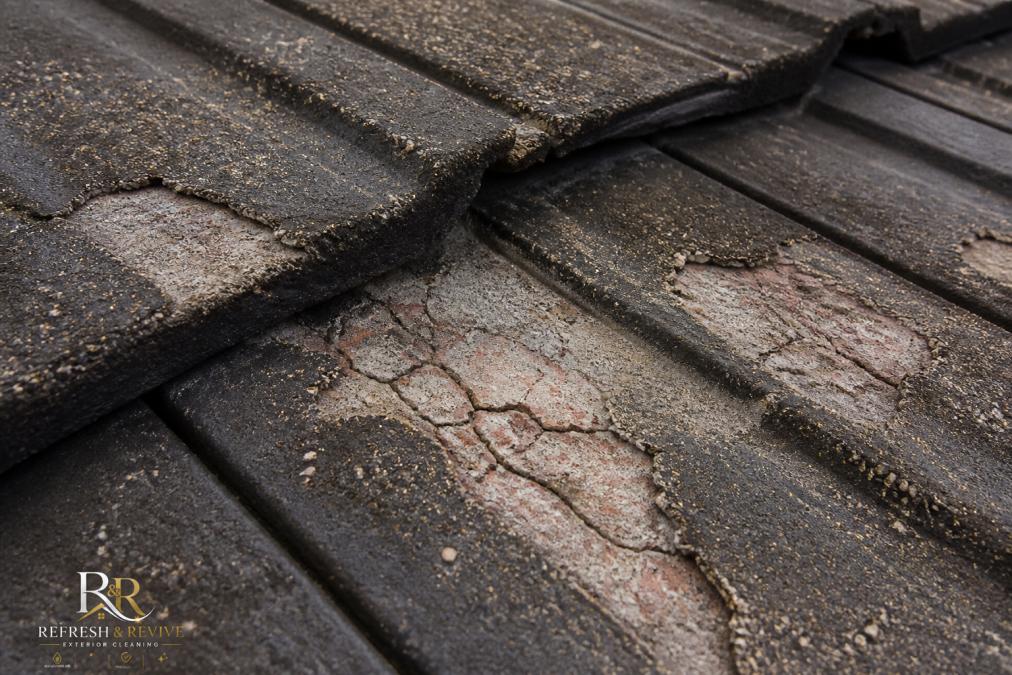
Render (the external coating on masonry) is particularly vulnerable. High-pressure jet washing can strip render from the wall, exposing brick or block underneath and creating pathways for water penetration. Once water enters the masonry, frost damage and internal dampness follow. Render requires soft washing; the low pressure preserves the coating whilst chemical treatment removes algae and discolouration.
Roof tiles and slate lose protective granules under high-pressure treatment. These granules shield the tile from UV damage and weathering. Once removed, the tile ages rapidly and becomes prone to cracking and water ingress. Roof cleaning must prioritise preservation; soft washing is the only appropriate choice.
Natural stone and aged mortar cannot withstand high-pressure force. Limestone, sandstone, and historic lime mortar are softer than modern materials and erode under pressure. High-pressure cleaning can also force water deep into the stone, causing internal frost damage during winter. These materials demand chemical treatment, not mechanical force.
Block paving and imprinted concrete can tolerate higher pressures than delicate surfaces, but excessive force causes problems. Joint sand is displaced, weeds establish in gaps, and the paving settles unevenly.
The underlying principle is straightforward: if a surface is delicate, aged, or has protective coatings or finishes, high pressure causes more harm than good.
Render Cleaning Services: Why Soft Washing Protects Your Investment
Render is one of the most common exterior finishes in the North West, and it's also one of the most misunderstood when it comes to cleaning. Homeowners often assume visible algae and discolouration require aggressive cleaning, but high-pressure render cleaning actually destroys the investment it's trying to restore.
Render works by providing a weatherproof barrier over masonry. Its durability depends entirely on the integrity of that barrier. When high-pressure jet washing strips or damages the render surface, water begins to penetrate behind it. Inside the wall, moisture causes frost damage, salt efflorescence, and eventually structural problems.
Low-pressure soft washing removes algae and biological growth from render without compromising the surface. The chemical treatment targets the organisms causing discolouration, not the render itself. Once growth is eliminated, the render remains intact, protective, and capable of performing its function for years to come.
Professional render cleaning services assess the render type (cement-based, lime mortar, silicate-based), identify the cause of discolouration (algae, lichen, pollution staining), and apply the appropriate treatment. Refresh Revive Exterior Cleaning uses surface-specific cleaning methods that preserve render integrity whilst restoring its appearance. This approach prevents regrowth more effectively than high-pressure alternatives because organic growth is chemically eliminated rather than temporarily blasted away.
Roof Cleaning Methods: Pressure vs Low-Pressure Approaches
Roof cleaning is where the choice between jet washing and soft washing becomes genuinely critical. The consequences of selecting the wrong method are visible, permanent, and expensive.
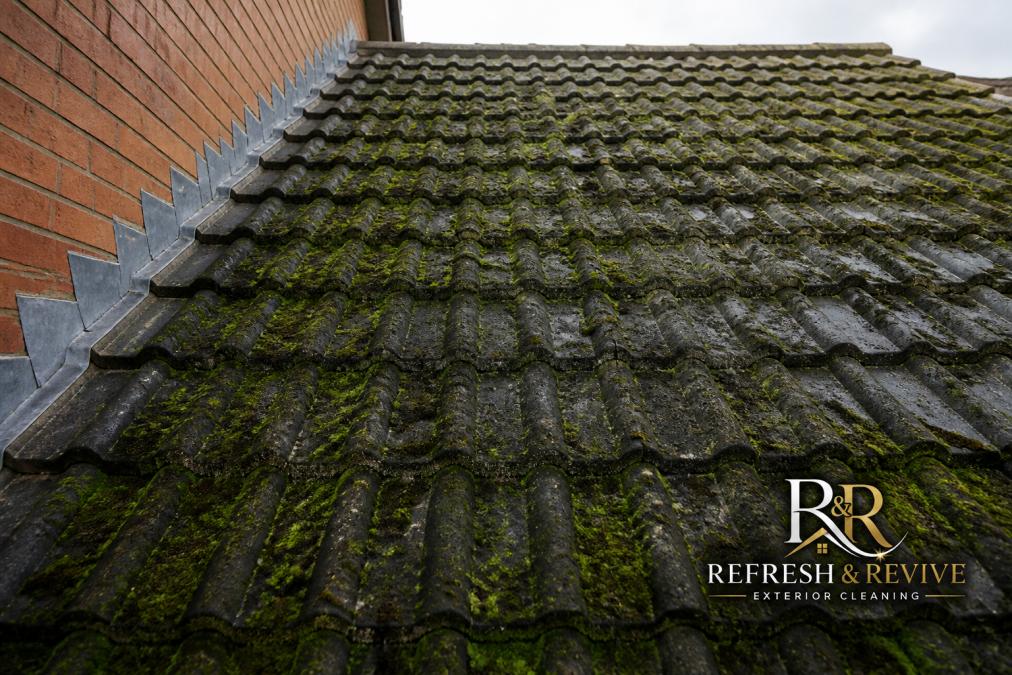
High-pressure jet washing removes moss and algae quickly, but it also removes the protective granule layer from roof tiles. These granules reflect UV radiation, prevent water penetration, and provide weather resistance. Once removed, the tile surface becomes porous and vulnerable. Frost damage accelerates, the tile's lifespan shortens, and leaks become more likely. Additionally, high-pressure water can dislodge tiles from their fixings, creating gaps where water enters the roof space.
Low-pressure roof cleaning methods apply biocide treatment to kill moss, algae, and lichen at their source. The chemical works over several days, breaking down biological material. Once growth is dead and loosened, a gentle rinse removes it. The tiles remain intact, granules remain in place, and the roof structure is never subjected to damaging force.
The process takes longer. However, results are durable.
When to Use Each Method: Driveways, Patios, and Block Paving
The right method depends on what surface you're cleaning and what's causing the soiling.
Driveways present a mixed scenario. If the driveway is modern concrete or asphalt with heavy accumulations of inorganic debris, dried mud, tyre marks, oil stains, concrete dust, high-pressure jet washing is appropriate. The substrate is strong enough to tolerate the force. However, if the driveway is older, has visible cracks, or shows signs of wear, lower pressure becomes necessary. If soiling is primarily biological (algae, moss, lichen), soft washing is more effective because it addresses the cause.
Patios and block paving require more caution. Block paving is held together by sand-filled joints. High-pressure jet washing displaces this sand, creating gaps where weeds establish and the paving settles unevenly. For algae and biological growth on block paving, soft washing is the preferred method because it cleans without displacing joint material.
Imprinted concrete (decorative concrete with stamped or textured patterns) is particularly vulnerable to high-pressure damage. Soft washing is the appropriate choice, especially if the concrete is more than 5-10 years old.
Render, roof tiles, and natural stone should never be cleaned with high-pressure jet washing. These materials demand soft washing without exception.
The practical rule: if you're uncertain, soft washing is the safer choice. It works on all surfaces, causes no damage, and delivers durable results.
COSHH Compliant Cleaning: Chemical Safety and Environmental Standards
Chemical treatment is central to soft washing, which means COSHH compliance (Control of Substances Hazardous to Health) is not optional, it's a legal requirement for anyone applying cleaning chemicals on a property.
COSHH regulations require that anyone handling or applying hazardous substances must understand the risks, follow the product label instructions precisely, use appropriate personal protective equipment, and ensure safe disposal of chemical residues (hse.gov.uk). This applies to professional contractors and homeowners undertaking DIY cleaning.
The chemicals used in soft washing are typically biocides (substances that kill biological organisms) or surfactants (detergents that help water penetrate and dissolve organic material). These are effective precisely because they're designed to be active, and active substances require careful handling.
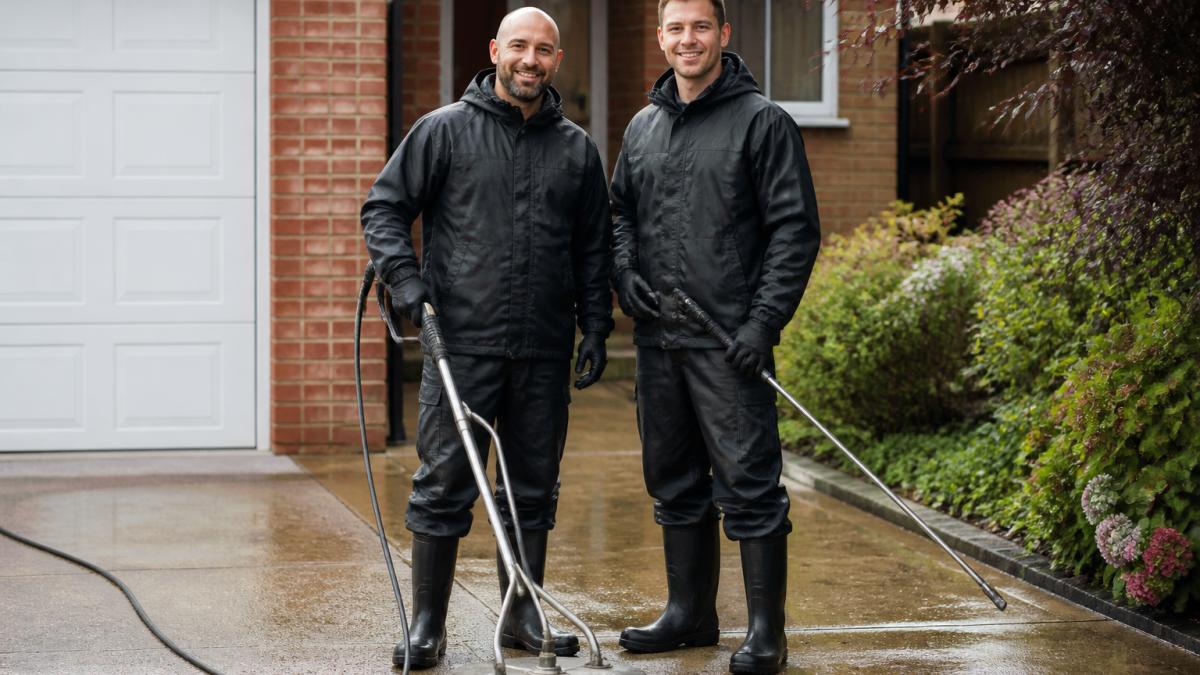
Professional cleaning services like Refresh Revive Exterior Cleaning are fully insured and trained in COSHH compliance. They select chemicals appropriate to the surface, apply them at the correct concentration, use proper safety equipment, and follow disposal protocols. Critically, they understand that certain chemicals should never be mixed, and they follow product safety data sheets without deviation.
For homeowners considering DIY cleaning, follow the product label exactly. Do not mix chemicals, do not exceed recommended concentrations, do not skip safety equipment, and do not improvise alternatives. Water runoff from chemical treatment should be managed responsibly; it should not contaminate nearby planting or drain directly into watercourses.
Environmental standards also apply. The Environmental Protection Act and related regulations govern how cleaning chemicals are used and disposed of, particularly in relation to water pollution. Professional contractors understand these requirements; DIY approaches often do not.
Professional Equipment vs DIY: What Actually Makes a Difference
The gap between professional equipment and DIY pressure washers is larger than most people realise.
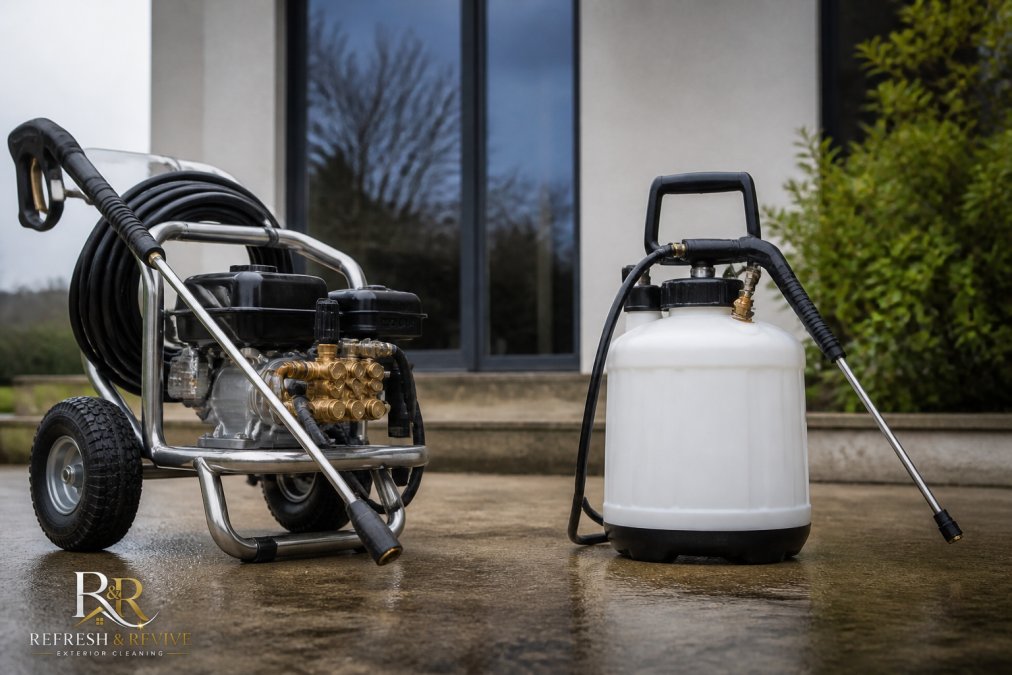
Professional high-pressure equipment includes pressure regulation, adjustable nozzles, flow-rate control, and calibrated settings for different surfaces. An operator can dial in exactly the right pressure and spray pattern for each task. DIY pressure washers, particularly rental units, often lack this precision. The pressure varies, the nozzle pattern is fixed, and operators have limited control over the actual force being applied.
For soft washing, the equipment difference is even more pronounced. Professional soft washing systems include chemical injection pumps calibrated to deliver precise concentrations, adjustable low-pressure spray heads, and integrated safety features. DIY alternatives typically lack this sophistication, making it difficult to apply treatment uniformly or at the correct strength.
Professional operators also understand surface-specific techniques. They know the pressure thresholds for different materials, the appropriate nozzle angles to avoid damage, the optimal spray distance, and the timing required for chemical treatment to work effectively. This knowledge prevents the costly mistakes that untrained operators make regularly.
For most property owners, high-value surfaces (roofs, render, natural stone) should be cleaned by professionals with appropriate equipment and expertise. For strong surfaces like modern concrete driveways with heavy soiling, a controlled approach using professional equipment is still preferable to DIY methods.
Long-Term Results: Maintenance Schedules and Regrowth Prevention
The cleaning method you choose directly determines how quickly regrowth occurs and how often you'll need to clean again.
High-pressure jet washing removes visible algae and moss, but it doesn't address the underlying conditions that allow biological growth to establish. Regrowth typically occurs within 6-12 months, particularly on north-facing surfaces or areas with poor drainage and limited sunlight.
Soft washing chemically eliminates biological growth and the conditions that support it. The biocide treatment kills organisms at their source, and the chemical residue continues to provide some protection against regrowth for several months. As a result, regrowth takes significantly longer, typically 18-24 months or more, depending on the surface and local conditions.
This difference has real financial implications. If you clean your roof with high pressure every year, you're committing to annual cleaning costs. If you use soft washing and regrowth takes two years, you've halved your long-term maintenance expense.
Professional maintenance contracts recognise this pattern. Services like Refresh Revive Exterior Cleaning offer maintenance visits timed to prevent regrowth before it becomes visible. These visits typically involve a light biocide application to surfaces showing early signs of organic growth, preventing the heavy accumulation that would require full cleaning. This preventative approach is more cost-effective than waiting for regrowth to become severe.
For commercial properties, maintenance schedules are particularly important. A professional appearance directly affects customer perception and business reputation. Regular low-pressure treatment prevents visible algae and moss that damage curb appeal, and it does so without the risk of surface damage that high-pressure cleaning introduces.
Choosing between jet washing and soft washing ultimately comes down to understanding what each method actually does and matching that to your specific surfaces and cleaning goals. High-pressure cleaning is fast and effective on strong, heavily soiled surfaces, but it causes permanent damage on delicate materials. Soft washing takes longer but protects your property whilst delivering more durable results and preventing regrowth more effectively.
If you're uncertain which method suits your property, a professional assessment is the safest choice. Refresh Revive Exterior Cleaning offers responsive no-obligation quotations and uses surface-specific cleaning methods tailored to your property's needs. Our White Glove Standard™ ensures meticulous care, full insurance protection, and before-and-after documentation so you can see exactly what's been achieved. Get in touch for a free quote and let our team recommend the method that will restore your property safely and effectively.
=== FAQ ANSWERS (audit these too, same rules) ===
[1] Q: What is the main difference between jet washing and soft washing? A: Jet washing uses high-pressure water (typically 150+ PSI) to remove dirt through mechanical force, whilst soft washing applies lower pressure (below 100 PSI) combined with chemical sanitisation to eliminate organic growth like moss and algae. Jet washing suits hard surfaces; soft washing protects delicate materials like render, roof tiles, and brickwork where high pressure risks substrate damage.
[2] Q: Is soft washing safer for roof tiles than high-pressure jet washing? A: Yes. High-pressure jet washing can strip protective granules from roof tiles, damage mortar joints, and force water under tiles. Soft washing uses low-pressure cleaning with appropriate chemical treatment to kill moss and lichen without mechanical damage. Roof cleaning methods that employ low-pressure application protect the tile integrity and extend roof lifespan.
[3] Q: Can professional soft washing remove stubborn organic growth? A: Professional soft washing is highly effective for stubborn organic growth. The chemical application kills moss, algae, and lichen at source, preventing rapid regrowth. Results depend on the biocide used and dwell time allowed. Maintenance visits after initial treatment help prevent regrowth, ensuring longer-lasting surface restoration compared to pressure washing alone.
[4] Q: Why is low-pressure cleaning recommended for render and brickwork? A: Render and brickwork are porous and vulnerable to high-pressure damage. Jet washing can force water into mortar joints, cause spalling, and damage the render finish. Low-pressure soft washing with appropriate detergents removes dirt and organic growth safely. Render cleaning services that use controlled pressure and chemical application preserve substrate integrity whilst delivering deep cleaning results.
Frequently Asked Questions
What is the main difference between jet washing and soft washing?
Jet washing uses high-pressure water (typically 150+ PSI) to remove dirt through mechanical force, whilst soft washing applies lower pressure (below 100 PSI) combined with chemical sanitisation to eliminate organic growth like moss and algae. Jet washing suits hard surfaces; soft washing protects delicate materials like render, roof tiles, and brickwork where high pressure risks substrate damage.
Is soft washing safer for roof tiles than high-pressure jet washing?
Yes. High-pressure jet washing can strip protective granules from roof tiles, damage mortar joints, and force water under tiles. Soft washing uses low-pressure cleaning with appropriate chemical treatment to kill moss and lichen without mechanical damage. Roof cleaning methods that employ low-pressure application protect the tile integrity and extend roof lifespan.
Can professional soft washing remove stubborn organic growth?
Professional soft washing is highly effective for stubborn organic growth. The chemical application kills moss, algae, and lichen at source, preventing rapid regrowth. Results depend on the biocide used and dwell time allowed. Maintenance visits after initial treatment help prevent regrowth, ensuring longer-lasting surface restoration compared to pressure washing alone.
Why is low-pressure cleaning recommended for render and brickwork?
Render and brickwork are porous and vulnerable to high-pressure damage. Jet washing can force water into mortar joints, cause spalling, and damage the render finish. Low-pressure soft washing with appropriate detergents removes dirt and organic growth safely. Render cleaning services that use controlled pressure and chemical application preserve substrate integrity whilst delivering deep cleaning results.
This article was written using GrandRanker