 comparison
Is Soft Washing Worth the Price? A 2026 Guide
Table of Contents
- What Is Soft Washing and How Does It Work?
- Soft Washing vs Pressure Washing: Pros and Cons
- How Long Does Soft Washing Last?
- How to Remove Black Mould from Render Walls
- Key Factors Influencing Soft Washing Costs
- Is Soft Washing Worth the Price? The ROI Perspective
- Safety, Environmental Responsibility, and Property Protection
- DIY Soft Washing vs Professional Services
- Conclusion: Making Your Decision on Soft Washing Worth the Price
- Frequently Asked Questions
Last Updated: August 30, 2026
What Is Soft Washing and How Does It Work?
Soft washing is a low-pressure cleaning method that uses biodegradable chemical solutions to kill organic growth at its source rather than blasting surfaces with high-pressure jets. Unlike traditional pressure washing, which relies on force to strip away dirt and debris, soft washing targets the biological cause of staining, algae spores, mould, mildew, and other microorganisms embedded in porous surfaces.
The process works in stages. A professional applies a specially formulated biocide solution to the affected surface, allowing it to dwell and break down organic contaminants at a cellular level. The chemical dwell time is critical; most treatments require 15-30 minutes for the biocide to work effectively (peer-reviewed research). Once the biological matter has been eliminated, low-pressure rinsing removes the dead organisms and residual chemical without damaging the substrate.
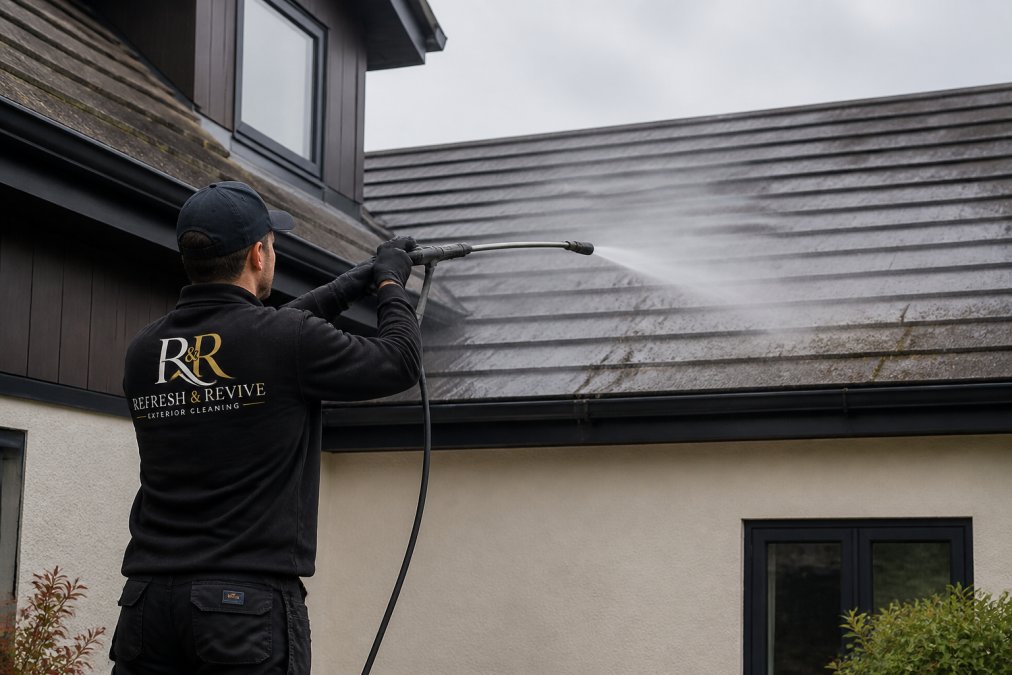
This method is particularly effective on delicate surfaces like render, roof tiles, natural stone, and newly installed cladding, materials that would suffer visible damage under high-pressure washing. Soft washing delivers what pressure washing cannot: long-term prevention. Because the treatment kills the organism rather than just removing visible staining, regrowth takes considerably longer.
At Refresh Revive Exterior Cleaning, homeowners often confuse soft washing with simple cleaning. The distinction matters. Soft washing is a restorative treatment; it addresses the root cause of deterioration rather than masking it temporarily. This is why understanding whether soft washing is worth the price requires looking beyond the immediate cost and considering the longevity of results.
Soft Washing vs Pressure Washing: Pros and Cons
The choice between soft washing and pressure washing often comes down to surface type and desired longevity. Understanding the differences helps explain why soft washing carries a different price point.
Pressure washing uses high-pressure jets (typically 3,000+ PSI) to physically remove dirt, algae, and surface contaminants. It works quickly and visibly, results are immediate. However, the force can damage delicate surfaces: it strips protective granules from roof tiles, erodes mortar between brickwork, and can force water into cavities where it causes long-term structural problems. On driveways and concrete, pressure washing can create uneven wear patterns and expose underlying aggregate.
Soft washing applies low-pressure jets (typically 500 PSI or less) combined with biocidal chemicals. Results take longer to appear, the treated surface may look unchanged immediately after application, but the biological kill is permanent. Regrowth is dramatically slower. The method is safe for render, timber cladding, natural stone, and newly laid paving where pressure would cause irreversible damage.
| Aspect | Soft Washing | Pressure Washing |
|---|---|---|
| Pressure (PSI) | 500 or less | 3,000+ |
| Surface Safety | Safe on delicate materials | Risks damage to render, stone, tiles |
| Speed of Results | 24-48 hours to full appearance | Immediate visual results |
| Longevity | 12-24 months before regrowth | 3-6 months before regrowth |
| Regrowth Prevention | Kills organism at root | Removes visible staining only |
| Best For | Render, roofs, natural stone, cladding | Concrete, hardened driveways, sealed surfaces |
| Chemical Residue | Biodegradable solutions | Water only |
Pressure washing remains useful for certain applications, heavily soiled concrete and sealed surfaces can tolerate high pressure. But for most residential properties, particularly those with render, moss-covered roofs, or newly established landscaping, soft washing delivers superior results without the risk of surface degradation.
How Long Does Soft Washing Last?
This question directly shapes whether soft washing is worth the price. The answer depends on several variables: the surface type, climate exposure, shade versus sun, and the specific biocide used.
Soft washing results typically remain visible for 12-24 months before regrowth becomes noticeable (peer-reviewed research). This is substantially longer than pressure washing alone, which usually requires repeat treatment within 3-6 months. The difference stems from how each method works: pressure washing removes the visible staining but leaves spores behind; soft washing eliminates the organism entirely, so regrowth must begin from scratch.
Surfaces in damp, shaded locations, north-facing render, roof areas overhung by trees, gutters, may show regrowth sooner, sometimes within 9-12 months. Exposed, sunny surfaces can remain clean for 18-24 months or longer. The environmental conditions that allowed the original growth (moisture, shade, airflow) determine how quickly conditions become favourable for new colonisation.
Professional soft washing services often include maintenance visits. Refresh Revive Exterior Cleaning offers preventative maintenance appointments to address early regrowth before it becomes visible. A single maintenance treatment, often shorter and less intensive than the initial clean, can extend the interval between full treatments to 24+ months. This preventative approach is where the long-term value of soft washing becomes clear.
Pressure-washed surfaces, by contrast, require repeat treatment at shorter intervals because the biological cause was never addressed. Over a five-year period, a property cleaned with pressure washing every six months requires ten treatments; the same property treated with soft washing every 18-24 months requires three to four treatments, even accounting for maintenance visits.
How to Remove Black Mould from Render Walls
Black mould and algae on render walls are among the most common complaints from homeowners. Render is porous and retains moisture, making it an ideal environment for organic growth. Understanding the proper removal method is essential for both aesthetics and structural longevity.
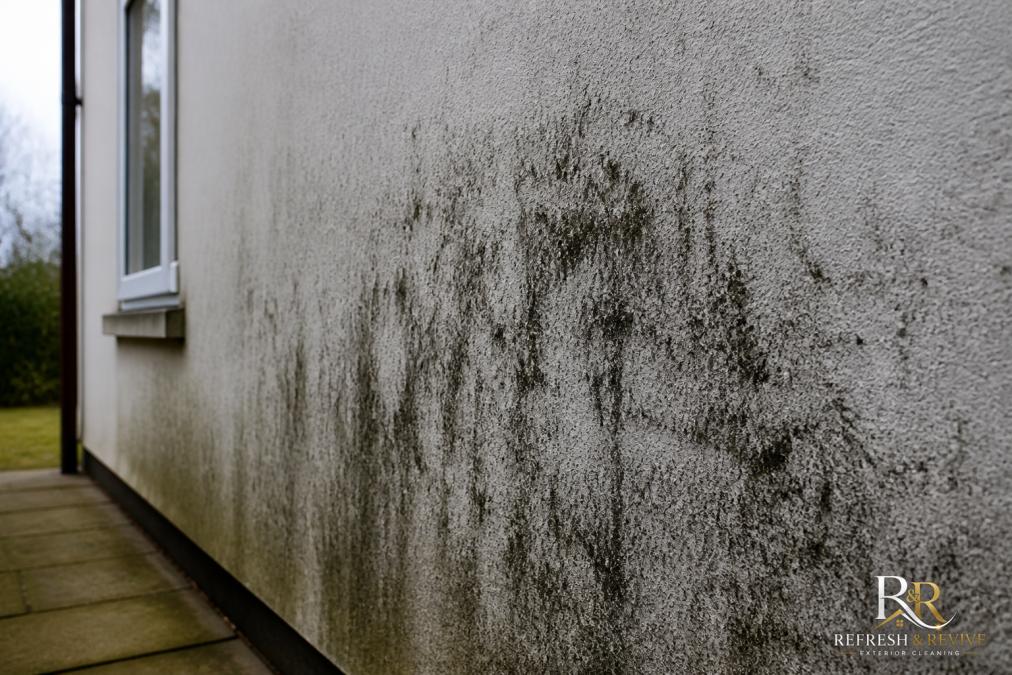
Black mould on render requires soft washing rather than pressure washing. High-pressure jets force water into the porous render substrate, potentially causing dampness issues internally and accelerating deterioration of the finish. Soft washing, by contrast, applies a biocidal solution that kills the mould organism whilst the low-pressure rinse removes the dead matter without forcing moisture deep into the material.
The process begins with a thorough assessment of the affected render. The biocide is applied at a dilution specified by the product safety data sheet, typically allowing 15-30 minutes of chemical dwell time. During this period, the active ingredient (often DDAC-based, as found in products like Benz Bio Cleanze) penetrates the biofilm and kills the mould spores at the root. Once the dwell time is complete, low-pressure rinsing removes the dead mould and residual chemical.
Render walls in shaded or north-facing positions are most susceptible to regrowth. A maintenance treatment six to nine months after the initial clean can prevent visible regrowth from reestablishing. This is significantly more cost-effective than waiting for heavy colonisation and then repeating a full treatment.
Key Factors Influencing Soft Washing Costs
The cost of soft washing varies widely depending on surface area, surface type, severity of contamination, and access. Understanding what drives the price helps determine whether soft washing is worth the investment for your specific property. More importantly, understanding these factors allows you to calculate the true cost per year over a maintenance cycle, rather than reacting to a single invoice.
Surface area is the primary cost driver. A small driveway (30-50 square metres) represents one pricing tier; a full roof or a large render-clad property another entirely. Most professional services price by the square metre, though minimum charges often apply. The key insight: a larger property may have a lower per-square-metre cost due to economies of scale, making soft washing proportionally cheaper for bigger jobs.
Surface type affects both the method and the cost. Render and natural stone require gentler handling and more expensive biocides than concrete. Roof cleaning involves scaffolding or access equipment, significantly increasing labour costs. Gutters and downpipes are priced separately, often per linear metre. Newly installed cladding or timber surfaces command premium pricing because the biocide formulation must be chosen to avoid discolouration or finish damage. This is where professional expertise justifies cost: an inexperienced operator might use a cheaper, harsher chemical that damages the surface, creating a false economy.
Contamination severity influences the chemical dilution and dwell time required. Light algae staining may need a single application; heavy mould colonisation, persistent biofilm, or lichen-covered roofs may require a stronger concentration, extended dwell time, or multiple staged treatments. This directly impacts material and labour costs. Critically, severity also determines longevity: a heavily contaminated surface treated once may regrow faster than a lightly contaminated one, affecting your maintenance schedule and long-term cost.
Access and site conditions matter considerably. A property with good vehicle access and simple ground-level surfaces costs less than one requiring scaffolding, cherry-picker hire, or specialist equipment. Delicate landscaping that requires protection or careful working around increases labour time and cost. Properties adjacent to water features, wildlife habitats, or sensitive ecosystems may require additional environmental precautions, reflected in pricing. This is not a cost to resent; it reflects responsible practice.
Geographic location and weather patterns affect both pricing and maintenance frequency. Properties in particularly damp regions, common throughout the North West, experience faster regrowth and may require more frequent maintenance visits. North-facing render, properties overhung by mature trees, or those in low-lying areas with poor drainage see biological growth return sooner than exposed, sunny properties. This means your maintenance schedule (and total five-year cost) depends partly on your property's microclimate. A contractor familiar with local conditions can advise realistic intervals; a generic quote cannot.
Professional credentials and insurance influence cost significantly. Fully insured contractors with public liability cover (typically £1-6 million), before-and-after documentation, COSHH compliance, and structured maintenance programmes charge more than uninsured operators. However, the protection is real: if an uninsured operator damages your render or causes injury on your property, you bear the liability. Professional contractors also carry equipment insurance, meaning replacement if tools are damaged during the job. This is not premium pricing; it is risk transfer, and it is worth the difference.
Calculating true cost over time is where the 'worth' question becomes clear. A property cleaned with pressure washing every six months over five years incurs ten treatments. The same property treated with soft washing every 18-24 months, with preventative maintenance visits at the 12-month mark, incurs three to four full treatments plus two to three maintenance visits. Even if a full soft wash costs more per visit than pressure washing, the cumulative cost over five years is typically lower, before accounting for repair expenses from pressure damage (repointing, render patching, tile replacement). A maintenance visit, often 30-50% of the cost of a full treatment, prevents regrowth before it becomes established, extending the interval between full treatments and reducing overall expenditure.
Is Soft Washing Worth the Price? The ROI Perspective
Determining whether soft washing is worth the price requires looking beyond the initial invoice and considering the broader financial picture: property value, maintenance intervals, and long-term surface protection.
Property value and curb appeal are the most tangible financial factors. A property with clean, well-maintained render, moss-free roof, and unblemished driveway presents significantly better than one with visible mould, algae staining, and biological growth. For homeowners considering sale or remortgage, the visual impact of soft washing directly influences perceived property condition and, therefore, valuation. A single professional soft wash often costs less than the negotiated price reduction a buyer might demand for a visibly neglected property.
Maintenance cost comparison demonstrates long-term value. A property cleaned with pressure washing every six months over five years incurs ten treatments plus potential repair costs from pressure damage (repointing, render patching, tile replacement). The same property treated with soft washing every 18-24 months incurs three to four full treatments plus preventative maintenance visits. The cumulative cost of pressure washing frequently exceeds professional soft washing, before accounting for repair expenses.
Surface longevity is where soft washing delivers genuine ROI. Render, roof tiles, and natural stone remain structurally sound and visually intact when cleaned with soft washing; these surfaces deteriorate noticeably under repeated pressure washing. Replacing damaged render or roof tiles costs hundreds to thousands of pounds. Avoiding this damage through appropriate cleaning method is a direct financial saving.
Preventative maintenance scheduling extends the interval between treatments and reduces overall expenditure. A soft-washed surface with biannual or triannual maintenance visits requires far fewer full treatments over a ten-year period than surfaces cleaned reactively only when visible contamination returns.
For most residential properties in the North West, soft washing is worth the price when evaluated over a three to five-year period. The initial cost is offset by reduced maintenance frequency, avoided damage repair, and improved property presentation. For properties with delicate surfaces, render, natural stone, or newly installed cladding, soft washing is not merely worth the price; it is the only method that protects your investment.
Safety, Environmental Responsibility, and Property Protection
Professional soft washing prioritises three critical concerns: the safety of the cleaning operatives and occupants, environmental responsibility, and protection of your property and landscaping.
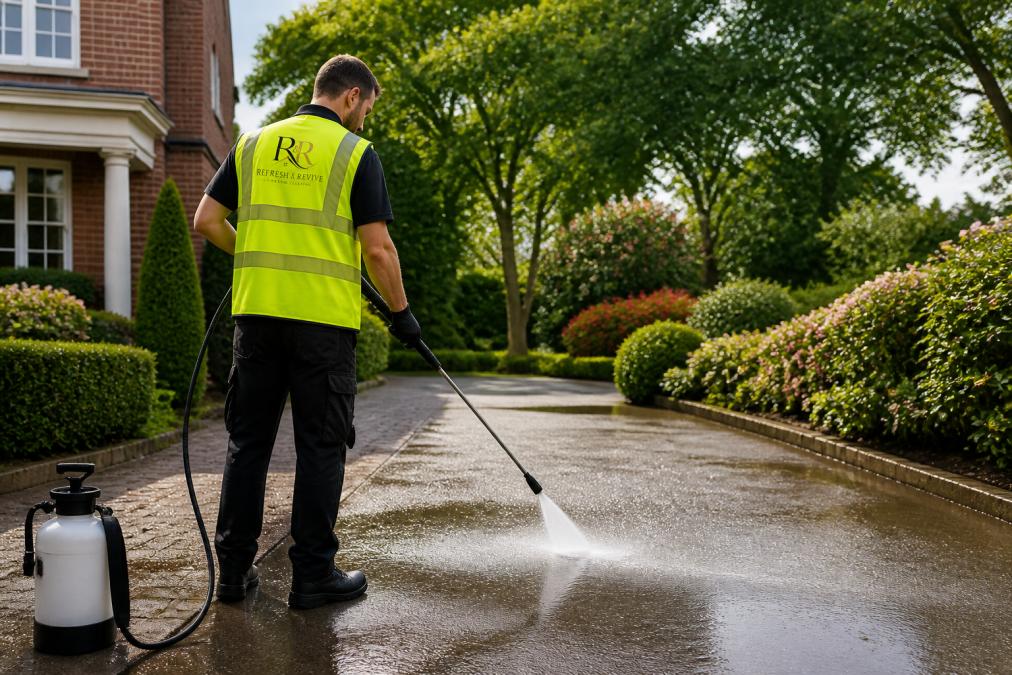
Chemical safety begins with proper handling and application. Professional-grade biocides like PureSeal BacClear Pro BAC50 (HSE licensed) and Benz Bio Cleanze are potent formulations requiring trained application. They must be diluted according to the product safety data sheet and applied in compliance with COSHH (Control of Substances Hazardous to Health) regulations. Operatives require appropriate personal protective equipment, training in chemical handling, and understanding of safe disposal procedures.
Homeowners should never attempt to use professional-grade biocides without proper training. The chemicals are significantly more concentrated than domestic products and carry real hazards if mishandled. Professional contractors carry public liability insurance specifically to protect against incidents during treatment.
Environmental responsibility is built into modern soft washing. Biodegradable biocides break down naturally in the environment without persisting in soil or waterways. Low-pressure application means minimal water use compared to pressure washing, which can consume hundreds of litres per hour. Responsible contractors ensure that runoff does not harm landscaping, pets, or wildlife.
Never mix cleaning chemicals or add improvised neutralisers after professional treatment. The interaction between different chemical formulations is unpredictable and can create hazardous compounds or damage the treated surface. Always follow the product label and safety data sheet guidance.
Property and landscaping protection is a key advantage of soft washing. Low-pressure application means water does not force its way into cavities, under render, or into newly laid paving. Delicate plants and newly established lawns are not damaged by the force of high-pressure jets. Refresh Revive Exterior Cleaning's commitment to protecting "your property, planting, and lawns" reflects this principle: the cleaning method should enhance, not compromise, your entire property.
DIY Soft Washing vs Professional Services
The temptation to save money by undertaking soft washing yourself is understandable. However, the practical, financial, and safety considerations often make professional services the better choice, particularly when you factor in the cost of failure and the maintenance implications of incomplete treatment.
DIY soft washing challenges begin with equipment and chemical access. Consumer-grade biocides are significantly weaker than professional formulations, requiring longer dwell times and multiple applications to achieve results. Renting or purchasing soft wash equipment (pump, tank, metering valve, low-pressure nozzles) represents a substantial upfront cost. Most homeowners use this equipment once or twice, making the per-job cost actually higher than professional service. Add the cost of hiring a skip for chemical disposal, and the financial case for DIY weakens further.
Chemical safety and regulatory compliance are serious concerns that many DIY enthusiasts underestimate. Professional biocides require proper dilution according to the product safety data sheet, handling in compliance with COSHH (Control of Substances Hazardous to Health) regulations, and safe disposal procedures. Incorrect mixing can create ineffective or hazardous solutions. A single mistake, chemical splash to skin or eyes, inhalation of vapour, or improper disposal into drains or soil, can cause injury or environmental harm. Professional contractors carry public liability insurance specifically to protect against such incidents; you do not.
Moreover, if you misapply a professional-grade biocide and damage your render, stone, or newly installed cladding, you have no recourse. A professional contractor's insurance covers such damage. You would bear the repair cost entirely.
Access and technique pose practical problems that are easy to underestimate. Reaching roof areas safely requires scaffolding or access equipment. Applying chemical evenly across large surfaces requires experience; uneven application results in patchy cleaning where some areas regrow quickly whilst others remain clean. Pressure control during the rinse phase is critical: too much pressure damages the surface and forces moisture into cavities; too little leaves residual chemical and biofilm, reducing longevity and requiring repeat treatment sooner.
The hidden cost of incomplete treatment: maintenance schedule impact. This is where DIY soft washing often fails financially. If your DIY treatment does not kill the organism completely, because the dwell time was too short, the chemical concentration was too weak, or the application was uneven, regrowth begins within weeks rather than months. You then face a choice: repeat the DIY process (incurring equipment rental and chemical costs again) or call a professional to remediate the incomplete work. Either way, you have spent money twice.
A professionally treated surface with proper biocide concentration and adequate dwell time remains clean for 12-24 months. A DIY-treated surface that regrows within 6-8 weeks has cost you money and time with no lasting benefit. Over a five-year period, this compounds: multiple failed DIY attempts plus eventual professional intervention often costs more than professional treatment from the outset.
Warranty and insurance implications. Many roof and siding warranties require that cleaning be performed by certified professionals using approved methods. If you soft wash your roof yourself and subsequently develop a leak, the warranty may be void because the cleaning was not performed to specification. Professional contractors can provide documentation proving that treatment was carried out to the manufacturer's standard, protecting your warranty. This is particularly important for newer properties or those with extended manufacturer guarantees.
Professional soft washing services eliminate these complications. Contractors carry insurance covering both operatives and your property. They have access to professional-grade biocides, proper equipment, and trained personnel. Before-and-after documentation provides evidence of results and protects your warranty. Maintenance scheduling prevents regrowth before it becomes visible, extending the interval between full treatments and reducing your long-term cost.
Refresh Revive Exterior Cleaning offers no-obligation quotations and responsive service with one working day turnaround. The White Glove Standard™ ensures surface-specific methods tailored to your property's needs, with full insurance and documented results. For most homeowners, particularly those with valuable surfaces or extensive areas requiring treatment, professional service delivers better results, greater safety, and genuine long-term value.
When DIY might be appropriate. For small, low-risk areas, a small patio corner with light algae, a garden fence with early moss growth, consumer-grade cleaning products applied carefully may be reasonable. For anything more substantial (roof cleaning, render walls, extensive driveways, or properties with delicate surfaces), professional soft washing is the appropriate choice. The difference in cost is typically offset by the difference in results, longevity, and risk avoidance.
Conclusion: Making Your Decision on Soft Washing Worth the Price
Whether soft washing is worth the price depends on your property's condition, surface types, and timeline. For most residential properties in the North West, the answer is yes, particularly when evaluated over three to five years.
Soft washing delivers superior longevity compared to pressure washing, protects delicate surfaces from damage, and prevents regrowth more effectively than any alternative method. The initial cost is offset by reduced maintenance frequency, avoided repair expenses, and improved property presentation.
Professional soft washing is not a luxury; it is the appropriate method for protecting your property's exterior. The difference between a competent contractor and an uninsured operator is substantial, insurance, training, proper equipment, and documented results matter.
If you're ready to restore your property's exterior with methods designed to protect your investment, Refresh Revive Exterior Cleaning provides fully insured, surface-specific soft washing across the North West. Our White Glove Standard™ ensures meticulous treatment tailored to your surfaces, from delicate render to moss-covered roofs, with maintenance visits available to prevent regrowth. Request a no-obligation quotation today and see how professional soft washing can transform your property whilst safeguarding your landscaping and lawns.
Frequently Asked Questions
Q: Is soft washing worth the money compared to pressure washing?
Soft washing costs more upfront but delivers superior long-term value. Pressure washing removes surface dirt quickly but can damage render, roof tiles, and driveway surfaces, leading to costly repairs. Soft washing uses low-pressure application with biodegradable biocides to kill organic growth at the root, preventing regrowth for longer periods. For properties with delicate surfaces or where you want lasting results without structural damage, soft washing's higher initial cost is offset by reduced maintenance frequency and avoided repair bills.
Q: How long does a professional soft wash treatment typically last?
Professional soft washing results typically last 12 to 24 months, depending on climate, surface type, and exposure to moisture. Roofs and shaded areas prone to organic growth may require treatment every 12-18 months, whilst driveways in drier locations may last closer to two years. The longevity stems from the biocide's ability to kill algae and mould spores at the root rather than just scrubbing the surface. Regular maintenance visits help extend results and prevent regrowth before it becomes visible.
Q: Does soft washing damage roof tiles or render?
No. Soft washing is specifically designed to protect structural integrity. Unlike high-pressure methods that can strip protective granules from roof tiles or crack render, soft washing uses low-pressure application combined with biodegradable cleaning agents. The chemical dwell time allows the biocide to break down organic biofilm without mechanical force. This method preserves surface degradation risk and maintains the longevity of your exterior materials, making it the safer choice for older properties or delicate finishes.
Q: Is soft washing safe for plants and garden areas?
Yes, when performed by professionals following proper COSHH controls. Professional soft washing services protect surrounding planting and lawns through careful application techniques and biodegradable solutions. The low-pressure delivery prevents damage to delicate plants, and modern biocides break down naturally without leaving harmful residue. Always ensure your service provider uses professional-grade, biodegradable cleaning agents and applies appropriate downstream system management to prevent chemical runoff into planted areas.
Q: What makes soft washing worth the price for my property?
Soft washing justifies its cost through four key factors: surface protection (avoiding expensive structural repairs), longevity (fewer treatments needed annually), kerb appeal (restoring brilliance for resale value), and preventative maintenance (stopping organic growth before it causes permanent damage). For residential properties, the investment protects your largest asset. For commercial premises, it maintains professional appearance and customer confidence. Calculate your ROI by comparing the cost of professional soft washing against the expense of pressure-washing damage repairs and more frequent DIY cleaning.
This article was written using GrandRanker