 listicle
Best Exterior Cleaning for Delicate Surfaces (2026 Guide)
Table of Contents
- Why Delicate Surfaces Need a Different Cleaning Approach
- The Best Exterior Cleaning Methods for Delicate Surfaces
- Soft Washing vs Pressure Washing: Which Is Safer?
- Choosing the Right Products for Your Surface Type
- Why Render Cleaning in Bolton Requires Specialist Care
- COSHH Exterior Cleaning Safety: What to Look For
- How to Prevent Damage and Protect Your Landscaping
- Conclusion: Secure a Safe Clean for Your Property
- Frequently Asked Questions
Last Updated: September 6, 2026
Why Delicate Surfaces Need a Different Cleaning Approach
When you search for the best exterior cleaning for delicate surfaces, the answer is rarely a high-pressure jet. Modern building materials such as insulated render, aged brick, and concrete roof tiles are surprisingly fragile. A pressure washer set too high can strip the protective finish from roofing granules or carve channels into soft masonry, turning a routine clean into an expensive repair.
The risk is real for many homeowners across Bolton and Lancashire who have watched a "quick jet wash" cause lasting damage. The core principle is simple: match the cleaning method to the material, not the other way around. At Refresh Revive Exterior Cleaning, we assess every surface before applying any treatment, because what works on a concrete driveway can ruin a painted facade.
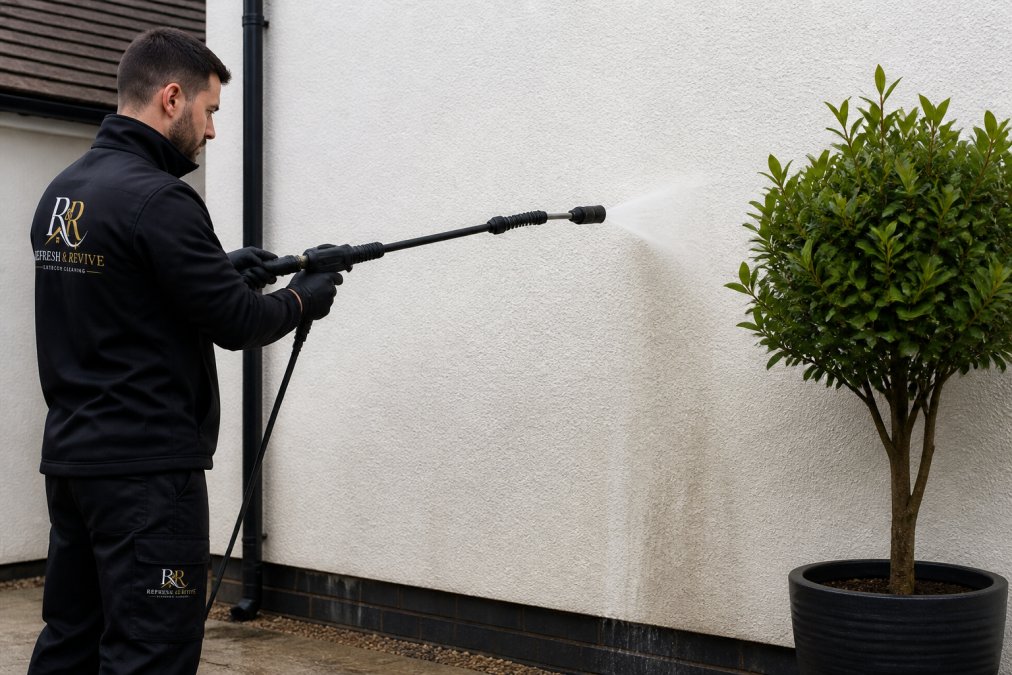
The Best Exterior Cleaning Methods for Delicate Surfaces
Choosing the right approach depends on the surface condition and what it is made of. Three methods dominate professional practice: soft washing, low-pressure washing, and hand cleaning. Each has a purpose, and none rely on brute force to shift organic growth.
Soft Washing: The Gentle Standard for Render and Roofs
Soft washing is the safest method for delicate surfaces because it uses low pressure combined with specialist solutions to kill algae, moss, and lichen at the root (peer-reviewed research). The biocide does the work, not the water pressure. This makes it ideal for modern render, which can be permanently scarred by concentrated jets. The process is methodical and slower than pressure washing, but the results last considerably longer.
Low-Pressure Washing for Masonry and Driveways
For harder surfaces like block paving and some masonry, low-pressure washing offers a middle ground. It uses enough force to dislodge ingrained grime without risking the surface profile. However, it still requires skill to avoid disturbing pointing or forcing water behind cladding. A common mistake is assuming that any pressure setting under full power is automatically safe, which is not true when a lance is held too close to the material.
Hand Cleaning for the Most Vulnerable Areas
Some areas should not be touched by a lance at all. Delicate stonework, painted timber, and historic brickwork often need hand cleaning with soft brushes and approved solutions. This is labour-intensive but prevents the etching and surface loss that pressure creates. It is also the method of choice for cleaning around windows, vents, and other fixtures where overspray could cause damage.
Soft Washing vs Pressure Washing: Which Is Safer?
The debate between soft washing vs pressure washing comes down to one factor: surface integrity. Pressure washing relies on kinetic energy to blast dirt away, which is effective on strong surfaces but inherently risky on delicate ones. Soft washing, by contrast, prioritises chemical action at low pressure, protecting the substrate while removing biological growth effectively.
| Method | Best For | Pressure Level | Key Risk |
|---|---|---|---|
| Soft Washing | Render, roof tiles, painted surfaces | Low | Requires correct biocide use |
| Pressure Washing | Concrete, block paving | High | Etching, granule loss, water ingress |
| Hand Cleaning | Stone, timber, historic brick | None | Time and labour cost |
For most residential properties in the North West, soft washing is the safer default. The climate, with its frequent rain and shaded aspects, encourages moss and algae growth that responds well to treatment. Pressure washing often removes the visible growth but leaves the roots behind, meaning regrowth appears within weeks rather than seasons.
Choosing the Right Products for Your Surface Type
Product selection matters as much as the method. Household cleaners are rarely suitable for exterior biological growth. Professional-grade solutions are formulated for specific substrates and must be applied according to the manufacturer's instructions and safety data sheet. Never mix cleaning chemicals, and avoid improvised solutions like vinegar or bicarbonate of soda (poison.org).
For light-duty tasks on non-porous fixtures, plant-based sprays can offer a safe option for routine maintenance, though they are not designed for heavy organic growth. The critical rule is to match the chemistry to the surface: an alkaline cleaner suited to one material may stain or react with another.
Why Render Cleaning in Bolton Requires Specialist Care
Render cleaning Bolton homeowners arrange often fails because the wrong technique is used. Modern silicone and monocouche renders are porous and easily damaged by high pressure, which can cause hairline cracks that allow moisture ingress. Over time, this leads to damp issues inside the property that are far costlier to fix than the original clean.
A professional render clean uses soft washing with a biocide matched to the render type. The technician adjusts the pressure to the minimum required and rinses gently to avoid forcing water into the substrate. If you are searching for render cleaning near me, look for a company that demonstrates surface-specific knowledge rather than offering a one-size-fits-all jet wash.
COSHH Exterior Cleaning Safety: What to Look For
COSHH exterior cleaning safety is a legal requirement, not an optional extra. The Control of Substances Hazardous to Health Regulations 2002 require any business using cleaning chemicals to assess the risks and protect both staff and the public (hse.gov.uk). When you hire a cleaning company, they should be able to explain how they handle, apply, and dispose of the biocides they use.
This matters for your property too. A reputable contractor will protect your planting and lawns from chemical overspray and will know which solutions are safe near water features or drains. If a company cannot discuss COSHH assessments or uses unlabelled chemicals from unmarked containers, that is a clear warning sign.
How to Prevent Damage and Protect Your Landscaping
The best exterior cleaning for delicate surfaces also protects everything around them. Before any work begins, vulnerable plants should be covered or thoroughly watered beforehand to create a barrier. The contractor should also check for loose pointing, cracks, and areas where water could penetrate and cause hidden damage.
Regrowth prevention is where professional treatment differs from a DIY jet wash. A quality biocide treatment kills the root structure of moss and algae, and a maintenance visit can keep surfaces clear. This is why the cheapest quote is rarely the most cost-effective: a temporary clean that leaves roots intact simply delays the problem.
Conclusion: Secure a Safe Clean for Your Property
Delicate surfaces demand a meticulous approach that prioritises long-term protection over quick results. The best exterior cleaning for delicate surfaces combines low-pressure methods, correct chemical selection, and the experience to know when not to use a jet washer at all.
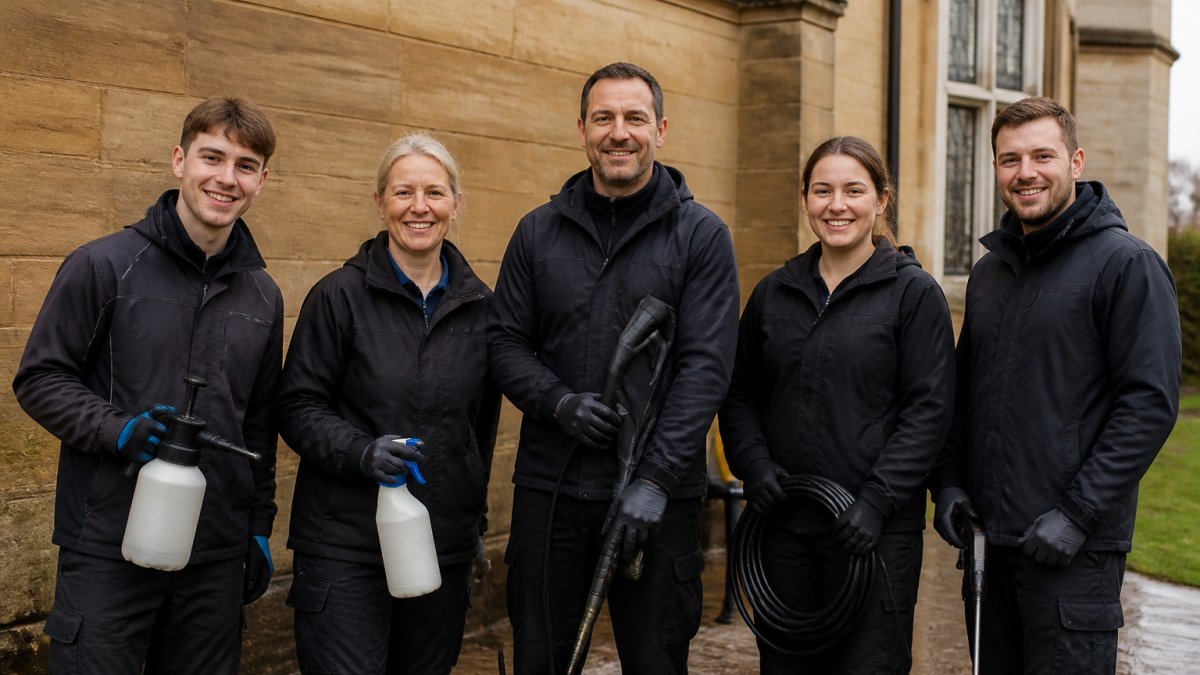
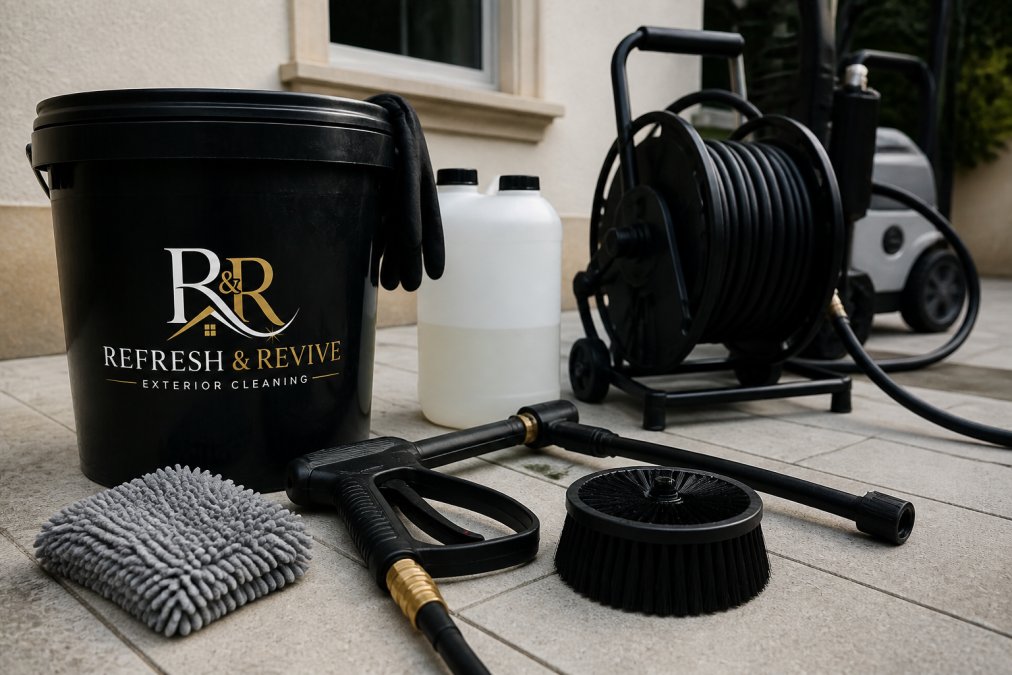
Refresh Revive Exterior Cleaning brings this care to every property across Bolton and Lancashire. Our White Glove Standard™ uses surface-specific, low-pressure methods that protect your render, roofs, and driveways while safeguarding your planting and lawns. We are fully insured, document our work with before and after photos, and offer maintenance visits to prevent regrowth. Request a free quote and see the difference a considered clean makes.
Frequently Asked Questions
What is the safest way to clean delicate exterior surfaces?
The safest method is soft washing, which combines low-pressure water with specialist biodegradable cleaning solutions. Unlike pressure washing, which forces water into the surface at high PSI, soft washing gently removes algae, moss, and grime without damaging render, roof tiles, or brickwork. For the most vulnerable areas, hand cleaning may be recommended. Always choose a professional who tailors the method to the surface and follows product safety guidelines.
Is pressure washing safe for render and roof tiles?
No, standard high-pressure washing is generally unsafe for render and many roof tiles. The intense water pressure can scour the surface, remove protective finishes, and force moisture into the structure, leading to cracks and damp issues. For these materials, soft washing or low-pressure washing is the appropriate technique. A professional service will assess the condition of your render or roof before starting to select the safest method.
What is soft washing and why is it better for delicate surfaces?
Soft washing is a cleaning technique that uses specialised, low-pressure equipment to apply biodegradable cleaning solutions to exterior surfaces. The solutions break down organic growth like algae, moss, and mildew at the root, allowing it to be rinsed away gently. It is better for delicate surfaces because the low pressure prevents the physical damage that jet washing can cause, while the solutions provide longer-lasting results by inhibiting regrowth.
How often should I have delicate exterior surfaces cleaned?
The frequency depends on your property's location, surrounding foliage, and weather exposure. In the damp climate of the North West, algae and moss can reappear quickly. Many homeowners schedule a professional clean every 1 to 2 years, while some opt for annual maintenance visits to manage regrowth effectively. A professional can assess your property and recommend a schedule that keeps surfaces looking their best without unnecessary treatment.
Are professional exterior cleaning services insured in the UK?
A reputable professional exterior cleaning company should be fully insured, which protects both their staff and your property during the work. When requesting a quote, you should ask for proof of insurance. This is a key part of ensuring you are hiring a responsible contractor who follows industry best practices and safety standards, giving you peace of mind before work begins.