 listicle
7 Signs Your Commercial Building Needs Exterior Cleaning
Table of Contents
- 1. Visible Algae, Moss, and Biological Growth on Walls and Surfaces
- 2. Discoloured or Stained Gutters and Downpipes
- 3. Roof Moss and Debris Accumulation
- 4. Dirty Windows and Conservatory Panels Affecting Natural Light
- 5. Oil Stains, Rust, and Chemical Marks on Driveways and Car Parks
- 6. Render Deterioration and Brick Discolouration
- 7. Graffiti or Persistent Staining That Affects Your Brand Image
- Pressure Washing vs Soft Washing: Choosing the Right Method
- Commercial Gutter Clearing Frequency and Maintenance Schedules
- Professional Commercial Exterior Cleaning in Bolton
- Frequently Asked Questions
Last Updated: September 21, 2026
7 Signs Your Commercial Building Needs Exterior Cleaning
Understanding 7 signs your commercial building needs exterior cleaning helps you protect your property and maintain a professional image, because a commercial building's exterior is the first thing clients, customers, and employees notice. When that exterior shows signs of neglect, it sends an unintended message about your business. At Refresh Revive Exterior Cleaning, we've identified the seven most telling signs that your building is overdue for professional exterior cleaning. These aren't just cosmetic issues, they're signals that your property needs attention before minor problems become costly damage.
The seven signs your commercial building needs exterior cleaning fall into three categories: biological growth and staining, structural deterioration, and image-damaging marks. Understanding each one helps you make informed decisions about maintenance schedules and cleaning methods. Below, we'll walk through each sign, explain why it matters, and show you what professional cleaning can achieve.
1. Visible Algae, Moss, and Biological Growth on Walls and Surfaces
Algae and moss growth on exterior walls is one of the earliest warning signs that your building needs cleaning. This biological growth thrives in damp conditions and shaded areas, particularly common on north-facing walls or surfaces near gutters that aren't draining properly.
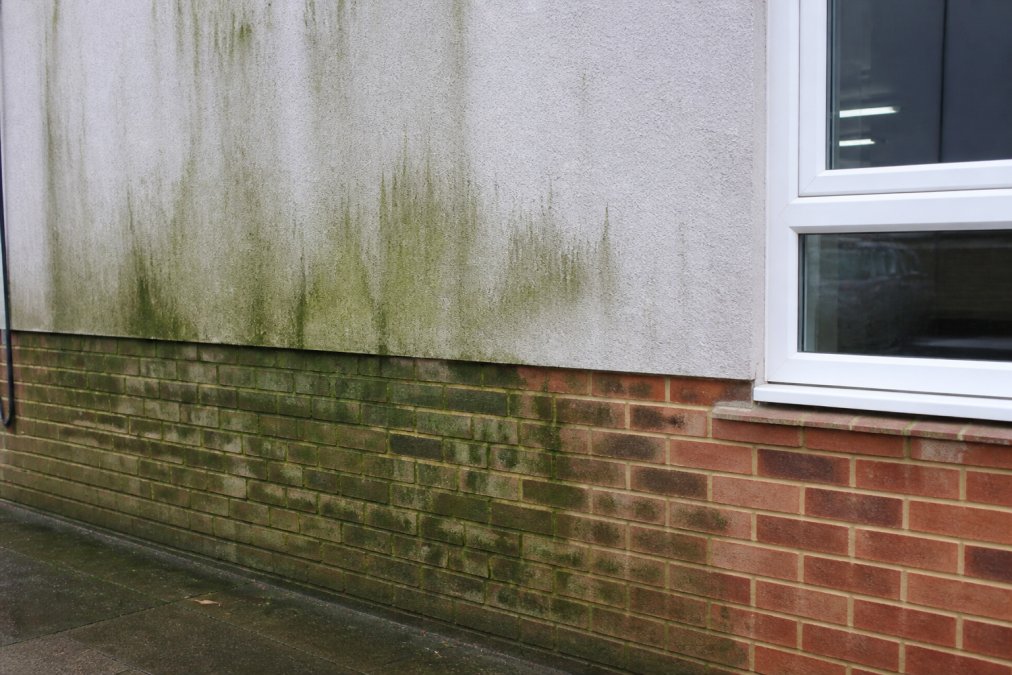
The problem isn't just aesthetic. Moss and algae retain moisture against your building's surface, which accelerates deterioration of brick, render, and stone. Left untreated, this biological growth can penetrate mortar joints and cause structural damage that's expensive to repair. For commercial properties, this visible growth also undermines your professional image, it suggests poor maintenance and can deter customers or business partners.
Soft washing is the ideal method for removing algae and moss without damaging the underlying surface. Unlike high-pressure washing, which can strip protective coatings and force water into mortar joints, soft washing uses a controlled low-pressure application combined with specialist biocides that kill the growth at its source. This approach prevents rapid regrowth and protects your building's integrity. Professional cleaning can include a preventative treatment that slows future biological growth, extending the time between cleaning visits.
2. Discoloured or Stained Gutters and Downpipes
Gutters and downpipes that appear discoloured, stained, or clogged with debris are a clear sign that your building's drainage system needs professional attention. Over time, gutters accumulate leaves, twigs, dirt, and organic matter that blocks water flow and causes staining.
Stained gutters indicate several problems. First, blocked gutters force water to overflow, which can damage fascia boards, soffit, and the building's exterior walls. Second, standing water in gutters attracts algae and becomes a breeding ground for moss. Third, the weight of accumulated debris can damage gutter brackets and cause sagging. For commercial buildings with multiple storeys, this damage becomes visible from ground level and affects your property's kerb appeal.
Professional gutter clearing uses high-reach vacuum systems and camera inspection to remove debris safely without climbing ladders or using scaffolding. This method is particularly valuable for commercial properties, where health and safety regulations (such as the Work at Height Regulations 2005) require that work be performed safely and by competent personnel. After clearing, gutters are cleaned to remove algae stains and improve water flow. A maintenance schedule can prevent blockages and keep gutters functioning properly.
3. Roof Moss and Debris Accumulation
Moss and debris on your roof is a sign that your building needs professional cleaning, and it's one of the most serious warning signs. Roof moss thrives in damp, shaded conditions and can accumulate rapidly on commercial buildings with large roof areas or complex roof designs.
Roof moss causes real damage. It traps moisture against roof tiles or shingles, accelerating deterioration of the protective granules on asphalt shingles or the surface of clay tiles. This moisture penetration can lead to leaks, wood rot, and structural damage inside your building. Debris accumulation, leaves, twigs, and dirt, blocks drainage and creates conditions for further moss growth. Unlike walls, where moss is primarily a cosmetic issue, roof moss is a structural concern that can become expensive to address if left untreated.
The critical point here is method. High-pressure roof washing is often recommended but can cause serious damage. It strips protective granules from shingles, dislodges tiles, and forces water under roof coverings where it causes leaks and rot. Professional roof moss removal uses controlled low-pressure soft washing combined with specialist treatments that kill moss at its source. This approach removes the biological growth without damaging the roof structure. For commercial buildings with slate, clay tiles, or other delicate roof materials, this careful method is essential.
After cleaning, a preventative treatment can slow moss regrowth. This approach protects your roof investment and prevents costly repairs.
4. Dirty Windows and Conservatory Panels Affecting Natural Light
Windows and conservatory panels that are visibly dirty reduce natural light inside your building and create a poor impression for visitors and staff. For commercial properties, dirty windows suggest neglect and can affect employee morale and customer perception.
Beyond appearance, dirty windows are a practical problem. Accumulated dirt, bird droppings, and algae reduce light transmission, which increases your reliance on artificial lighting and raises energy costs. On conservatory panels, dirt accumulation can trap moisture and promote algae growth, which eventually damages the panel material and seals.
Pure water window cleaning is the professional approach for commercial buildings. This method uses purified water applied at low pressure, which removes dirt without leaving mineral deposits or streaks. For conservatory panels and skylights, pure water cleaning is particularly effective because it reaches high areas safely and leaves a crystal-clear finish. Professional cleaning can include frames and sills, which collect dirt and algae and detract from the overall appearance.
For commercial properties, regular window cleaning maintains a professional appearance and supports staff well-being by maximising natural light indoors.
5. Oil Stains, Rust, and Chemical Marks on Driveways and Car Parks
Oil stains, rust marks, and chemical residues on driveways and car parks are immediate signals that your commercial property needs professional cleaning. These marks are particularly visible on light-coloured concrete or asphalt and suggest poor maintenance.
Oil stains are especially problematic because they're difficult to remove with standard pressure washing. High-pressure washing alone often fails to penetrate the stain, leaving residue that reappears after the surface dries. Rust stains from metal fixtures, plant containers, or vehicle parts are similarly stubborn and require specialist treatment. Chemical marks, from de-icer, fertiliser, or spilled substances, can etch or discolour concrete and asphalt if left untreated.
Professional treatment combines hot water pressure washing with specialist degreasers and rust treatments. Hot water is essential for breaking down oils and greases; it's more effective than cold water and reduces the pressure needed, which minimises damage to the underlying surface. Rust treatment involves applying a specialist product that chemically converts rust and prevents it from returning. For stubborn chemical marks, specialist cleaners are applied to dissolve the residue before rinsing.
6. Render Deterioration and Brick Discolouration
Render deterioration and brick discolouration indicate that your commercial building's exterior is weathering and needs professional attention. Render, the protective coating on brick or block walls, can become stained, discoloured, or damaged by weather, algae growth, and pollution.
Brick discolouration is often caused by algae, moss, or mineral deposits that accumulate over time. While these marks don't necessarily indicate structural damage, they significantly affect your building's appearance and suggest poor maintenance. For commercial properties, this visual deterioration can undermine client confidence and affect your brand image.
Soft washing is the appropriate method for render and brick cleaning. High-pressure washing can damage render, causing it to crack, crumble, or separate from the underlying wall. Soft washing uses low pressure combined with specialist cleaning solutions that dissolve algae, moss, and mineral deposits without damaging the surface. After cleaning, a protective sealant can be applied to render, which helps prevent future staining.
For brick, soft washing removes discolouration and restores the original colour of the masonry. This approach is particularly important for heritage or listed commercial buildings, where high-pressure methods could cause irreversible damage.
7. Graffiti or Persistent Staining That Affects Your Brand Image
Graffiti and persistent staining are serious concerns for commercial property managers. Graffiti is not just unsightly, it signals that your building is neglected and can attract further vandalism. Persistent staining from weathering, pollution, or previous damage undermines your professional image and suggests poor property care.
Graffiti removal requires specialist knowledge. The wrong approach can damage the underlying surface or drive the stain deeper. Professional graffiti removal uses methods matched to the surface material and the type of graffiti. For painted surfaces, specialist solvents dissolve paint-based graffiti without damaging the underlying finish. For brick or stone, low-pressure washing combined with specialist graffiti removers lifts the mark without etching or discolouring the surface.
Persistent staining, from previous water damage, rust, or weathering, often requires a combination of methods. Hot water pressure washing removes surface stains, whilst specialist treatments address underlying discolouration. For commercial buildings, addressing graffiti and staining promptly prevents further deterioration and maintains your professional image.
After removal, a protective sealant can be applied to vulnerable surfaces, which makes future graffiti removal easier.
Pressure Washing vs Soft Washing: Choosing the Right Method
The difference between pressure washing and soft washing is fundamental, and choosing the right method is essential for protecting your commercial building.
Pressure washing uses high-pressure water jets to remove dirt, algae, and stains. It's effective for removing loose debris, heavy soiling, and stubborn marks on strong surfaces like concrete and asphalt. However, high-pressure washing can damage delicate surfaces, render, brick, stone, and wood, by stripping protective coatings, crumbling mortar, and forcing water into structural joints where it causes damage and leaks.
Soft washing uses low-pressure water combined with specialist cleaning solutions that dissolve biological growth and stains chemically, rather than blasting them away physically. This approach is gentler on surfaces and is the appropriate method for render, brick, stone, and any surface where high pressure could cause damage. Soft washing is also more effective at preventing regrowth because the specialist solutions kill algae and moss at their source, rather than simply removing visible growth.
For commercial buildings, the choice between pressure washing and soft washing depends on the surface and the type of soiling:
| Surface Type | Ideal Method | Why |
|---|---|---|
| Concrete, asphalt | Pressure washing or hot water | Strong surfaces tolerate pressure; hot water improves effectiveness |
| Render, brick, stone | Soft washing | Low pressure protects surface integrity; chemical treatment prevents regrowth |
| Gutters, fascia, soffit | Soft washing or specialist vacuum | Delicate materials require gentle handling; vacuum systems avoid pressure damage |
| Roof tiles, shingles | Soft washing only | High pressure strips protective granules and damages roof structure |
| Windows, conservatory panels | Pure water cleaning | Low pressure; purified water prevents mineral deposits |
Professional cleaning companies assess each surface and recommend the appropriate method. This surface-specific approach protects your building whilst delivering superior results.
Commercial Gutter Clearing Frequency and Maintenance Schedules
For commercial buildings, establishing a gutter clearing and maintenance schedule is essential for preventing water damage and protecting your property investment.
Most commercial properties benefit from professional gutter clearing. This frequency prevents blockages, ensures proper water drainage, and allows early detection of damage to gutters, fascia, and soffit.
However, the ideal frequency depends on several factors. Buildings surrounded by trees require more frequent clearing because they accumulate more leaf debris. Properties in areas with high rainfall or high pollution may need more frequent cleaning to prevent algae and moss growth. Commercial buildings with complex roof designs or multiple roof levels may require more frequent inspection to ensure all gutters are draining properly.
Professional gutter clearing includes several steps. High-reach vacuum systems remove debris safely without climbing or scaffolding. Camera inspection allows technicians to identify blockages, damage, and areas where debris is accumulating. After clearing, gutters are cleaned to remove algae stains and improve water flow. Downpipes are flushed to ensure clear drainage. If damage is identified, cracked gutters, loose brackets, or separated joints, this is documented.
A maintenance contract with a professional cleaning company ensures regular clearing on a schedule that suits your property. This approach prevents emergency call-outs for water damage and extends the life of your gutters and roof.
Professional Commercial Exterior Cleaning in Bolton
For commercial property managers and business owners across Bolton, Greater Manchester, and Lancashire, professional exterior cleaning is an investment in protecting your building and maintaining your professional image.
Refresh Revive Exterior Cleaning specialises in commercial exterior cleaning for facilities managers, property managers, hotels, care homes, offices, retail spaces, construction sites, schools, and commercial property owners. Our team understands the specific challenges of commercial properties: the need for minimal disruption to business operations, compliance with health and safety regulations, and the importance of professional results that reflect well on your organisation.
Our approach combines expertise in surface-specific cleaning methods with commercial-grade equipment and professional standards. We use high-reach gutter vacuum systems with integrated camera inspection to clear gutters safely and identify potential issues before they become expensive problems. Our controlled soft washing methods protect delicate surfaces whilst delivering superior results. For oil and rust stains, we use hot water pressure washing combined with specialist treatments. For graffiti and persistent staining, we apply methods matched to the surface material and the type of mark.
Crucially, we operate to commercial standards. Our team is trained in health and safety compliance, including the Work at Height Regulations 2005 and COSHH (Control of Substances Hazardous to Health) requirements. We're fully insured, which protects your property and your business. We provide no-obligation quotations and can arrange maintenance visits on a schedule that suits your property and your budget.
The difference between professional cleaning and standard pressure washing becomes obvious when you see the results. Surfaces that look permanently stained are restored to their original appearance. Biological growth is removed and prevented from returning quickly. Your building looks professionally maintained, which reflects well on your business and reassures clients and employees that you take property care seriously.
If your commercial building is showing any of these seven signs, professional cleaning can restore your property and prevent costly damage. Refresh Revive Exterior Cleaning provides free quotations and can assess your building's specific needs. Send photographs of the areas you're concerned about, or request a site visit to discuss your cleaning requirements. We serve commercial properties across Bolton, Bury, Wigan, Chorley, Horwich, and wider Greater Manchester, Lancashire, and Cheshire. Get in touch through refreshrevivecleaning.co.uk to arrange your free quote and discover how professional exterior cleaning can protect and restore your commercial building.
Frequently Asked Questions
How often should commercial buildings have their exterior cleaned?
Commercial exterior cleaning frequency depends on your building's location, surface type, and exposure to weather. Most commercial properties benefit from annual deep cleaning, with gutter clearing every 6-12 months depending on local tree coverage and debris accumulation. High-traffic car parks and driveways may need more frequent attention. A professional assessment identifies the right maintenance schedule for your specific property.
What is the difference between pressure washing and soft washing for commercial buildings?
Pressure washing uses high-pressure water jets (typically 150+ bar) to blast away stubborn grime, ideal for concrete driveways and oil stains. Soft washing applies lower pressure with specialist treatments to remove algae and moss without damaging delicate surfaces like render, brick, or roof tiles. The right method depends on your surface; high pressure on render or aged brickwork can cause permanent damage. Professional assessment ensures the correct technique is used.
Why is commercial gutter clearing important for my building?
Clogged gutters prevent water drainage, leading to overflow that damages fascias, soffits, and building foundations. Blocked gutters also create an environment for moss and algae growth, which can spread to your roof and walls. Regular clearing, ideally twice yearly, prevents costly structural damage and maintains your building's exterior integrity. Using high-reach vacuum systems with camera inspection ensures thorough, safe clearing without access equipment.
Can professional exterior cleaning actually improve my commercial property's appearance and value?
Yes. A clean, well-maintained exterior significantly improves first impressions for clients, customers, and employees. Regular professional cleaning prevents permanent staining, algae growth, and surface deterioration that becomes expensive to repair. For commercial properties, a maintained exterior reflects professionalism and care, which influences perception and can support property valuation. Preventative maintenance is far more cost-effective than dealing with damage from neglect.