 how-to
Why Does My Render Turn Green Every Year? Causes & Fixes
Last Updated: September 13, 2026
Why Does My Render Turn Green Every Year?
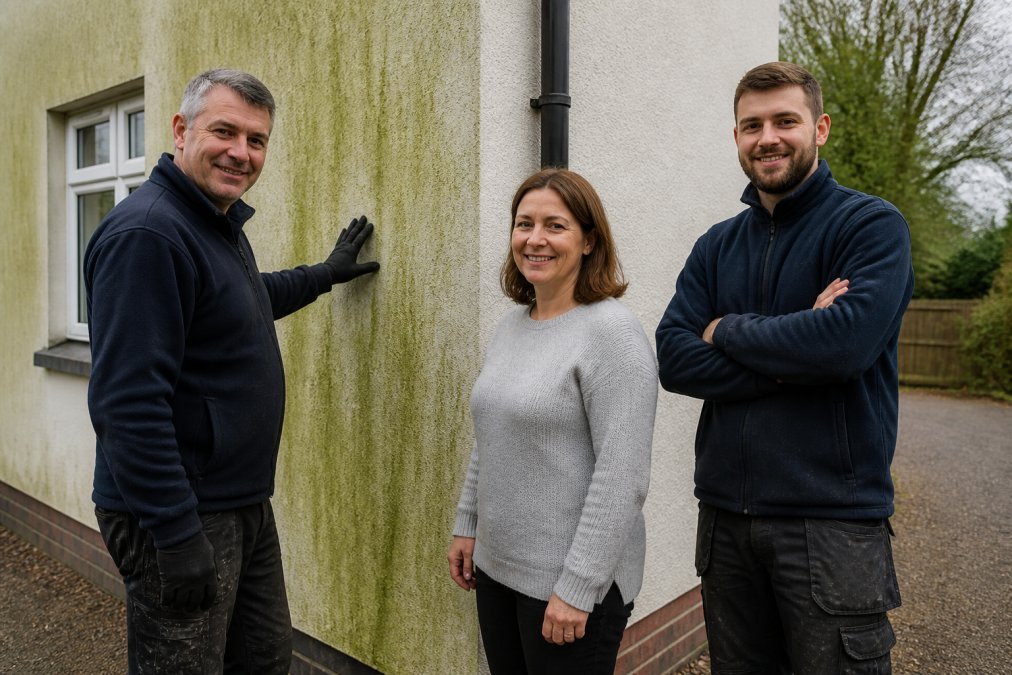
If you are asking why does my render turn green every year, the answer is algae. Green staining is living growth, not dirt, and it returns because the damp, shaded conditions that let it grow never go away.
Render is porous and holds a thin film of water after rain, enough to keep algae, moss or lichen alive most of the year (historicengland.org.uk).
Why Green Growth Returns to Render Every Year
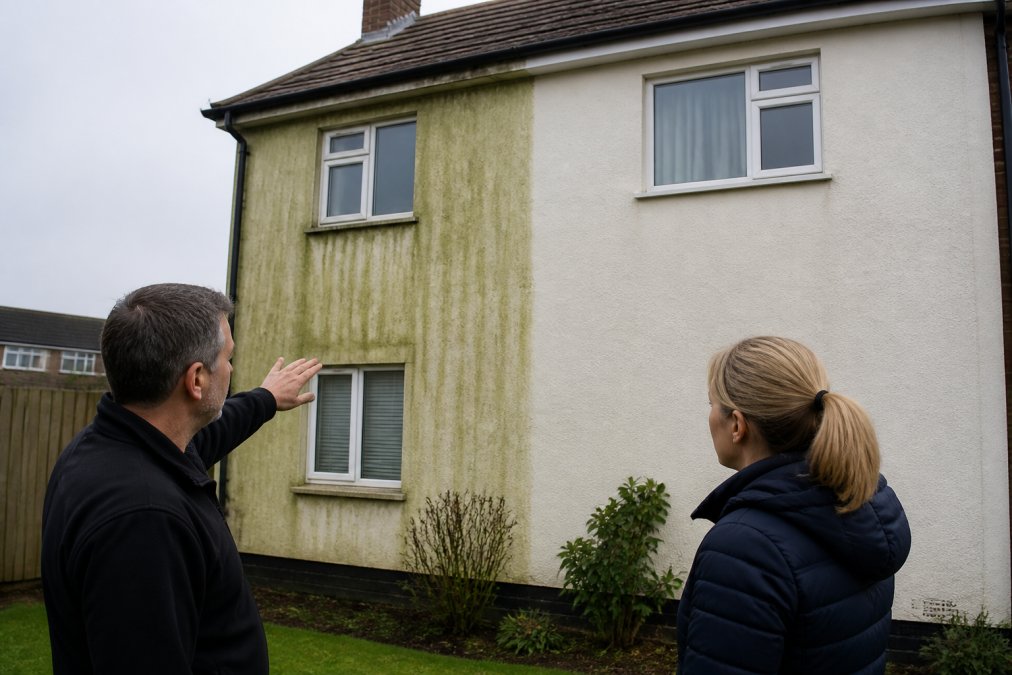
Green growth returns because the wall stays damp long enough for algae to re-establish. Shade, orientation, nearby trees and poor drainage all play a part.
North-facing, tree-covered walls dry slowly, blocked gutters and leaking downpipes keep lower walls wet, and cracks hold moisture.
How to Remove Black Mould From Render Walls
Black mould and algae on render are removed by treating the growth first, then washing it away at low pressure. High pressure can force water into the render without killing the growth.
We assess the render type, age and condition, apply an appropriate treatment following the manufacturer's label, then rinse at controlled low pressure.
Render is softer and more porous than concrete or paving, so controlled low-pressure washing with the right treatment is generally more suitable.
Preventing Algae Growth on Exterior Walls
Preventing algae growth on exterior walls means slowing regrowth and reducing how long the wall stays wet.
Keep gutters and downpipes clear, cut back plants, repair cracked render and plan regular maintenance rather than a one-off clean.
Regrowth depends on shade, moisture, drainage, weather, nearby trees and surface condition, so a shaded wall always needs more attention.
Our Approach to Render Cleaning in Bolton
We assess the surface, choose the right treatment and clean it properly, so we do not clean render the same way twice.
For render, that usually means a low-pressure approach with an appropriate treatment, taking into account the render's type and condition, access, drainage and surrounding plants.
Working across Bolton, Bury, Westhoughton and Horwich, we are used to the local conditions that drive regrowth.
What Affects Cost, Timescale and Results
Cost and timescale depend on area size, render type, level of growth, access, drainage, treatment, working height and any repairs. Weather and drying also affect the schedule, so we never confirm a completion time before assessing the property.
A lightly affected wall in a sunny spot responds quickly, while a heavily shaded wall may need more than one visit and may not come back to a perfectly uniform finish.
| Factor | What It Affects | Why It Matters |
|---|---|---|
| Size of area | Cost and time | Larger walls need more treatment and rinse time |
| Render type and condition | Method and result | Soft, cracked or blown render needs gentler handling |
| Level of growth | Cost and result | Heavy algae, moss and lichen take longer to treat |
| Access and working height | Cost and time | Difficult access needs different equipment and care |
| Drainage and surroundings | Method and result | Plants, lawns and drainage need protecting |
| Weather and drying | Timescale | Treatment and drying depend on conditions |
Preparation and Maintenance Advice
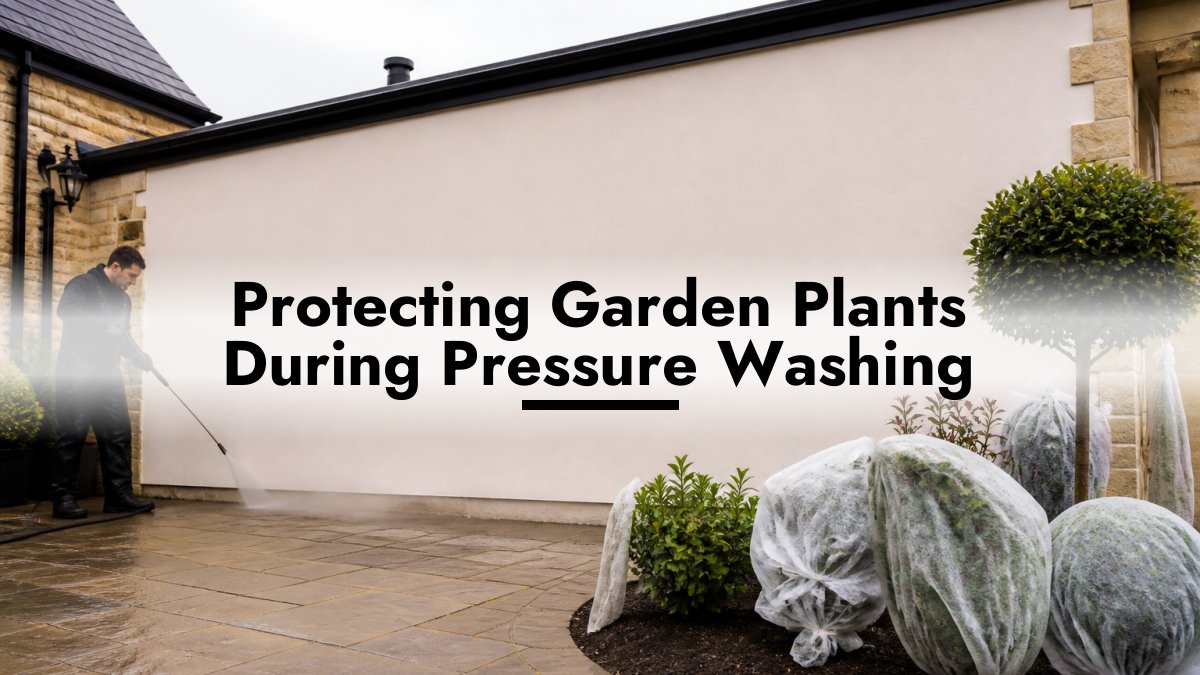
Before any clean, move or cover anything you want to protect, and tell us about pets, plants and any known issues with the wall. Keep people and pets away from treated areas until dry, and if treating anything yourself, follow the manufacturer's label and safety data sheet, and never mix cleaning products (hse.gov.uk).
Render in a damp, shaded spot will need cleaning again at some point, and a regular maintenance visit keeps on top of it.