 how-to
How to Clean K-Rend Without Damaging It
Table of Contents
- Why K-Rend Needs Careful Cleaning
- Can You Pressure Wash Render Without Damage
- Soft Washing Render: The Safer Method
- Remove Algae From Render Effectively
- K-Rend Maintenance to Prevent Regrowth
- What You'll Need Before Cleaning K-Rend
- Step-by-Step K-Rend Cleaning Process
- Common Mistakes to Avoid When Cleaning K-Rend
- When to Call a Professional for K-Rend Cleaning
- Frequently Asked Questions
Last Updated: 10 October 2026
Why K-Rend Needs Careful Cleaning
K-Rend is a modern synthetic render system designed to be durable and weather-resistant. But like all exterior surfaces, it needs proper care to stay looking pristine and to prevent long-term damage. The key challenge is understanding that K-Rend responds differently to cleaning methods than traditional render or brick.
At Refresh Revive Exterior Cleaning, we've worked extensively with K-Rend properties across Bolton and Lancashire, and we've learned that aggressive cleaning can strip the protective coating and create micro-cracks where water penetrates. The render's polymer finish is what keeps it performing well. Damage it, and you're looking at costly repairs down the line.
The good news is that K-Rend cleans beautifully when you use the right approach. You don't need maximum pressure to get brilliant results. In fact, the opposite is true.
Can You Pressure Wash Render Without Damage
The short answer is: it depends on the pressure, the distance, and the render type. High-pressure washing can absolutely damage K-Rend. Low-pressure washing, done correctly, can work safely.
When Pressure Washing Works on K-Rend
Pressure washing can be appropriate for K-Rend, but only under specific conditions. The pressure must be kept low. The nozzle must be held at a safe distance from the surface. The water temperature should be cool, not hot.
Even with these precautions, pressure washing is best reserved for stubborn stains rather than routine cleaning. Surface dirt, light algae, and weathering respond far better to soft washing. Think of pressure washing as a tool for problem areas, not your first choice for the whole wall.
The risk is always there, even at low pressure. One slip, one moment of inattention, and you've created damage that's difficult to repair.
Why High Pressure Causes Problems
High-pressure water forces its way into the micro-structure of K-Rend. It can:
- Penetrate the polymer coating and damage the base layer
- Create hairline cracks that trap moisture
- Dislodge the render from the substrate beneath
- Cause water ingress that leads to damp and mould inside the building
- Strip away the protective finish that gives K-Rend its colour and durability
The damage isn't always visible immediately. Sometimes it shows up months later as cracks, discolouration, or soft patches. By then, the cost of repair is far higher than the cost of cleaning done right the first time.
Soft Washing Render: The Safer Method
Soft washing is the professional method for cleaning K-Rend safely. It uses low-pressure water combined with specialist cleaning solutions to remove algae, moss, lichen, and dirt without any risk of surface damage.
How Soft Washing Protects Your Render
Soft washing works by letting chemistry do the heavy lifting, not force. The cleaning solution is applied at low pressure. The solution then sits on the surface for a set time, breaking down the biological growth and dirt at a molecular level.
Once the dwell time is complete, a gentle rinse removes the loosened material. The whole process is safe because it respects the integrity of the render.
This method is especially effective on K-Rend because:
- It removes the root cause (algae spores and moss) rather than just the visible growth
- It doesn't force water into the substrate
- It preserves the protective polymer coating
- It's gentler on surrounding plants, lawns, and landscaping
Soft washing also delivers longer-lasting results. Because it kills the biological growth at the root, regrowth takes much longer than with pressure washing alone.
Choosing the Right Cleaning Solutions
Not all cleaning solutions are suitable for K-Rend. Some are too aggressive. Others don't work effectively. The best solutions are:
- Biocides that target algae, moss, and lichen without harming the render
- pH-neutral formulations that don't attack the polymer coating
- Environmentally responsible products that are safe for plants and soil
- Solutions that are approved for use on synthetic renders
The solution is mixed to the right strength for the type of growth you're dealing with. Light algae needs a gentler mix than thick moss. A professional will assess the surface and choose accordingly.
Remove Algae From Render Effectively
Algae, moss, and lichen are common on K-Rend, especially in damp climates like Lancashire. Removing them effectively requires understanding what you're dealing with and choosing the right treatment.
Identifying Algae, Moss and Lichen Growth
These three types of growth look different and respond to different treatments:
- Algae appears as a thin green or brown film. It's slippery and covers large areas. It's the easiest to remove but returns quickly without prevention.
- Moss is thicker, softer, and often darker green. It grows in patches and has a spongy texture. It's harder to remove than algae and indicates moisture retention.
- Lichen is grey, orange, or white and forms crusty patches. It's the hardest to remove and grows slowly but persistently.
All three thrive in damp conditions. They're not a sign of poor render quality, they're a sign that your wall is exposed to moisture, shade, and the right temperature range for biological growth.
Treatment-Led Cleaning for Stubborn Growth
For heavy moss or lichen, treatment-led cleaning is the answer. This means applying a specialist biocide solution and allowing it to work for several days before any cleaning begins.
The solution penetrates the growth and kills it at the root. The dead growth then either falls away naturally or is gently removed by soft washing. This approach works far better than trying to force growth off the surface.
Treatment-led cleaning takes longer than pressure washing, but the results last longer and the risk of damage is zero.
K-Rend Maintenance to Prevent Regrowth
The best way to keep K-Rend looking good is to prevent heavy growth in the first place. Regular maintenance stops small problems becoming big ones.
Regular Inspection and Early Intervention
Inspect your K-Rend render quarterly, especially in autumn and winter when moisture levels are highest. Look for:
- Early signs of algae (slight discolouration or slipperiness)
- Moss starting to establish
- Areas where water pools or drains slowly
- Cracks or damage to the protective coating
If you catch growth early, a single treatment application stops it from spreading. Early intervention is always cheaper and easier than dealing with heavy growth.
Seasonal Cleaning Schedule
A simple seasonal approach keeps K-Rend in excellent condition:
- Spring: Light inspection and early treatment if any growth is visible
- Summer: Visual check for new growth; address any problem areas
- Autumn: Main cleaning season; treat moss and algae before winter moisture sets in
- Winter: Avoid cleaning in heavy rain; focus on inspection and planning
This rhythm matches the natural growth cycle and prevents buildup. It also means you're never facing a massive cleaning job, just regular, manageable maintenance.
What You'll Need Before Cleaning K-Rend
If you're planning to clean K-Rend yourself, you'll need the right equipment and materials. However, professional cleaning is almost always the better choice for safety and results.
For DIY cleaning, you'll need:
- A low-pressure washer (under 100 bar) or a garden sprayer for biocide application
- Specialist K-Rend cleaning solution or approved biocide
- Safety equipment: gloves, eye protection, and appropriate footwear
- A sturdy ladder or access equipment
- Soft brushes (never hard wire brushes)
- Clean water for rinsing
The reality is that most people lack the equipment and experience to do this safely. One mistake, a slip with the pressure washer, the wrong chemical, or holding the nozzle too close, and you've damaged your render. Professional cleaning from Refresh Revive Exterior Cleaning ensures it's done right.
Step-by-Step K-Rend Cleaning Process
Here's how professional soft washing of K-Rend is done properly.
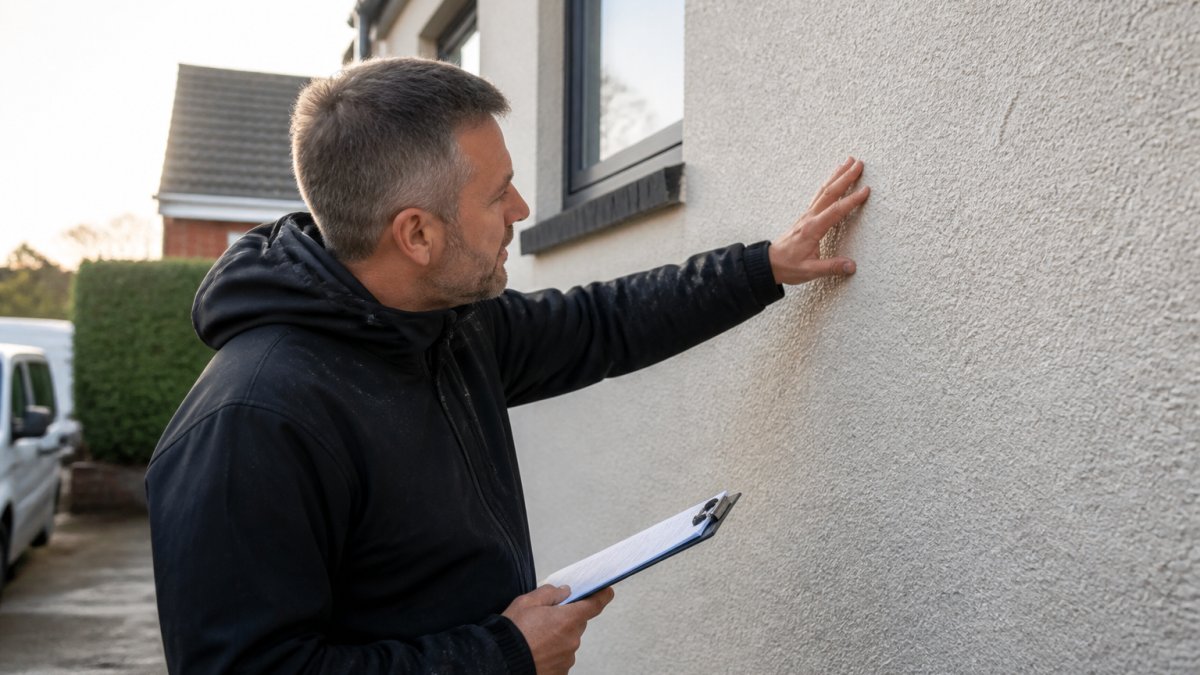
Step 1: Assess the Surface and Damage
Before any cleaning begins, the render is inspected carefully. The cleaner looks for:
- Existing cracks or damage
- Areas of soft or loose render
- Type and severity of growth
- Moisture levels and drainage patterns
- Nearby plants or surfaces that need protection
This assessment determines the cleaning method, solution strength, and precautions needed.
Step 2: Apply Pre-Treatment Solution
Once assessed, the biocide solution is applied evenly across the affected areas. Application is done with low-pressure equipment, a sprayer or soft-wash lance, never a high-pressure jet.
The solution is mixed to the right strength for the growth type. It's applied thoroughly but carefully, ensuring it covers all affected areas without oversaturation.
Step 3: Allow Dwell Time for Treatment
The solution needs time to work. Dwell time typically ranges from 12 to 48 hours, depending on the solution and growth type. During this time, the biocide penetrates and kills the algae, moss, or lichen at the root.
This is where patience pays off. Rushing to rinse too early means the treatment hasn't fully worked, and you'll need to repeat the process.
Step 4: Rinse Gently and Thoroughly
Once dwell time is complete, the render is rinsed with low-pressure water. The rinse is gentle but thorough, removing the dead growth and cleaning solution.
The final result is clean K-Rend with no risk of damage. The protective coating remains intact, and the biological growth is eliminated at the root.
Common Mistakes to Avoid When Cleaning K-Rend
Understanding what goes wrong helps you avoid costly damage.
Using a pressure washer on high settings. This is the most common mistake. High pressure forces water into the render and damages the protective coating.
Applying the wrong cleaning solution. Acidic or alkaline solutions can attack K-Rend. Always use products specifically approved for synthetic renders.
Skipping the dwell time. Some people apply biocide and rinse immediately. The solution needs time to work. Skipping this step means poor results and wasted effort.
Cleaning in unsuitable weather. Rain during treatment washes away the biocide before it can work. Frost can cause water damage. Clean in dry conditions with temperatures above 5°C.
Neglecting nearby plants. Some cleaning solutions harm vegetation. Protecting plants and soil before cleaning prevents damage and keeps your garden healthy.
Ignoring existing damage. If the render is already cracked or soft, aggressive cleaning makes it worse. Address damage first, or use gentler methods.
When to Call a Professional for K-Rend Cleaning
Professional cleaning is the right choice in most situations. Here's when it's essential:
- Heavy growth: Thick moss or lichen needs specialist treatment and equipment
- Existing damage: Cracks or soft areas require careful handling
- Large areas: Cleaning a whole house is time-consuming and risky on a ladder
- Difficult access: High walls, steep roofs, or tight spaces need proper equipment and experience
- First-time cleaning: If you've never cleaned K-Rend, professional cleaning sets a good baseline
- Maintenance contracts: Regular professional cleaning prevents heavy growth building up
Refresh Revive Exterior Cleaning serves Bolton, Bury, Wigan, Wilmslow, and across Lancashire and Cheshire. We use controlled soft washing, specialist biocides, and our expertise to clean K-Rend safely and deliver results that last. Our White Glove Standard™ means meticulous, surface-specific care that protects your property, plants, and lawns.
We're fully insured and committed to quality. We offer no-obligation quotations and can assess your render via photographs if you'd like an initial view before we visit.
K-Rend is a premium render system that deserves premium care. The difference between cleaning done right and cleaning done wrong is the difference between a surface that looks brilliant for years and one that's damaged and costly to repair. Soft washing with the right solution, applied by someone who understands the material, delivers the best results with zero risk. If you'd like a professional assessment of your K-Rend, get in touch with Refresh Revive Exterior Cleaning for a free quote. Send photographs of the areas you'd like cleaned, and we'll advise on the best approach for your property.
Frequently Asked Questions
Can you pressure wash K-Rend safely?
Yes, but only at low pressure. High-pressure washing damages K-Rend by stripping the protective surface layer and forcing water into the render core, causing cracks and water ingress. Soft washing is the safer choice for most situations, using low pressure combined with specialised cleaning solutions to break down algae and moss without mechanical damage.
What's the best way to remove algae from K-Rend?
Treatment-led cleaning works best. Apply a biocide solution designed for render and allow 24-48 hours dwell time for the treatment to kill algae and moss at the root. This prevents regrowth for months. Gentle rinsing with soft washing then removes the dead growth. Avoid bleach, which can damage the render's colour and protective coating.
How often should K-Rend be cleaned?
Most properties benefit from an annual inspection and clean, particularly in damp climates where moss and algae thrive. If growth appears between annual cleans, treat it early with a biocide solution before it becomes stubborn. Regular maintenance prevents the need for aggressive cleaning methods and extends the life of your render.
What chemicals are safe to use on K-Rend?
Use only biocides and detergents designed for render surfaces. Avoid bleach, caustic soda and acidic cleaners, which damage the finish and colour. Specialist render cleaning solutions are pH-neutral and formulated to break down biological growth without harming the render's protective layer. Always follow manufacturer guidance and test in an inconspicuous area first.