 how-to
Protecting Garden Plants During Exterior Cleaning
Table of Contents
- Why Exterior Cleaning Poses a Real Risk to Your Plants
- What You'll Need Before You Start
- Step-by-Step: Protecting Garden Plants During Exterior Cleaning
- Safe Patio Cleaning Chemicals for Plants: What to Use and Avoid
- How to Rinse Plants After Pressure Washing
- Emergency Recovery Steps If Plants Show Signs of Damage
- Soft Washing vs Pressure Washing: Which Is Safer for Landscaping
- Protecting Garden Plants During Exterior Cleaning: Common Mistakes to Avoid
Last Updated: August 14, 2026
Why Exterior Cleaning Poses a Real Risk to Your Plants
Protecting garden plants during exterior cleaning is one of the most overlooked aspects of any driveway, patio, or render wash. A single careless cleaning session can scorch foliage, strip nutrients from soil, and kill established planting that took years to grow.
Risks fall into two categories: physical and chemical. Physical damage comes from high-pressure water jets stripping leaves, snapping stems, and compacting root systems. Chemical damage is subtler but often more destructive. Cleaning solutions containing bleach, sodium hypochlorite, or strong alkaline surfactants can alter soil pH, burn foliage through foliar absorption, and contaminate groundwater via runoff.
Most plant damage from exterior cleaning is entirely preventable with straightforward steps followed in the right order and with the right materials.
What You'll Need Before You Start
Good preparation makes the difference between a clean that leaves your garden looking better and one that sets it back a season. Before starting any exterior cleaning work, gather the following:
Item | Purpose | Notes |
|---|---|---|
Garden hose with soft spray | Pre-wetting plants and rinsing foliage | Avoid jet attachments near delicate plants |
Horticultural fleece or old bedsheets | Physical barrier against spray and runoff | Breathable fleece preferred over plastic |
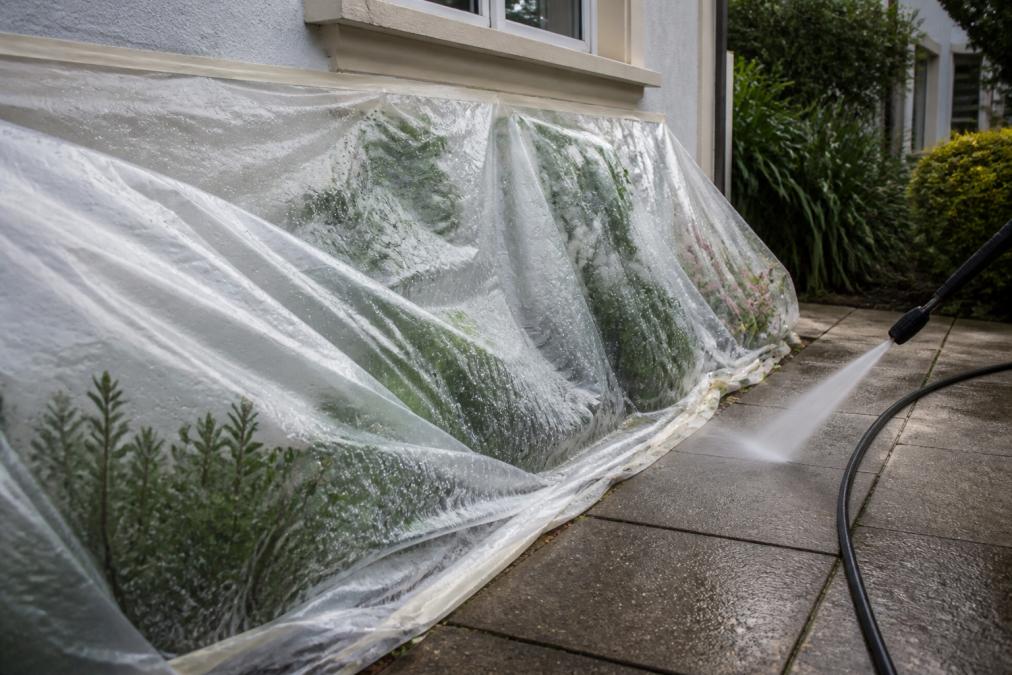
Plastic sheeting or tarpaulins | Covering hard surfaces and pots | Secure edges to prevent chemical pooling |
Garden cloches | Protecting individual specimens | Useful for herbs and low-growing plants |
Clean water | Diluting and flushing accidental residues | Use generously where the product instructions permit |
Product-specific spill guidance | Following the product label and safety data sheet | Never mix products or improvise neutralisers |
Biodegradable detergent | Safer cleaning solution option | Check for plant-safe certification |
Watering can | Controlled rinsing around root zones | Helps even application across root zones |
According to the Royal Horticultural Society's guidance on garden chemicals, many standard exterior cleaning products contain compounds harmful to plants and soil organisms. Biodegradable detergents with neutral pH balance dramatically reduce risk to surrounding planting.
Step-by-Step: Protecting Garden Plants During Exterior Cleaning
Protecting garden plants requires a structured approach. Skipping any of the following steps increases the risk of chemical exposure, physical damage, or root system contamination.
Step 1: Pre-wet Plants and Saturate the Surrounding Soil
Start by thoroughly watering all plants and surrounding soil before any cleaning begins. This is the most important single step in the entire process.
Pre-wetting serves two purposes. Saturated soil absorbs cleaning solution far less readily than dry soil, reducing chemical penetration toward the root system. Wet foliage also dilutes any spray drift or splashback, minimising the concentration of surfactants that cause plant scorch. Water generously and deeply so moisture reaches the root zone.
Step 2: Apply Physical Barriers and Coverings
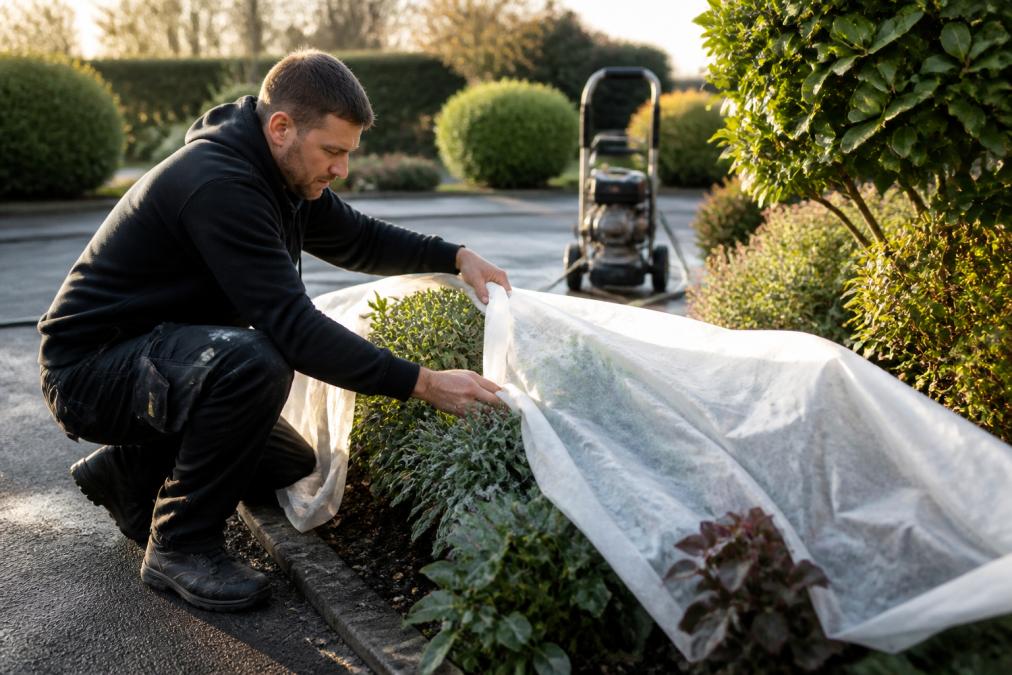
Once plants are pre-wetted, apply physical barriers to intercept chemical spray and runoff. Horticultural fleece is preferred: it is breathable, lightweight, and does not trap heat like plastic sheeting.
Cover border plants, hedging, and any specimens within two metres of the cleaning area. For individual plants or containers, garden cloches provide excellent protection. Secure edges with stones or pegs to prevent coverings being dislodged by pressure washing.
Step 3: Time the Clean to Reduce Plant Stress
Cleaning during the hottest part of a summer day compounds the risk of chemical damage. Early morning is optimal: temperatures are lower, plants have recovered overnight moisture, and morning dew dilutes any cleaning solution that contacts foliage. Avoid cleaning during dry spells or immediately after fertilising.
Step 4: Control Chemical Runoff at the Source
Chemical runoff carries surfactants, biocides, and pH-altering compounds directly into flower beds and lawns. Direct runoff away from planting using temporary barriers, folded tarpaulins, sandbags, or timber to redirect flow toward a drain. A squeegee or brush used regularly during the clean can push pooling solution away from soil edges before it migrates.
Step 5: Rinse Safely and Follow the Product Label
After cleaning, follow the product label and safety data sheet for rinsing, runoff control and spill response. Do not use vinegar, bicarbonate of soda or another household chemical to neutralise residues. Acids can react dangerously with sodium hypochlorite and release chlorine gas.
Where the product instructions allow, rinse exposed foliage and soil thoroughly with clean water while preventing contaminated runoff from entering surface-water drains, ponds or watercourses. If a concentrated spill occurs, stop work and follow the product-specific spill procedure.
Safe Patio Cleaning Chemicals for Plants: What to Use and Avoid
No exterior-cleaning chemical should be assumed safe for plants simply because it is described as biodegradable or pH-neutral. Choose a product authorised for the intended use, follow its label exactly, and protect plants, soil and drainage from spray and runoff.
YouTube Video
Use where possible:
- Biodegradable oxygen-based cleaners (percarbonate of soda formulations)
- pH-neutral detergents certified safe for use near water courses
- Plain hot water with mechanical agitation for lightly soiled surfaces
Avoid near planting:
- Sodium hypochlorite bleach solutions (highly alkaline, toxic to soil organisms)
- Quaternary ammonium compounds (persistent biocides that accumulate in soil)
- Strong acid-based cleaners (devastating to root systems)
According to the Health and Safety Executive's guidance on biocidal products, many exterior cleaning products are classified as biocidal products under UK regulations and must be used in accordance with their product authorisation, including restrictions on proximity to water and vegetation.
Plant Sensitivity: Which Species Need the Most Protection
Not all plants respond equally to chemical exposure. Understanding which species are most vulnerable helps prioritise protective effort.
Sensitivity Level | Plant Types | Key Risk |
|---|---|---|
High | Ferns, hostas, heathers, azaleas, rhododendrons | Foliar absorption; pH-sensitive root systems |
Medium | Roses, lavender, hydrangeas, ornamental grasses | Moderate chemical tolerance; recover with rinsing |
Lower | Established hedging, mature shrubs, ivy | Resilient but not immune to concentrated runoff |
Very High | Seedlings, newly planted specimens, herbs | Minimal root establishment; no chemical tolerance |
Acid-loving plants such as azaleas, rhododendrons, and heathers are particularly vulnerable to alkaline cleaning solutions. These specimens should receive the most thorough pre-wetting and most secure physical barriers.
The Environmental Impact of Chemical Runoff
Chemical runoff does not stop at the garden boundary. Surfactants and biocides that enter soil persist for weeks, disrupting soil microorganism populations that plants depend on for nutrient uptake. Runoff reaching drains contributes to wider water course contamination. Low-pressure soft washing with diluted biodegradable detergents produces significantly less harmful runoff than high-pressure washing with concentrated biocidal solutions.
How to Rinse Plants After Pressure Washing
Rinsing foliage should begin as soon as the cleaning work on the adjacent surface is complete. Do not wait; the longer cleaning solution remains on leaves and in soil, the greater the risk of plant scorch and root system damage.
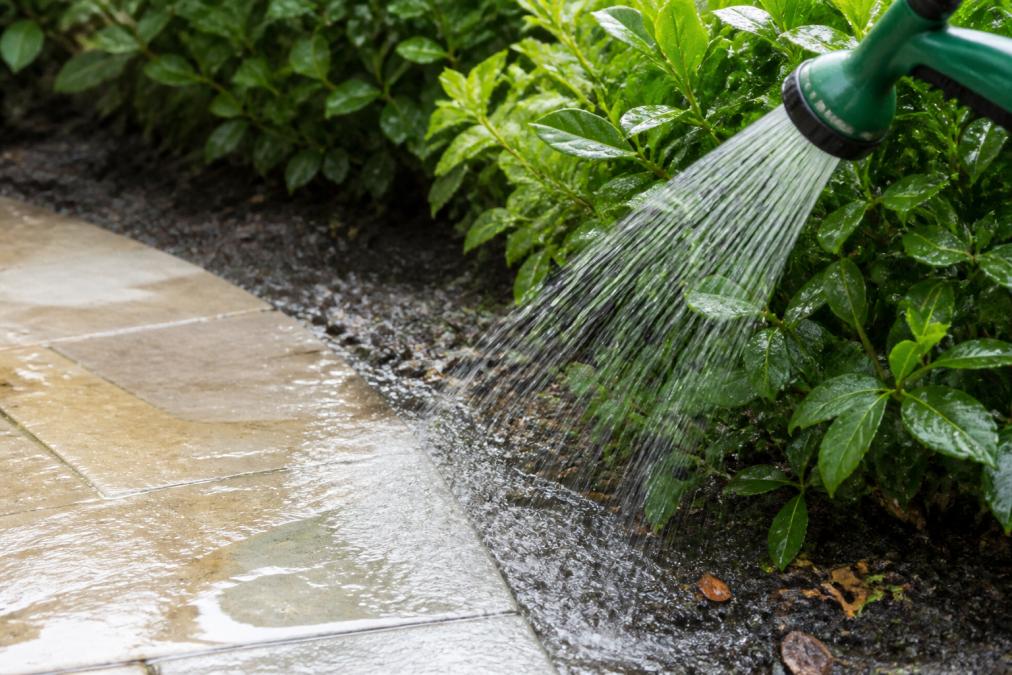
Use a garden hose on a soft spray setting. Work from the top of the plant downward, rinsing foliage thoroughly before directing water to the base and surrounding soil. For plants directly adjacent to the cleaned surface, rinse for at least two to three minutes per plant. Follow the foliage rinse with a generous soil soak to flush chemical residue away from the root zone. Remove physical barriers only after rinsing is complete.
Emergency Recovery Steps If Plants Show Signs of Damage
Despite best efforts, chemical damage sometimes occurs. Recognising the signs early and responding quickly significantly improves recovery prospects.
Signs of chemical damage in plants:
- Sudden leaf wilting or drooping without drought conditions
- Brown or scorched leaf margins
- Yellowing foliage, particularly in acid-loving species after alkaline exposure
- Soil surface crust or unusual discolouration around the root zone
Immediate recovery steps:
- Flood the affected area with clean water immediately; volume matters for dilution and flushing.
- Remove any visibly damaged foliage to reduce plant stress.
- Do not add another chemical in an attempt to neutralise the residue. Stop work, identify the product used, consult its label and safety data sheet, and seek specialist advice for a concentrated spill. Use clean water only where the product instructions say it is safe to do so.
- Mulch around the base of affected plants to retain moisture and protect recovering root systems.
- Avoid fertilising for at least two weeks; adding nutrients to chemically stressed soil can compound root damage.
- Monitor daily for two weeks. Many plants that appear severely damaged will recover with consistent watering and time.
If an entire border shows symptoms simultaneously, the issue is almost certainly runoff contamination. A soil pH test will confirm whether soil chemistry has been significantly altered.
Soft Washing vs Pressure Washing: Which Is Safer for Landscaping
Neither method is automatically safer for landscaping. The risk depends on the surface, the pressure used, the product and dilution, application control, weather, drainage and how nearby planting is protected.
Pressure washing uses high-pressure water (typically above 1,500 psi) to mechanically remove dirt, moss, and algae. The physical force is effective on hard surfaces but creates significant spray drift, carrying cleaning solution and debris onto surrounding planting. Root systems near driveways and patios are also vulnerable to soil compaction from high-pressure runoff.
Soft washing uses low-pressure application with a treatment selected for the surface and contamination. Lower pressure can reduce physical damage and spray drift, but chemical risk still has to be controlled through correct dilution, careful application, plant protection and runoff management.
For gardens with established borders, delicate specimens, or newly planted areas, low-pressure soft washing is the responsible choice. Refresh Revive Exterior Cleaning's White Glove Standard™ is built around surface-specific, low-pressure methods precisely because high-pressure cleaning poses unnecessary risk to surrounding property, planting, and lawns.
Protecting Garden Plants During Exterior Cleaning: Common Mistakes to Avoid
The most common mistakes in protecting garden plants during exterior cleaning are errors of sequence and assumption.
Mistake 1: Skipping pre-wetting because it "seems unnecessary." Dry soil absorbs cleaning chemicals rapidly. Pre-wetting is standard practice for every clean near planting.
Mistake 2: Using plastic sheeting and leaving it on too long. Plastic traps heat and creates a greenhouse effect that can wilt plants faster than chemicals would. Use breathable horticultural fleece and remove coverings as soon as the adjacent surface has been cleaned.
Mistake 3: Rinsing only the foliage and ignoring the soil. Foliage rinsing is visible and satisfying. Soil flushing is invisible and more important. Most chemical damage occurs at the root system.
Mistake 4: Assuming "eco-friendly" products are safe for plants. Biodegradable does not mean harmless to plants in the short term. Always dilute correctly and rinse thoroughly.
Mistake 5: Improvising a chemical neutraliser after the clean. Never mix cleaning products or add vinegar, bicarbonate of soda or another household chemical to affected soil. Follow the product label and safety data sheet; use clean-water rinsing only when the instructions permit it.
Mistake 6: Cleaning immediately after planting. Newly planted specimens have minimal root establishment and no chemical tolerance. Allow at least six to eight weeks after planting before conducting any exterior cleaning within two metres of new plants.
Exterior cleaning near established planting requires the same level of care as the cleaning itself. The risk of chemical runoff, spray drift, and root system contamination is real, but entirely manageable with the right preparation. Refresh Revive Exterior Cleaning's approach, built on the White Glove Standard™, incorporates surface-specific low-pressure methods and meticulous site preparation to protect your planting and lawns throughout every clean. If you have established borders, delicate specimens, or a newly laid lawn, request a no-obligation quotation and discuss your garden's specific requirements before any work begins.
Frequently Asked Questions
Will outdoor cleaning chemicals harm my garden plants?
Many standard exterior cleaning products contain surfactants, bleach compounds such as sodium hypochlorite, or alkaline agents that can cause plant scorch, root system damage, and foliage burn if they reach soil or leaves in concentrated form. Biodegradable, pH-balanced detergents used at correct dilution rates pose significantly less risk. Pre-wetting plants and soil before cleaning, using physical barriers, and rinsing foliage thoroughly afterwards are the most effective preventative measures you can take.
Does sodium hypochlorite damage plants?
Yes, sodium hypochlorite can damage plants, particularly through foliar absorption and root system exposure via chemical runoff. At the concentrations used in soft washing, contact with undiluted solution causes leaf scorch and, with repeated exposure, can affect root health. Dilution and thorough pre-rinsing of surrounding soil reduce risk considerably. If plants show yellowing or wilting after a clean, flush the root zone with clean water immediately and remove any scorched foliage to encourage recovery.
Should I water my plants before using exterior cleaning products?
Yes. Saturating plants and soil before any exterior cleaning session is one of the most effective protective steps available. Well-watered soil absorbs and dilutes chemical runoff far more effectively than dry soil, reducing foliar absorption and protecting the root system. Aim to water thoroughly at least 30 minutes before cleaning begins, paying particular attention to beds immediately adjacent to the surface being cleaned, such as borders alongside a driveway or patio.
How do I clean my patio without damaging nearby shrubs?
Protecting garden plants during patio cleaning involves several combined steps: pre-wet plants and soil thoroughly, cover vulnerable shrubs with horticultural fleece or cloches, choose biodegradable cleaning solutions with a neutral pH balance, apply low-pressure or soft washing techniques to minimise spray drift, and rinse all foliage and surrounding soil with clean water once the cleaning solution has been removed. Timing the clean to cooler parts of the day also reduces the risk of plant scorch from chemical exposure in direct sun.
This article was written using GrandRanker