 how-to
How to Safely Clean Gutters Without Ladders
Table of Contents
- Why Cleaning Gutters Without Ladders Matters
- Signs of Blocked Gutters You Shouldn't Ignore
- Ground-Level Gutter Cleaning Tools and Methods
- High-Reach Gutter Vacuum Systems: A Professional Approach
- Benefits of Regular Gutter Maintenance
- Safety Tips for DIY Gutter Cleaning Without Ladders
- When to Call a Professional for Gutter Cleaning
- Frequently Asked Questions
Last Updated: October 3, 2026
Why Cleaning Gutters Without Ladders Matters
Gutters are one of the most neglected parts of any home. Yet they're essential for protecting your property from water damage. When gutters clog, water overflows and damages fascias, soffits, foundations, and landscaping. The problem is that traditional ladder-based gutter cleaning is dangerous. Falls from height cause serious injuries every year.
At Refresh Revive Exterior Cleaning, we understand why homeowners in Bolton and across the North West avoid this task. Climbing a ladder to clear gutters feels risky. It's uncomfortable. Many people put it off until the damage is already done.
The good news: you can clean gutters without ladders. Ground-level methods exist. They're safer, often more effective, and they take the stress out of maintenance. This guide shows you exactly how to safely clean gutters without ladders, plus when professional help makes sense.
Signs of Blocked Gutters You Shouldn't Ignore
Blocked gutters don't announce themselves loudly. But the signs are there if you know what to look for.
Water overflowing at the edges is the clearest warning. During rain, water should flow through the downpipe. If it spills over the sides, debris is blocking the channel. This happens fast after leaves fall or during high pollen seasons.
Dark streaks on fascias and soffits show water damage building up. The staining comes from water running down the outside of the gutter instead of through it. Once you see these marks, the problem has been developing for weeks.
Sagging gutters mean debris weight is pulling the system down. Metal gutters can bend under the load of wet leaves and sediment. This causes water to pool in the wrong places, accelerating damage.
Plant growth in the gutter is a sure sign of standing water and decomposing organic matter. Moss and weeds grow where moisture sits. This adds weight and traps more debris.
Visible nests or insects indicate gutters have become a habitat. Birds and insects move in when gutters stay damp and full of organic material. This is both a pest problem and a sign of serious blockage.
Check your gutters twice yearly: once after autumn leaf fall and once in spring. Look from the ground with binoculars if climbing feels unsafe. Early detection prevents costly water damage repairs.
Ground-Level Gutter Cleaning Tools and Methods
The safest approach to cleaning gutters without ladders uses tools that extend your reach from the ground. Several proven methods exist. Each has strengths depending on your gutter layout and debris type.
Telescopic Gutter Cleaning Wands
A telescopic wand extends to reach gutters on most domestic properties from ground level. You attach a brush head or scoop to the end. Then you work the debris loose and push it toward the downpipe.
How they work: The wand has a curved end that mimics the gutter profile. You angle it upward and work along the channel. Twisting and pulling motions dislodge leaves and sediment. Gravity carries debris toward the outlet.
Best for: Single-storey homes and lower sections of two-storey properties. They work well for light to moderate debris. Leaves and small twigs clear easily.
Limitations: Telescopic wands struggle with heavy, wet debris or sediment build-up. The curved head can't always reach tight corners. You need reasonable arm strength to work the tool effectively. For gutters on higher storeys, reach becomes difficult even with extended poles.
Safety considerations: Keep both feet on the ground. Never overreach or lean at extreme angles. If you feel unstable, stop and reassess. The tool should feel manageable at full extension.
Leaf Blowers and Air Pressure Systems
A leaf blower can dislodge dry debris from gutters. You aim the nozzle upward and use air force to push leaves and dust along the channel toward the downpipe.
How they work: High-velocity air loosens debris. Lighter material (dry leaves, pollen, dust) moves easily. The debris flows toward the outlet where it falls to the ground below.
Best for: Seasonal maintenance after leaf fall. Works brilliantly for dry conditions. Quick and requires no contact with the gutter itself.
Limitations: Leaf blowers fail on wet debris. Damp leaves stick to the gutter bottom. Sediment and moss don't budge with air pressure alone. You'll also blow debris everywhere, which creates mess in gardens and neighbouring properties. This method works best in controlled conditions.
Safety considerations: Wear eye protection and a dust mask. Blowing debris can scatter into your face or eyes. Keep bystanders away from the discharge area.
Garden Hose Flushing Techniques
Running water through gutters flushes lighter debris toward the downpipe. You position yourself at one end of the gutter section and direct the hose flow.
How they work: Water pressure carries debris along the channel. Start at the end furthest from the downpipe. Let water flow naturally toward the outlet. The current moves leaves and sediment along with it.
Best for: Maintenance cleaning after light debris accumulation. Works well for pollen and dust. Safe and straightforward.
Limitations: Heavy debris won't move with water pressure alone. If sediment has compacted, flushing alone won't clear it. You need the downpipe to be clear first, or water backs up and floods the gutter. This method works best when gutters are already mostly clear.
Safety considerations: Water can be heavy and awkward to direct from ground level. Use a spray nozzle, not a solid stream. Keep the hose manageable. Avoid pointing water at electrical fixtures or downpipes that might channel water into foundations.
High-Reach Gutter Vacuum Systems: A Professional Approach
For thorough, safe gutter cleaning without ladders, a high-reach gutter vacuum system is the gold standard. This equipment reaches gutters on two and three-storey homes from ground level. It removes debris completely and leaves gutters clean.
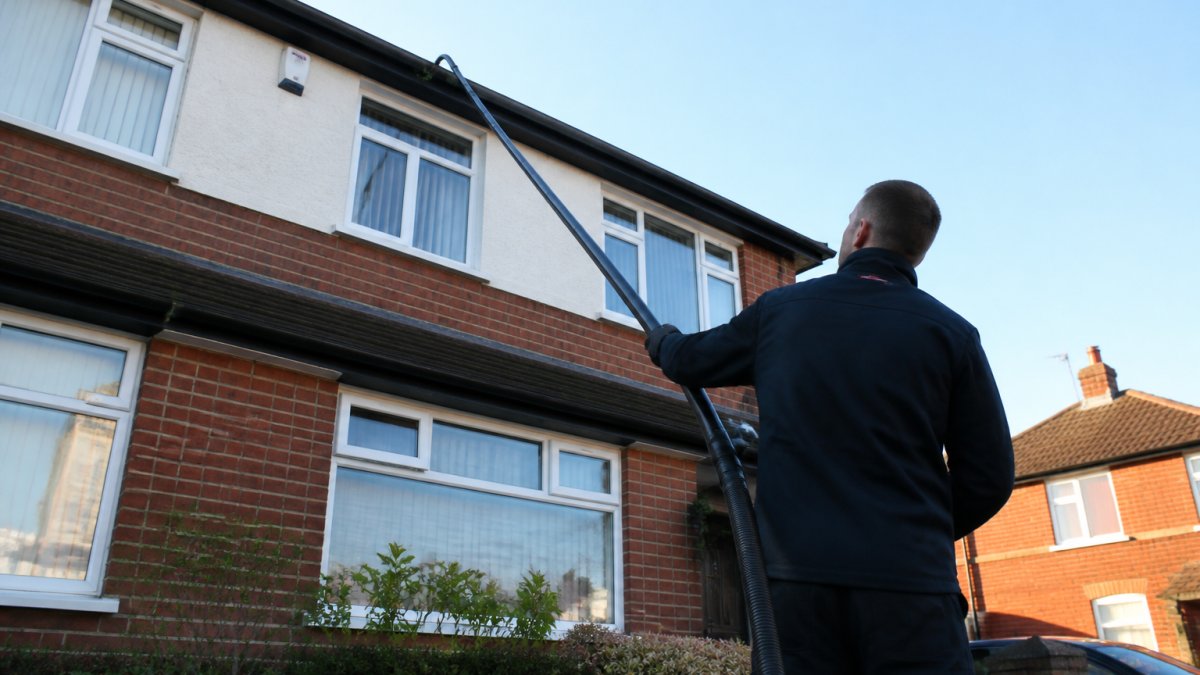
How high-reach vacuums work: A vacuum unit sits on the ground. A long, lightweight pole extends upward with a suction head at the end. The operator positions the head inside the gutter and switches on the vacuum. Suction pulls debris up the pole and into a collection tank. The system captures everything: leaves, sediment, moss, and small twigs.
Why they're superior: High-reach vacuums remove debris completely. Nothing is left behind to decompose or trap moisture. The suction is powerful enough to pull wet, compacted material. Many systems include camera inspection, so you can see exactly what's in the gutter before and after cleaning. This transparency matters. You know the job is done properly.
Coverage and reach: Professional systems extend to handle gutters on most residential and commercial properties. The pole is lightweight enough for one person to operate, yet rigid enough to hold position while working.
Debris collection: All debris goes into a sealed tank. Nothing scatters across gardens or neighbouring properties. Sediment and organic matter are contained. This is especially important in Bolton and surrounding areas where properties sit close together.
Safety advantage: Your feet stay on the ground. No climbing. No balance issues. No risk of falling. You maintain full control and can stop instantly if anything feels wrong.
Professional expertise: Companies using high-reach vacuums often include camera inspection. They photograph gutters before and after. This creates a record of the work. It also helps identify damage early: cracked gutters, loose brackets, or deteriorating fascias. Early detection prevents expensive repairs.
Refresh Revive Exterior Cleaning operates high-reach gutter vacuum systems across Bolton and Greater Manchester. We use this method because it's a safe and thorough approach. The equipment reaches gutters on properties of all sizes. Camera inspection means you see exactly what we've cleared.
Benefits of Regular Gutter Maintenance
Cleaning gutters regularly prevents problems before they start. The benefits extend far beyond the gutters themselves.
Water protection: Clear gutters channel water away from your home. Water damage is one of the costliest problems homeowners face. Blocked gutters let water overflow into walls, foundations, and basements. Regular cleaning prevents this entirely.
Fascia and soffit preservation: These wooden components rot when water runs down the outside of the gutter. Regular cleaning keeps water flowing properly. Your fascias and soffits last decades longer.
Foundation stability: Water pooling around foundations causes subsidence and cracking. Clear gutters direct water safely away. Your foundation stays dry and stable.
Roof longevity: Blocked gutters trap moisture on the roof. Moss and algae thrive. Roof tiles deteriorate faster. Regular gutter cleaning protects your roof investment.
Pest prevention: Blocked, damp gutters attract insects and birds. Mosquitoes breed in standing water. Rats nest in debris-filled channels. Clean gutters eliminate these habitats.
Property value: A well-maintained exterior, including clean gutters, signals that a home is cared for. Buyers notice. Lenders notice. Your property value stays strong.
Reduced maintenance costs: Fixing water damage costs far more than preventing it. Regular gutter cleaning is cheap insurance against expensive repairs.
Safety Tips for DIY Gutter Cleaning Without Ladders
If you're using ground-level methods, safety remains paramount. Follow these guidelines.
Wear appropriate protective gear. Gloves protect your hands from sharp edges and debris. Safety glasses shield your eyes from dust and flying particles. A dust mask helps if you're working in dry, dusty conditions.
Check your tools before use. Inspect telescopic wands for cracks or loose sections. Test leaf blowers and hoses for proper function. Make sure extension poles are stable and secure.
Never overreach or lean excessively. Keep your feet planted firmly. If you can't reach a section safely, move your position instead of stretching. Overreaching causes falls and injuries.
Be aware of your surroundings. Watch for power lines above gutters. Avoid electrical hazards. Check for wasp or bee nests before working. If you find nests, stop and contact a pest professional.
Work in daylight. Good visibility helps you see debris and hazards. Avoid working in rain or strong wind. Wet conditions make tools slippery. Wind can knock poles off balance.
Take breaks. Holding a pole extended overhead is tiring. Fatigue leads to mistakes. Work in short sessions and rest between them.
Use a spotter if possible. A second person watching can alert you to hazards. They can also help steady equipment if needed.
Know your limits. If a gutter is too high, too far, or too clogged for your comfort, stop. Professional help exists for a reason. There's no shame in calling someone with the right equipment.
When to Call a Professional for Gutter Cleaning
Some situations call for professional help. Recognise when DIY becomes risky or ineffective.
Gutters on higher storeys. Ground-level tools have limits. If your home is three storeys or taller, professional equipment is safer and more effective.
Heavy sediment build-up. If debris has compacted into thick sludge, telescopic wands and hoses won't clear it. Professional vacuums pull this material easily.
Gutters you can't see clearly. If you can't assess the blockage from the ground, a professional with camera inspection can. They'll know exactly what needs clearing.
Damaged gutters or brackets. If you spot cracks, loose sections, or sagging, stop cleaning. Damaged gutters need repair. Professionals can assess damage and recommend solutions.
Roof or fascia damage. If water damage is already visible on your roof, fascias, or soffits, professional cleaning is urgent. The longer you wait, the worse it gets.
Time or physical limitations. Not everyone can spend hours working overhead. If you have mobility issues, back problems, or simply lack time, professionals can handle it.
Commercial properties. Offices, retail parks, care homes, and industrial units need regular, reliable maintenance. Professional contracts ensure consistent service. Facilities managers benefit from scheduled cleaning and documentation.
Peace of mind. Some homeowners simply prefer professional work. There's nothing wrong with that. Quality matters more than doing it yourself.
Refresh Revive Exterior Cleaning serves Bolton and surrounding areas including Bury, Wigan, Chorley, Horwich, Westhoughton, Ramsbottom, Whitefield, Prestwich, Worsley, Altrincham, Hale, Bowdon, Wilmslow, Knutsford, Lymm, Alderley Edge, and Prestbury across Greater Manchester, Lancashire, and Cheshire. We handle residential and commercial gutter cleaning. Our high-reach vacuum systems and camera inspection mean your gutters are genuinely clean. We document the work so you have a record.
Frequently Asked Questions
Is it safe to clean gutters from the ground?
Yes, ground-level gutter cleaning is safe when you use the right tools and techniques. Telescopic wands, leaf blowers, and professional vacuum systems all allow you to clear gutters without climbing. The key is ensuring your footing is secure, keeping both hands free or using stable equipment, and wearing appropriate protective gear like gloves and eye protection. Avoid overreaching or working on wet, slippery surfaces.
What are the signs of blocked gutters that need clearing?
Watch for water overflowing at the edges during rain, sagging gutters, visible debris or plant growth, damp patches on exterior walls, and guttering that pulls away from the fascia. You might also notice water pooling around your property's foundation or hear dripping sounds from blocked downpipes. Regular inspection, especially after autumn leaf fall, helps catch blockages early before they cause damage to your roof, walls, or foundations.
How often should I clear my gutters?
Most properties benefit from gutter clearing twice yearly: once in late autumn after leaf fall, and again in spring. Properties surrounded by trees may need clearing three or four times annually. Regular maintenance prevents water damage, protects your roof structure, and keeps your exterior looking well-maintained. Professional cleaning services can assess your property's specific needs and recommend a maintenance schedule tailored to your location and surrounding vegetation.
Can I use a pressure washer to clean gutters from the ground?
Pressure washers can dislodge debris from gutters when used carefully from ground level with low pressure, but they're not ideal for gutter interiors. High-pressure water can damage guttering, strip protective coatings, or force water into fascias and soffits. Softer methods like telescopic wands, leaf blowers, or professional vacuum systems are safer for gutter cleaning. If you do use a hose, keep pressure gentle and always direct water toward downpipes to avoid backing up debris.
Blocked gutters damage your home silently until the problem becomes expensive. Ground-level cleaning methods work for light maintenance. But for complete, safe, professional results, high-reach gutter vacuum systems are unbeatable. Refresh Revive Exterior Cleaning brings this expertise to your property. We clean gutters thoroughly, inspect for damage, and help you prevent costly water damage. Request a free quote or send photographs of your gutters for assessment. Let's keep your home protected.