 how-to
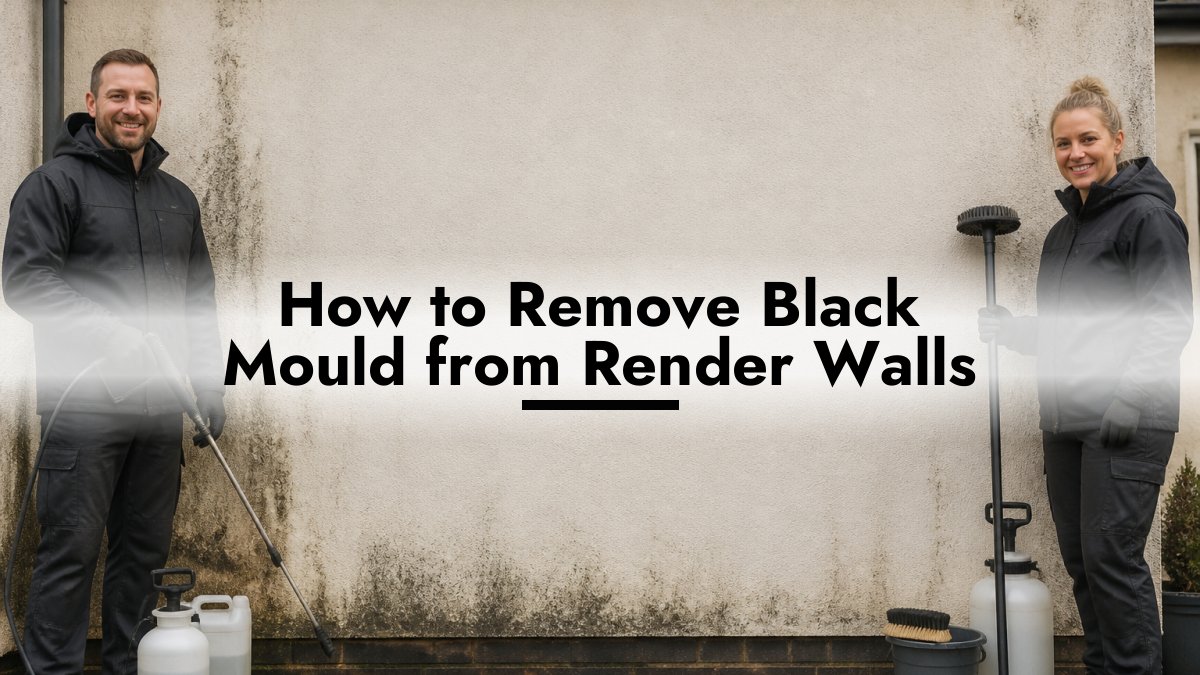
How to Remove Black Mould from Render Walls
Table of Contents
- Why Black Mould Forms on Render Walls
- What You'll Need Before You Start
- Soft Washing Render Walls: The Safe Approach
- Pressure Washing Rendered Walls: When and How
- Best Cleaner for Rendered Walls
- How to Prevent Mould Returning on Exterior Walls
- Common Mistakes to Avoid
- When to Call a Professional
- Conclusion
- Frequently Asked Questions
Last Updated: 4 October 2026
Why Black Mould Forms on Render Walls
Black mould on rendered walls is a common problem in damp climates. It thrives where moisture sits on porous surfaces and sunlight rarely reaches. Render absorbs water easily, making it ideal for mould growth.
The issue isn't just cosmetic. Mould can damage render over time, causing it to crumble and crack. It also signals underlying moisture problems that need attention.
In Bolton and the surrounding areas, rendered properties face particular challenges. Our damp climate and frequent rain create perfect conditions for mould to spread. North-facing walls and shaded areas are especially vulnerable.
Mould appears as black, green, or brown patches. It grows fastest in spring and autumn when temperatures fluctuate and moisture lingers. Once established, black mould on render walls spreads quickly without intervention.
Understanding why it forms helps you prevent it. Most render mould problems stem from poor drainage, lack of sunlight, or rising damp. Addressing these root causes prevents regrowth after cleaning.
What You'll Need Before You Start
Safety equipment and protective gear
Cleaning mould requires personal protection. Mould spores can irritate lungs and skin, so proper gear matters.
You'll need:
- Safety goggles to protect eyes from spray and spores
- A respiratory mask (FFP2 or higher) for spore protection
- Waterproof gloves, ideally nitrile or rubber
- Long sleeves and trousers to cover skin
- Sturdy footwear with good grip for wet surfaces
- A hat or hood to keep spores out of hair
Don't skip the mask. Mould spores become airborne when you spray, and inhaling them can trigger allergic reactions or respiratory issues.
Cleaning solutions and tools
The right tools make the job safer and more effective. You don't always need harsh chemicals.
Essential tools include:
- A garden hose with a spray nozzle for initial rinsing
- A low-pressure sprayer (under 100 bar) for applying cleaner
- Soft-bristled brushes to gently agitate the surface
- A squeegee or cloth to remove excess water
- Buckets for mixing solutions
- A ladder or access equipment if cleaning high areas
For cleaning solutions, you have options. Diluted bleach works for light mould, but biocide treatments are more effective for stubborn growth. We'll cover both approaches below.
Soft Washing Render Walls: The Safe Approach
Soft washing is the best method for how to remove black mould from render walls. It uses low pressure and specialist cleaning solutions to kill mould without damaging the render itself.
High-pressure washing can strip paint, damage mortar joints, and force water into the render. Soft washing avoids these problems entirely.
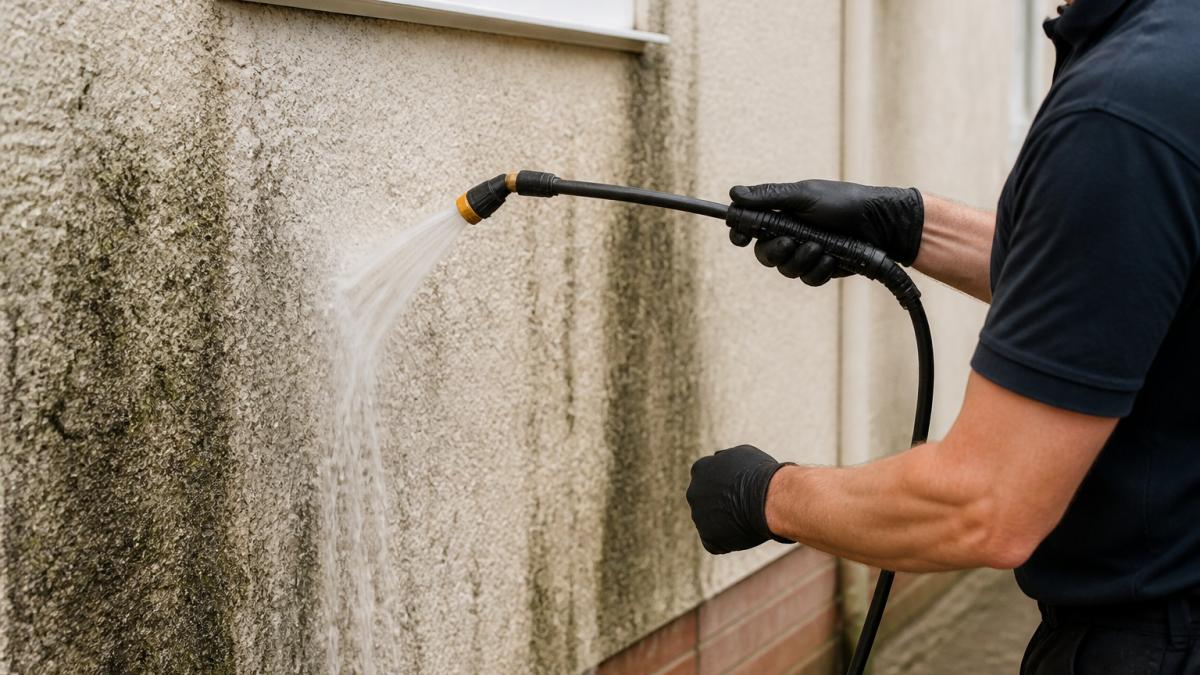
The process works like this:
- Apply a biocide solution to the mouldy areas
- Let it sit for 10-15 minutes to kill the mould
- Gently rinse with low-pressure water
- Allow the render to dry completely
This method kills mould at the root. The biocide penetrates the render and stops spores from regrowing. It's slower than pressure washing but far more effective long-term.
Soft washing also protects your plants and lawn. The low-pressure spray won't damage delicate foliage or newly seeded grass. If you're concerned about your garden, soft washing is the safest choice.
The render needs time to dry after cleaning. In damp weather, this can take several days. Avoid walking on or touching the surface until it's completely dry.
Pressure Washing Rendered Walls: When and How
Pressure washing can work for render, but only with care and proper technique. It's faster than soft washing but riskier if done incorrectly.
Never use pressure above 100 bar on rendered walls. High pressure forces water behind the render, causing it to delaminate and fail. This leads to expensive repairs.
Pressure washing suits light surface dirt more than established mould. If you have thick, stubborn mould growth, soft washing is the better choice.
If you do pressure wash:
- Use water temperature of 40°C or less
- Keep the nozzle at least 30cm away from the surface
- Use a 25-degree fan nozzle, never a jet nozzle
- Work from top to bottom in overlapping passes
- Test on a small, hidden area first
Even with these precautions, pressure washing can damage old or deteriorating render. If your render is already cracked or flaking, soft washing is essential.
Many homeowners in Bolton choose soft washing specifically because it protects their property. It's gentler, more effective, and prevents future problems.
Best Cleaner for Rendered Walls
Biocide treatments for lasting results
Biocide cleaners are specifically designed to kill mould, algae, and lichen. They work by targeting the organisms at a cellular level, preventing regrowth for months.
The best biocide treatments contain active ingredients that penetrate porous surfaces. They don't just clean the surface; they prevent spores from returning.
Biocide solutions work best when applied to dry or damp (not wet) render. The cleaner needs contact time to work effectively. Allow 10-15 minutes before rinsing.
Results from biocide treatment last longer than pressure washing alone. This makes biocide worth the extra cost.
Professional biocide products are stronger than retail versions. They're formulated for exterior use and designed to withstand weathering.
Household alternatives and their limitations
Bleach mixed with water (1:10 ratio) kills surface mould quickly. It's cheap and readily available, making it tempting for homeowners.
The problem is bleach doesn't penetrate render deeply. It kills visible mould but leaves spores behind. Mould often returns within weeks.
Bleach also damages render over time. It can bleach the colour and weaken the surface. Repeated bleach applications accelerate deterioration.
Vinegar is gentler but less effective. It works on light mould but struggles with established growth. It also has a strong smell and requires frequent reapplication.
Baking soda mixed with water creates a mild abrasive paste. It's safe for render and plants, but again, it's not strong enough for heavy mould.
For serious mould problems, household solutions disappoint. Professional biocide is often a more effective investment.
How to Prevent Mould Returning on Exterior Walls
Prevention is easier than removal. Once you've cleaned the mould, focus on stopping it coming back.
Improve drainage around the property:
- Clear gutters and downpipes regularly
- Direct water away from the walls
- Fix any leaks in the roof or gutters
- Ensure ground slopes away from the building
Increase air circulation and sunlight:
- Trim back overhanging trees and vegetation
- Remove ivy and climbing plants that trap moisture
- Paint render with breathable exterior paint
- Avoid dark colours that absorb heat and encourage condensation
Address rising damp if present:
- Check for damp patches at ground level
- Install or repair damp-proof courses if needed
- Improve ventilation in basements or cellars
Maintain the render surface:
- Repair cracks and damage promptly
- Repoint mortar joints if they're failing
- Apply a breathable sealant if appropriate
Regular maintenance visits catch problems early. Many properties benefit from annual or bi-annual cleaning to prevent heavy mould build-up.
Common Mistakes to Avoid
Using maximum pressure is the biggest mistake. Homeowners often think higher pressure = better results. In reality, it damages render and forces water into the structure. Use 100 bar or less, or choose soft washing instead.
Rushing the drying process leads to problems. If you seal or paint render before it's fully dry, moisture gets trapped inside. This causes the render to fail and mould to return faster. Wait at least 48 hours in dry conditions before painting.
Ignoring the root cause of mould guarantees regrowth. If the wall stays damp, mould will return regardless of how well you clean it. Fix the drainage or moisture problem first.
Mixing cleaning products is dangerous. Bleach and ammonia together create toxic gas. Even mixing different commercial cleaners can be hazardous. Use one product at a time and rinse thoroughly between applications.
Treating only visible mould leaves hidden spores. Mould spreads deeper than you can see. A proper biocide treatment penetrates the surface and kills spores you can't see.
Skipping safety equipment puts your health at risk. Mould spores cause respiratory problems, especially for people with asthma or allergies. Always wear a mask, goggles, and gloves.
When to Call a Professional
DIY cleaning works for light mould on small areas. If you're dealing with extensive mould, high walls, or fragile render, professional help is worth the investment.
Professional cleaners have equipment and expertise you don't. They use proper biocide treatments, control pressure precisely, and know how to protect your property and plants.
Call a professional if:
- Mould covers more than 25% of the wall
- The render is already damaged or crumbling
- You have rising damp or structural moisture issues
- The wall is higher than one storey
- You're unsure about the render condition
- You want lasting results
At Refresh Revive Exterior Cleaning, we specialise in removing black mould from render walls across Bolton and the surrounding areas. We use controlled soft washing with professional biocide treatments to kill mould effectively and prevent regrowth.
Our approach protects your render, your plants, and your health. We assess each property individually and recommend the best cleaning method for your specific situation. Many customers choose professional cleaning because it saves time and delivers lasting results.
We're fully insured. If you're unsure whether your render can handle DIY cleaning, it's worth getting a professional opinion first.
Conclusion
Black mould on render walls is treatable, but prevention is better than cure. The safest approach is soft washing with professional biocide treatment, especially for established mould growth.
Understand why mould forms on your property, address the root causes, and maintain the render regularly. This keeps your exterior looking clean and protects your investment.
If you'd like professional advice on how to remove black mould from render walls, or if you're ready to have the work done properly, Refresh Revive Exterior Cleaning is here to help. We serve Bolton, Bury, Wigan, Chorley, and throughout Greater Manchester, Lancashire, and Cheshire.
Get in touch for a free quote or send photographs of the affected areas for a professional assessment. We'll recommend the best approach for your property and ensure your render is restored safely and effectively.
Frequently Asked Questions
Can you use bleach to clean mould off render?
Bleach can kill surface mould on render, but it doesn't address the root cause and can damage the render's protective layer. A biocide-based cleaner designed for exterior render is more effective because it penetrates the surface and helps prevent regrowth. For render specifically, soft washing with a professional biocide treatment can offer more lasting results than household bleach.
Is pressure washing safe for rendered walls?
High-pressure washing can damage render by forcing water into tiny cracks, eroding the surface, and stripping away protective coatings. However, low-pressure washing at around 80-100 bar, combined with appropriate cleaning solutions, is safe and effective. The key is matching the pressure to the render's condition and age. Soft washing (low-pressure with biocide) is the safest option for delicate or older render, whilst controlled pressure washing works for newer, sound surfaces.
How do you stop black mould coming back on exterior render?
Prevention requires three steps: improve drainage around the base of the wall, ensure gutters and downpipes are clear and directing water away, and apply a professional biocide treatment after cleaning. Biocides create an invisible protective layer that helps inhibit mould growth. Regular maintenance, clearing debris and checking for moisture, also helps. Professional soft washing with biocide treatment can prevent regrowth more effectively than DIY cleaning alone.
What is the difference between black mould and algae on render?
Black mould appears as dark, often fuzzy patches and thrives in damp, shaded areas. Algae looks green or brown, spreads in wet conditions, and grows more on surfaces that catch moisture. Both indicate excess moisture, but they require slightly different approaches. Black mould needs biocide treatment to prevent regrowth, whilst algae can be removed with lower-concentration cleaners. Professional assessment identifies which you have and applies the right treatment.
Black mould doesn't have to be a permanent problem. With the right method and professional support, your rendered walls can look clean and stay protected. Contact Refresh Revive Exterior Cleaning today to discuss how we can restore your property and prevent mould returning.