 how-to
Gutter Cleaning Power Washing: A Safe How-To Guide
Table of Contents
- Understanding Gutter Cleaning Power Washing
- Soft Washing vs Pressure Washing for Gutters
- Essential Equipment and Tools You'll Need
- Safety Precautions for Working at Height
- Step-by-Step Guide to Power Washing Your Gutters
- Benefits of Regular Gutter Maintenance
- Common Risks and How to Avoid Them
- Professional Gutter Clearing in Your Area
- Exterior Property Maintenance Checklist
- When to Call a Professional
- Frequently Asked Questions
Last Updated: October 1, 2026
Understanding Gutter Cleaning Power Washing
Gutter cleaning power washing is the process of using pressurised water jets to remove debris, algae, and moss from gutters and downpipes. At Refresh Revive Exterior Cleaning, we understand that gutters require careful attention, the wrong approach can damage fascia boards, strip protective coatings, or harm your property's surroundings.
Power washing gutters involves directing high-pressure water through nozzles to dislodge built-up material. However, not all gutters suit maximum pressure. The key is matching the method to your gutter material and condition.
Gutters filled with leaves, silt, and organic growth need clearing before any water-based cleaning. A blocked gutter channels water into walls and foundations, causing structural damage over time. Regular gutter cleaning power washing prevents this costly problem.
Most homeowners and property managers in Bolton discover they need gutter work only after water damage appears. Prevention is far cheaper than repair.
Soft Washing vs Pressure Washing for Gutters
The choice between soft washing and pressure washing determines whether your gutters stay protected or sustain damage.
Pressure washing uses high-pressure jets (typically 2,500-4,000 psi) to blast away debris. It works fast on tough buildup. However, high pressure can dent aluminium gutters, crack cast iron, or force water behind boards.
Soft washing applies lower pressure (under 1,500 psi) combined with biodegradable cleaning solutions. It removes algae and moss without force. Soft washing takes longer but protects your gutters and fascia.
For gutter cleaning power washing, the best approach depends on what you're removing:
- Heavy leaf and silt buildup: Start with manual removal or a gutter vacuum, then soft wash
- Algae and moss stains: Soft washing with treatment solutions works best
- Stubborn deposits on metal gutters: Low-pressure rinse after treatment application
- Plastic gutters: Always use soft washing; high pressure causes permanent damage
The most common mistake is assuming high pressure equals better cleaning. In reality, treated surfaces stay cleaner longer than pressure-blasted ones. Treatment-based cleaning addresses the root cause, the organisms causing growth, rather than just removing visible debris.
Health and Safety Executive guidance on working at height emphasises that method choice affects both cleaning safety and property protection.
Essential Equipment and Tools You'll Need
Proper equipment makes gutter cleaning power washing safer and more effective. Here's what you actually need:
- Pressure washer (1,500-2,500 psi for gutters)
- Low-pressure nozzles (40-degree or wider)
- Extension wands with gutter attachments
- Biodegradable cleaning solution (moss and algae treatment)
- Gutter vacuum or scoop for debris removal
- Hose with adequate length to reach gutters
- Water supply connection
- Safety harness and anchor points
- Non-slip footwear
A gutter vacuum is worth its weight. It removes loose debris without water, preventing overflow and reducing the cleaning load.
Safety Gear and Fall Prevention
Working at height demands proper protection. Before you start any gutter cleaning power washing work, gather:
- Safety harness rated for your body weight
- Secure anchor point (roof ridge, chimney, or commercial anchor)
- Hard hat to protect from falling debris
- Safety glasses to shield eyes from spray and particles
- Gloves (nitrile or leather) for grip and protection
- Non-slip boots with good ankle support
- High-visibility clothing so others see you
- First aid kit nearby
A harness is non-negotiable. Gutters sit 2-4 metres above ground. A fall from that height causes serious injury or death.
Safety Precautions for Working at Height
Working on ladders or roofs demands respect for gravity. Most gutter accidents happen because people skip safety steps to save time.
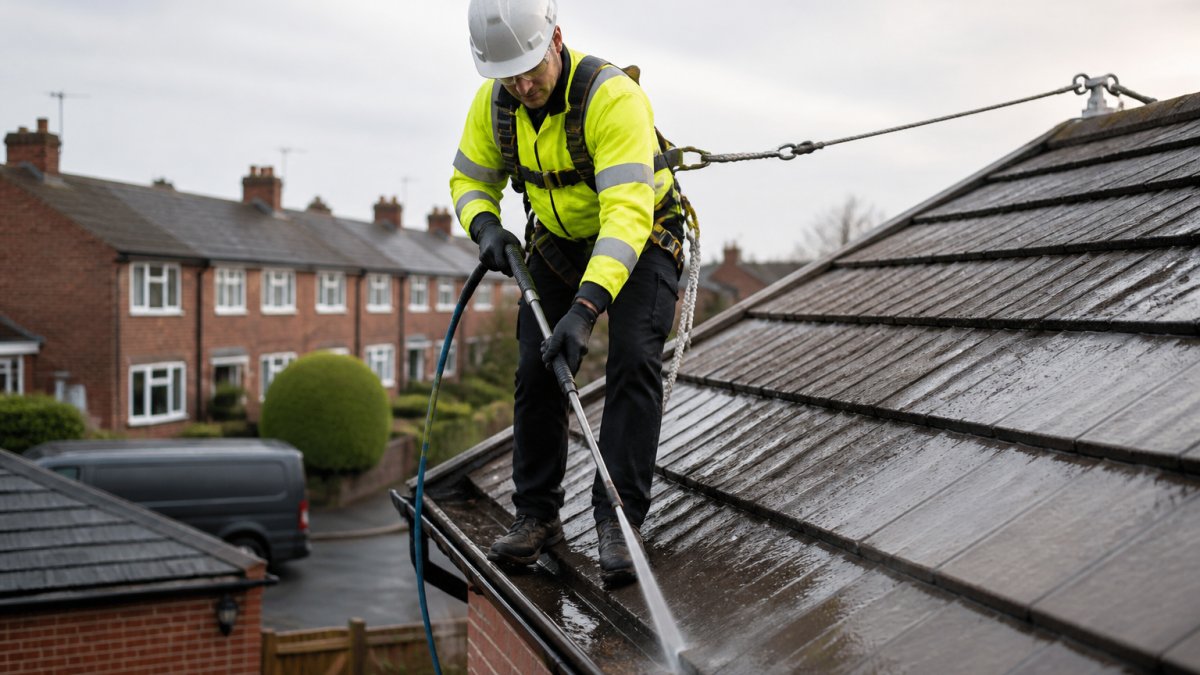
Set up your anchor point first. Your harness needs a fixed point rated for fall arrest. A roof ridge, chimney, or commercial anchor works. Never tie off to gutters, downpipes, or anything that might move.
Use a three-point contact rule. Keep three limbs in contact with the ladder at all times, two hands and one foot, or two feet and one hand. This prevents loss of balance.
Inspect your ladder before climbing. Check for cracks, bent rungs, or loose rivets. A damaged ladder fails without warning.
Never overreach. Keep your hips inside the ladder rails. Reaching too far sideways shifts your weight and causes tipping.
Avoid working alone. Have someone on the ground to spot you and call for help if needed. They can also hand you tools and keep the work area clear.
Check the weather. Rain, wind, or frost makes surfaces slippery. Postpone work if conditions are unsafe.
Wear a safety harness at all times. Even experienced workers fall. The harness is your insurance policy.
According to HSE statistics on falls from height, falls remain the leading cause of fatal and major injuries in construction and maintenance work.
Step-by-Step Guide to Power Washing Your Gutters
Gutter cleaning power washing works best when you follow a logical sequence. Rushing the process leads to missed debris or water damage.
Preparing Your Property and Surroundings
Before you touch a pressure washer, prepare the area. Loose debris and water spray affect everything below.
Clear the ground below gutters. Move garden furniture, potted plants, and vehicles away from the work area. Water spray travels farther than you expect.
Turn off air conditioning units. High-pressure water can damage condenser fins and electrical components.
Close windows and doors. Spray can force water into your home.
Check for electrical hazards. Ensure no power lines run near your work area. Wet equipment near electricity causes electrocution.
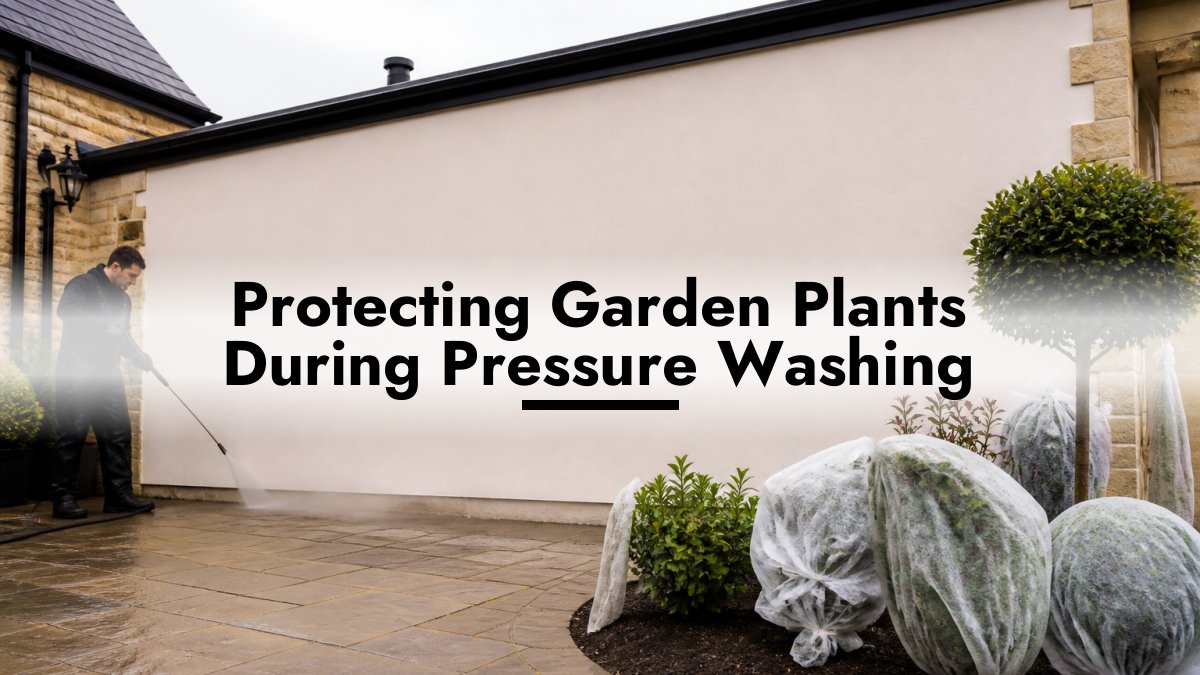
Protect delicate plants. Cover flower beds with tarpaulins. Pressure spray damages new growth and leaves.
Inspect gutters for damage. Look for cracks, rust, or loose sections. Damaged gutters need repair, not cleaning.
Gather all equipment. Have your harness, ladder, nozzles, and cleaning solution ready before you climb.
The Cleaning Process
Once your area is safe and prepared, begin the actual cleaning.
Step 1: Remove loose debris. Use a gutter scoop or gutter vacuum to pull out leaves, twigs, and silt. This step is crucial. Wet debris becomes heavy and compacts, making later steps harder.
Step 2: Inspect the gutters. Look for standing water, damage, or areas where debris was stuck. Note any problem areas for treatment.
Step 3: Apply cleaning solution. Pour biodegradable moss and algae treatment into gutters. Let it soak for 10-15 minutes. The solution kills organisms at the root, preventing rapid regrowth.
Step 4: Rinse with low pressure. Use your pressure washer at 1,000-1,500 psi with a wide-angle nozzle. Keep the nozzle moving to avoid concentrating pressure in one spot. Work from the downpipe end towards the outlet, so water flows away from joints.
Step 5: Check downpipes. Flush downpipes with water to ensure they're clear. A blocked downpipe defeats the purpose of clean gutters.
Step 6: Inspect your work. Walk around the property and check that gutters are clear and water flows freely.
Gutter cleaning power washing done properly takes 2-4 hours for an average house. Rushing causes mistakes.
Benefits of Regular Gutter Maintenance
Regular gutter cleaning power washing protects your home and saves money over time.
Prevents water damage. Blocked gutters overflow, saturating fascia boards, walls, and foundations. Water damage costs thousands to repair. Clean gutters cost far less.
Extends roof life. Water pooling on roofs promotes moss growth and degrades shingles. Regular cleaning keeps water moving.
Stops pest infestations. Debris-filled gutters attract birds, insects, and rodents. They nest in the buildup and enter your home.
Maintains property value. Clean gutters and fascia improve kerb appeal. Visible damage signals poor maintenance to buyers.
Reduces ice dam risk. In winter, blocked gutters trap water that freezes and damages edges. Clean gutters drain freely.
Prevents foundation problems. Water running down walls instead of through gutters saturates soil around foundations. This causes subsidence and cracking.
Most homeowners find that regular gutter cleaning power washing every 6-12 months keeps their systems working properly. The frequency depends on tree coverage and local weather.
Common Risks and How to Avoid Them
Gutter cleaning power washing carries real risks. Understanding them helps you stay safe.
Risk: Falls from height. Solution: Use a proper harness, secure anchor point, and three-point ladder contact at all times.
Risk: Pressure damage to gutters. Solution: Use low pressure (under 1,500 psi) and wide-angle nozzles. Test pressure on a small area first.
Risk: Water forcing behind fascia boards. Solution: Direct spray away from board joints. Never point the nozzle upward under the board.
Risk: Electrical hazard. Solution: Keep pressure washer and hose away from power lines. Do not use electric pressure washers in wet conditions without a residual current device.
Risk: Debris in eyes. Solution: Wear safety glasses. Debris travels at high speed and causes eye damage.
Risk: Slippery surfaces. Solution: Wear non-slip boots and avoid working on wet days. Wet surfaces are unpredictable.
Risk: Muscle strain. Solution: Take breaks. Holding a pressure washer wand overhead for hours causes fatigue and loss of control.
The most common injury is a fall from a ladder. The second most common is pressure-related damage to property. Both are preventable with preparation.
Professional Gutter Clearing in Your Area
Some gutter cleaning jobs suit DIY work. Others demand professional equipment and expertise.
Refresh Revive Exterior Cleaning serves Bolton and surrounding areas across Greater Manchester, Lancashire, and Cheshire. We use professional-grade equipment and safety systems that home equipment cannot match.
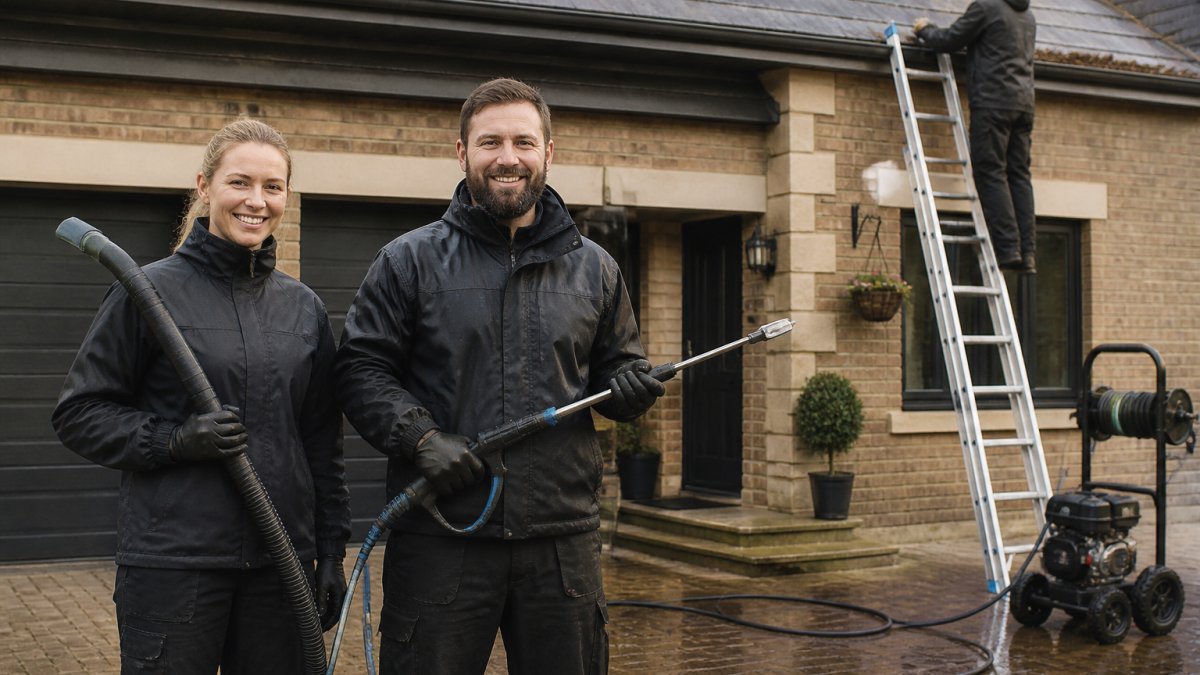
Our approach combines a high-reach gutter vacuum for debris removal, camera inspection to spot hidden damage, and controlled soft washing to remove algae and moss without risk. We work with safety harnesses, anchor systems, and commercial-grade RAMS (Risk Assessment and Method Statements) for complex jobs.
For commercial properties, offices, retail parks, care homes, schools, and industrial units, we offer maintenance contracts with regular clearing schedules. Property managers appreciate the reliability and the fact that we handle all safety responsibility.
A professional gutter cleaning power washing service takes the fall risk, pressure damage risk, and time commitment off your shoulders.
Exterior Property Maintenance Checklist
Gutters are one part of a broader maintenance plan. Here's what deserves regular attention:
| Task | Frequency | Why It Matters |
|---|---|---|
| Gutter clearing and cleaning | Every 6-12 months | Prevents water damage and pest entry |
| Downpipe flushing | With gutter cleaning | Ensures water flows away from property |
| Fascia and soffit inspection | Annually | Catches rot and damage early |
| Roof moss removal | As needed (1-2 years) | Prevents shingle damage and water pooling |
| Driveway cleaning | Annually or as needed | Maintains kerb appeal and prevents slip hazards |
| Patio and deck cleaning | Annually | Removes algae and extends surface life |
| Window cleaning | Every 3-6 months | Improves visibility and prevents mineral buildup |
| Render and wall cleaning | Every 2-3 years | Prevents mould and staining |
A maintenance schedule keeps your property in top condition and catches problems before they become expensive.
When to Call a Professional
DIY gutter cleaning power washing works for single-storey homes with easy access. Beyond that, professional help makes sense.
Call a professional if:
- Your home is two storeys or taller
- You have a fear of heights or health conditions affecting balance
- Your gutters show signs of damage, rust, or sagging
- You lack proper safety equipment (harness, anchor points)
- Your property has complex roof lines or obstacles
- You're unsure about pressure settings or cleaning solutions
- You have commercial property with multiple buildings
Professionals carry insurance, use certified equipment, and know how to handle unusual situations. If something goes wrong during professional work, you're protected by their insurance.
For properties in Bolton and the surrounding areas, Refresh Revive Exterior Cleaning handles gutter cleaning power washing with full safety systems and professional expertise. We assess your gutters, recommend the best approach, and complete the work to our White Glove Standard™, meticulous, surface-specific cleaning that protects your property.
Gutters protect your home's structure and value. Neglecting them leads to expensive damage. Whether you choose to tackle gutter cleaning power washing yourself or hire professionals, the key is doing it regularly and safely.
If you'd prefer to leave the work to experienced hands, Refresh Revive Exterior Cleaning is ready to help. Send us photographs of your gutters or request a free quote to discuss your property's needs. We serve Bolton, Bury, Wigan, Chorley, Wilmslow, Altrincham, and across Greater Manchester and Lancashire. Our team will assess your gutters, explain the best cleaning method for your situation, and complete the work with the care your home deserves.
Frequently Asked Questions
How often should I have my gutters cleaned?
Most properties benefit from gutter cleaning twice yearly: once in autumn after leaf fall and again in spring. Properties surrounded by trees may need three to four cleanings per year. Regular gutter cleaning prevents water damage, protects your foundation, and stops costly blockages that can lead to damp inside your home. The exact frequency depends on your roof pitch, tree coverage, and local weather patterns.
What's the difference between soft washing and pressure washing for gutters?
Pressure washing uses high-force water jets (typically 3000+ PSI) and works well for heavy debris and stubborn buildup on metal gutters. Soft washing applies lower pressure (500-1500 PSI) with chemical treatment and is safer for delicate gutters, fascias, and surrounding paintwork. For most residential gutters, soft washing or low-pressure methods prevent damage to gutters and nearby surfaces whilst still achieving excellent results. The right method depends on your gutter material and the type of debris present.
Can I clean my gutters myself, or should I hire a professional?
DIY gutter cleaning is possible if you're comfortable working at height and have proper safety equipment. However, professional gutter cleaning eliminates fall risk, ensures thorough inspection for damage, and uses specialist equipment like high-reach vacuums and camera inspection. Professionals can identify hidden problems, apply protective treatments, and work safely on multi-storey properties. If you're uncertain about ladder work or have a complex roof, professional cleaning is the safer choice.
What damage can blocked gutters cause to my property?
Blocked gutters overflow, allowing water to run down walls and pool around your foundation. This causes damp inside your home, rots fascias and soffits, damages brickwork, and can lead to costly structural problems. Water damage weakens walls, encourages mould growth, and reduces property value. Regular gutter maintenance prevents these issues by ensuring water drains properly away from your home, protecting your investment and keeping your property safe and dry.