 blog
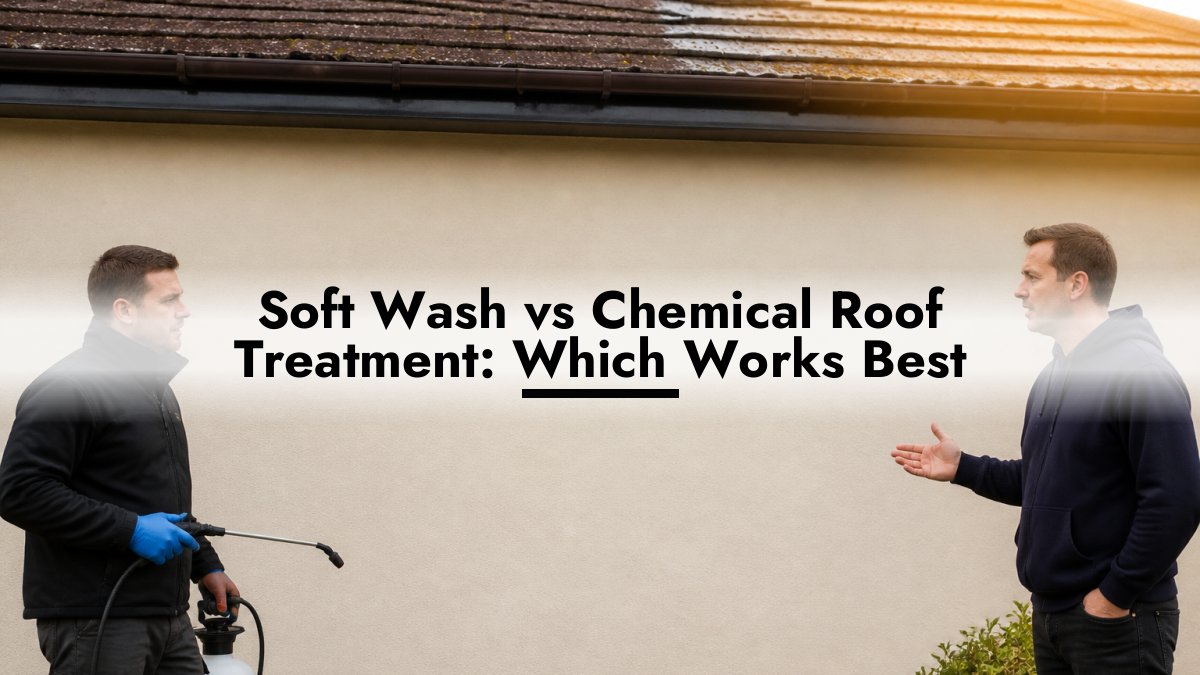
Soft Wash vs Chemical Roof Treatment: Which Works Best
Table of Contents
- Soft Wash vs Chemical Roof Treatment: Understanding the Core Difference
- How Soft Washing Works on Roofs
- Chemical Roof Treatment for Moss: What to Expect
- Roof Moss Removal Without Pressure Washing: Why Low-Pressure Matters
- How Long Does Roof Moss Treatment Take to Work
- Roof Cleaning Safety and Plant Protection
- Durability and Long-Term Results
- Which Method Is Right for Your Roof
- Getting a Professional Assessment
- Frequently Asked Questions
Last Updated: October 18, 2026
Soft Wash vs Chemical Roof Treatment: Understanding the Core Difference
When moss and algae take hold on your roof, you face a choice. Soft wash vs chemical roof treatment represents two fundamentally different approaches to the same problem, and the right one depends on your roof type, the severity of growth, and what happens after cleaning.
Soft washing uses low-pressure water combined with specially formulated cleaning solutions to dissolve biological growth without forcing water into gaps or stripping protective granules from roof tiles. Chemical roof treatment applies targeted biocides and fungicides directly to moss and lichen, killing them at the source so they don't return quickly. Both work. Neither is universally "best." But they solve different problems in different ways.
At Refresh Revive Exterior Cleaning, we've worked with many roofs across Bolton, Wilmslow, Hale, and the wider North West. We've seen soft washing restore tiles that pressure washing would have damaged. We've also seen chemical treatments prevent regrowth for months longer than water alone could achieve. Understanding which method suits your roof is the first step toward a lasting solution.
This guide breaks down how each approach works, what you can realistically expect, and how to choose the right one for your property.
How Soft Washing Works on Roofs
Soft washing cleans by chemistry, not force. A trained technician applies a biodegradable cleaning solution, typically a blend of surfactants, algaecides, and sometimes mild acid, directly onto affected roof areas. The solution clings to moss and algae, breaking down their cell structure over several minutes. Then, low-pressure water rinses everything away.
The pressure used in soft washing is typically under 100 bar, compared to 150-250 bar in pressure washing. This matters enormously. Roof tiles are porous. High pressure forces water into those pores, behind tiles, and into the felt layer underneath. Low pressure allows the cleaning agent to do the work instead.
Soft washing is particularly effective on slate, clay tiles, and older roof systems where structural integrity is already compromised. It's also the safer choice if your roof has delicate mortar joints or if you're concerned about granule loss on asphalt shingles.
One advantage: the cleaning solution continues working even after application. Algae and moss don't die instantly, they weaken over hours, making regrowth less likely in the short term. Many homeowners see a cleaner roof for a period after soft washing, depending on weather and shading.
The drawback is time. Soft washing requires the solution to dwell on the surface, so the job takes longer than pressure washing. You'll also need to avoid the roof for a period while the treatment sets and dries completely.
Chemical Roof Treatment for Moss: What to Expect
Chemical roof treatment for moss applies biocides and fungicides directly to affected areas. These are active ingredients designed to kill moss, lichen, and algae at a cellular level. Unlike soft washing, which relies on water to rinse away dead growth, chemical treatment works even if rain doesn't fall immediately afterward.
Common chemical treatments include copper sulfate, zinc sulphate, and proprietary algaecide blends. These are applied as a spray, gel, or granule depending on the product and the roof surface. Once applied, they begin killing biological growth within hours.
The advantage of chemical treatment is persistence. A good chemical application can suppress regrowth for an extended period. For homeowners in shaded areas or damp climates, common across Lancashire and Greater Manchester, this extended protection is valuable.
Chemical treatments also work on steeper roofs where soft washing might struggle, and they're less labour-intensive than low-pressure cleaning. A technician can apply treatment and move on; there's no need to dwell or rinse extensively.
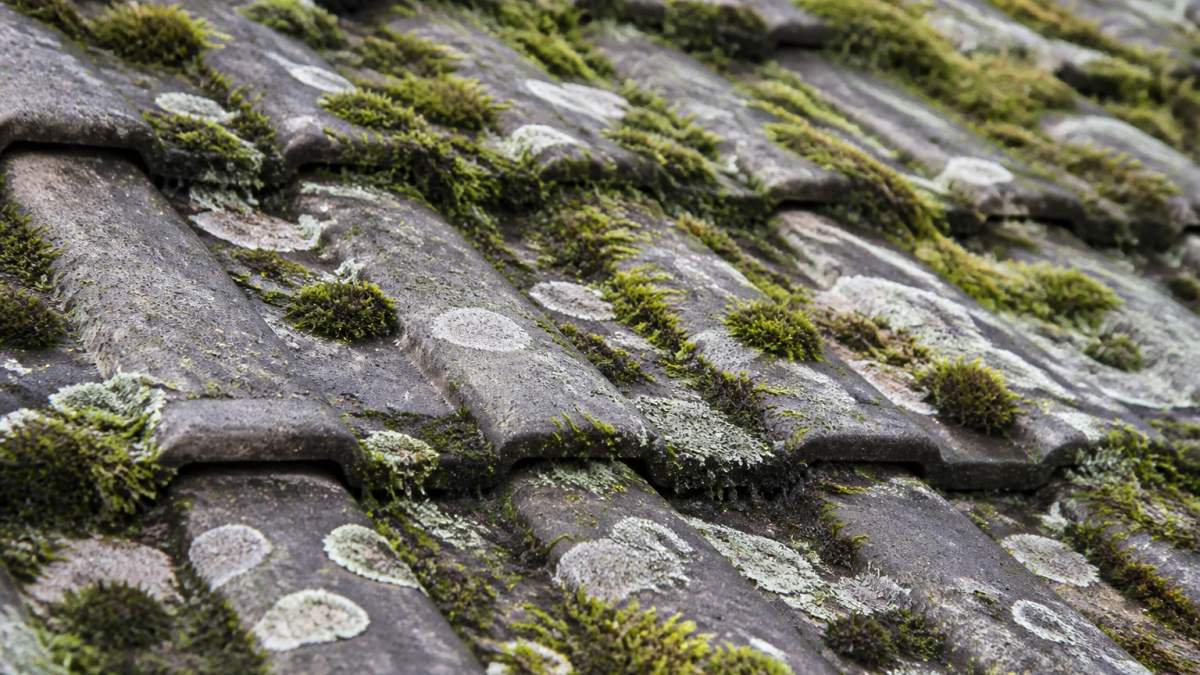
The trade-off is that chemical treatments don't remove existing moss and algae visually, they kill it. Dead growth may remain on the roof for weeks, gradually darkening and breaking down naturally. Some homeowners find this unsightly, though it does mean the roof is still protected. You'll see the visual improvement over time rather than immediately.
Roof Moss Removal Without Pressure Washing: Why Low-Pressure Matters
High-pressure roof washing is tempting because results are instant. Blast the moss away and the roof looks clean immediately. But instant isn't always better.
Pressure washing at 200+ bar can strip protective granules from asphalt shingles, exposing the underlying felt and shortening roof life by years. It can lift slate, crack clay tiles, and force water into cavities where it causes long-term damage. On older roofs, particularly those with existing wear, high pressure is genuinely dangerous.
Roof moss removal without pressure washing means choosing soft washing, chemical treatment, or a combination of both. Both alternatives preserve roof integrity while still delivering real results.
Soft washing is gentler because the solution weakens moss before water touches it. The moss releases from the tile surface more easily, so lower pressure suffices. Chemical treatment avoids water pressure altogether, it's pure chemistry doing the work.
For properties in Altrincham, Knutsford, and other affluent areas where roof condition directly affects property value, low-pressure methods make financial sense. A roof that lasts an extra 5-10 years because it wasn't pressure-washed is worth far more than the cost of a gentler cleaning approach.
Professional technicians understand this trade-off. They know which roofs can tolerate higher pressure and which cannot. This is where expertise matters. A contractor who defaults to maximum pressure on every job isn't protecting your investment, they're prioritising speed.
How Long Does Roof Moss Treatment Take to Work
How long does roof moss treatment take to work? The answer depends entirely on which method you choose.
Soft washing produces visible results as the cleaning solution continues working and dead moss breaks down naturally. Most people see a significantly cleaner roof within a few days. Full results, including the subtle lightening that continues for weeks, emerge over a few weeks.
Chemical treatments work more slowly visually but more thoroughly biologically. The biocides begin killing moss within hours, but dead growth remains on the roof surface for a period before weathering away naturally. You won't see a "clean" roof immediately, but you will see gradual improvement as dead moss darkens, breaks apart, and washes away with rain.
In terms of protection, chemical treatments typically outlast soft washing. A soft-washed roof may need retreatment within a period in damp, shaded areas. A chemically treated roof often stays protected for an extended period, depending on local weather and the product used.
The timeline also depends on weather. Rain within a few days of soft washing helps rinse away dead growth faster. Dry weather after chemical treatment allows biocides to cure more thoroughly. This is why timing matters, a technician who understands seasonal patterns can schedule your treatment for maximum effectiveness.
Roof Cleaning Safety and Plant Protection
Roof work involves height, wet surfaces, and potentially harmful chemicals. Safety isn't optional.
Professional roof cleaning requires proper harnesses, secure anchor points, and trained technicians who understand fall prevention. At Refresh Revive Exterior Cleaning, our team operates to commercial RAMS (Risk Assessment and Method Statement) standards, ensuring every job meets industry safety requirements.
Roof cleaning safety and plant protection go hand in hand. Cleaning solutions, whether soft-wash detergents or chemical biocides, will run off your roof and onto surrounding gardens, gutters, and soil. The right approach minimises harm.
Soft-washing solutions are typically biodegradable and designed to break down safely in soil and water systems. Most professional-grade soft-wash blends are non-toxic to plants at the dilutions used for roof cleaning. Still, it's wise to water nearby plants before and after treatment, diluting any residue.
Chemical treatments require more caution. Copper and zinc compounds, whilst effective against moss, can accumulate in soil if applied repeatedly in the same area. Professional applicators understand safe dosing and application methods that prevent environmental build-up. They also know which chemicals are appropriate for roofs near vegetable gardens, ponds, or sensitive landscaping.
DIY roof cleaning is where problems usually occur. Homeowners often use undiluted chemicals, apply them incorrectly, or fail to protect plants and gutters. Professional contractors have the knowledge and insurance to do this safely.
Durability and Long-Term Results
Neither soft washing nor chemical treatment is permanent. Moss returns because the conditions that created it, shade, moisture, and organic debris, persist. The question is how long you'll stay moss-free and what maintenance strategy makes sense.
Soft-washed roofs typically stay clean for a period in moderate conditions. In heavily shaded areas or during particularly wet seasons, regrowth may appear sooner. The advantage is that soft washing removes all visible growth, so you start from a completely clean slate.
Chemically treated roofs often resist regrowth for an extended period because the biocides continue suppressing new growth even after the initial application. However, if moss does return, you may see it more gradually, suppressed growth rather than rapid invasion.
Long-term durability also depends on roof maintenance. Clearing debris, trimming overhanging branches, and improving roof ventilation all reduce the conditions moss needs to thrive. A roof that's clean but still shaded and damp will grow moss again faster than one where you've addressed underlying causes.
This is why professional assessment matters. A technician can identify whether your moss problem is purely cosmetic or a sign of deeper issues like poor drainage or ventilation. Solving those problems prevents regrowth more effectively than any single cleaning method.
Which Method Is Right for Your Roof
Choosing between soft wash and chemical roof treatment depends on your roof type, the severity of growth, and your priorities.
Choose soft washing if:
- Your roof is slate, clay tile, or older and potentially fragile
- You want immediate visual results
- You prefer a gentler, water-based approach
- Your moss problem is moderate and you don't mind retreating annually
- Your roof is in good structural condition
Choose chemical treatment if:
- You want longer-lasting protection (12-18 months or more)
- Your roof is heavily shaded or in a particularly damp location
- You prefer a low-pressure, low-water approach
- You're willing to accept gradual visual improvement over time
- Your roof is asphalt shingle or concrete tile
Choose a combination if:
- Your roof has severe, established moss and lichen
- You want both immediate visual improvement and long-term protection
- You're treating a large or complex roof
- You want maximum durability
Many professional cleaners, including Refresh Revive Exterior Cleaning, recommend starting with soft washing for immediate results, then applying a chemical treatment to extend protection. This two-step approach gives you the best of both methods.
Getting a Professional Assessment
The honest truth is that a photograph or description rarely tells the whole story. Roof condition, moss type, underlying damage, and local weather all influence which method will work best for you.
A professional assessment includes:
- Visual inspection of moss and lichen type
- Evaluation of roof structure and tile condition
- Assessment of underlying causes (shade, drainage, ventilation)
- Recommendation of the most suitable treatment method
- Honest discussion of what results to expect and how long they'll last
At Refresh Revive Exterior Cleaning, we offer free, no-obligation assessments across Bolton, Bury, Wigan, and the wider North West. We'll examine your roof, explain your options clearly, and recommend the approach that protects your property and your investment.
If you're unsure whether soft wash vs chemical roof treatment is right for your roof, the best next step is to get expert eyes on the problem. Send us photographs of your roof or request a site visit, and we'll provide honest guidance tailored to your specific situation.
Roof moss doesn't have to become a recurring problem. Whether you choose soft washing for its gentle, thorough clean or chemical treatment for extended protection, the key is matching the method to your roof's needs. Refresh Revive Exterior Cleaning specialises in roof moss removal without aggressive high-pressure washing, using controlled soft washing and professional chemical treatments to protect your property whilst delivering lasting results. Get in touch for a free assessment and discover which approach works best for your home.
Frequently Asked Questions
What is the difference between soft washing and chemical roof treatment?
Soft washing uses low-pressure water combined with biodegradable detergents to gently remove moss and algae without damaging roof tiles or their protective granules. Chemical roof treatment applies specialist biocides that kill moss at the root, preventing regrowth over months. Soft wash works immediately but requires maintenance; chemical treatment works slower but offers longer-lasting protection. The choice depends on your roof type, urgency, and whether you want ongoing prevention or quick results.
Is soft washing safe for roof tiles?
Yes, when performed by professionals using controlled pressure and appropriate techniques. Soft washing protects roof tiles because it avoids the high-pressure jets that strip protective granules and cause tile damage. The gentle flow removes moss and debris without compromising the roof's integrity. High-pressure cleaning, by contrast, can crack tiles and void warranties. Professional soft washing is specifically designed to be safe for all common roof types, including slate, clay, and concrete tiles.
How long does roof moss treatment take to work?
Chemical roof treatments typically begin working within a few weeks, with full results visible after a period as moss dies back and weather gradually removes the dead growth. Soft washing produces immediate visual results but doesn't prevent regrowth as effectively. Chemical treatments offer longer-lasting protection, often lasting an extended period depending on local moisture and shade. Results vary based on climate, roof exposure, and product used. Professional assessment helps determine which timeline suits your property and maintenance preferences.
Does chemical roof treatment kill moss and lichen?
Yes, chemical roof treatments contain biocides specifically formulated to kill moss, lichen, and algae at the cellular level. They work by disrupting growth even after visible removal, providing preventative protection. However, they work gradually, dead growth remains visible for several weeks before weathering away. Chemical treatments are particularly effective in damp, shaded areas where moss thrives. Professional application ensures the right product is used for your roof type and local conditions, maximising effectiveness and safety for surrounding plants and gutters.