 how-to
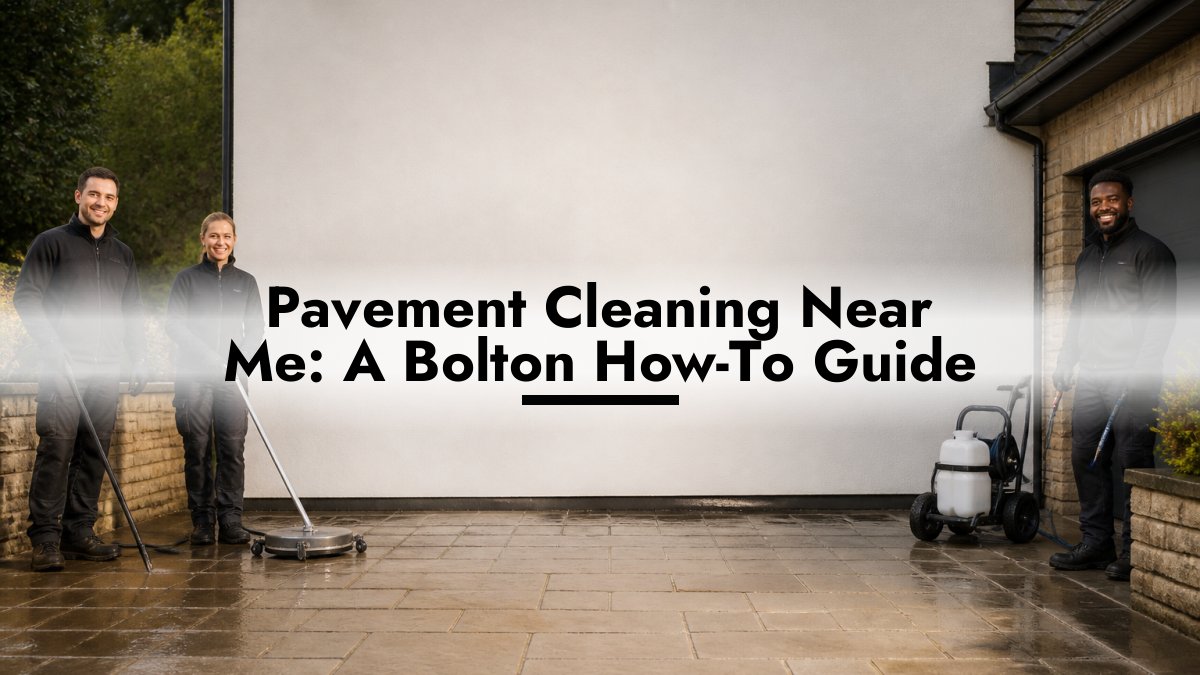
Pavement Cleaning Near Me: A Bolton How-To Guide
Table of Contents
- What Pavement Cleaning Near Me Actually Involves
- What You'll Need Before You Start
- Step 1: Assess the Surface and Clear the Area
- Step 2: Pressure Washing Paving Without Damaging It
- Step 3: How to Remove Moss From Paving Properly
- Step 4: Block Paving Cleaning and Re-Sanding Joints
- Step 5: Paving Sealing After Cleaning
- Common Mistakes to Avoid
- When to Call a Professional Pavement Cleaning Service
- Conclusion
- Frequently Asked Questions
Last Updated: October 16, 2026
What Pavement Cleaning Near Me Actually Involves
Pavement cleaning is the controlled removal of dirt, algae, moss and staining from paving surfaces using the right method for that material, not simply the highest pressure available. When people search for pavement cleaning near me, they usually want one of two things: a safe DIY method or a local team who will not wreck the slabs.
At Refresh Revive Exterior Cleaning, we clean paving across Bolton and the surrounding towns, and the single biggest mistake we see is brute force. A patio or driveway is a surface with a finish, jointing and a substrate beneath it. Damage it and you are looking at replacement, not restoration.
Below, we will show you exactly how to clean paving properly, step by step, and when to stop and call in a professional.
What You'll Need Before You Start
Gather your kit before you touch the paving, because a half-finished clean is how water ends up sitting in open joints.
- A pressure washer with a rotary surface cleaner attachment, not just a lance
- A stiff broom and a soft brush
- A moss treatment or dedicated patio cleaner, applied according to the label
- Sharp sand or kiln-dried sand for re-sanding joints
- A patio sealer if you plan to seal afterwards
- Safety glasses, gloves and sturdy footwear
Check the weather first. Avoid cleaning in frost, and never wash paving that is already wet from rain, as you cannot see the dirt lifting. For context on how weather affects exterior surfaces in the North West, the Met Office climate guidance for the UK is a useful reference for planning around wet spells.
Step 1: Assess the Surface and Clear the Area
Start by identifying what you are standing on. Block paving, natural stone, concrete slabs and resin-bound surfaces each need a different approach, and some should never see a high-pressure jet at all.
Clear furniture, pots and vehicles. Sweep off loose grit and leaves. Check for cracked slabs, loose joints or wobbly blocks, because pressure will exploit any weakness already there.
Look closely at the type of growth. Green algae wipes away easily with a light wash. Black spot lichen and deep moss need a treatment-led approach rather than pressure alone. This distinction matters: treatment kills the growth, washing only removes what is visible today.
Step 2: Pressure Washing Paving Without Damaging It
The safe way to pressure wash paving is with a rotary surface cleaner on moderate pressure, kept moving, with the nozzle matched to the surface. A bare lance held close to the slabs will strip pointing, etch the face and leave stripe marks.
Work in overlapping passes, section by section, and keep the head flat to the surface. On block paving, angle the pass so you do not blast sand out of the joints unnecessarily. Rinse as you go so dirty water does not dry back into the slabs.
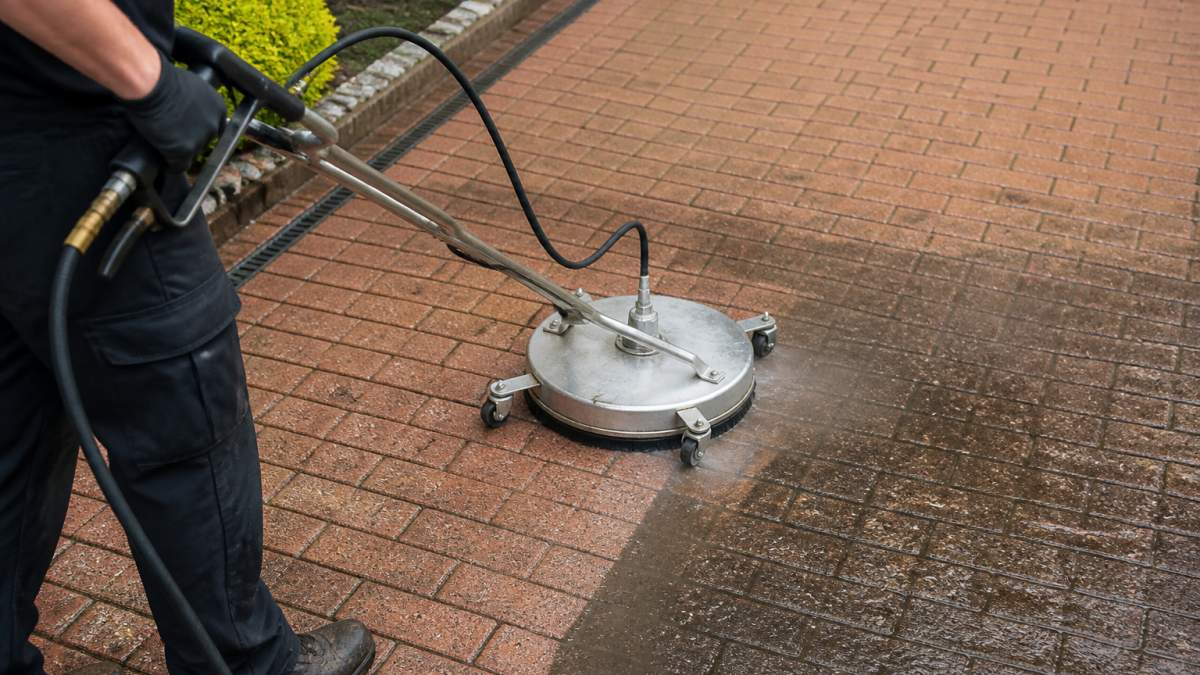
For softer or older surfaces, lower pressure plus a longer dwell time from a cleaner does more good than a hard jet. That is the principle behind the Health and Safety Executive guidance on pressure system safety approach to controlled equipment use: match the tool to the job.
Step 3: How to Remove Moss From Paving Properly
To remove moss from paving properly, treat it first, let it die back, then wash out the remains. Moss holds moisture against the surface, so simply blasting the top off leaves the roots and spores behind, and it returns within weeks.
Apply a suitable moss treatment according to the label instructions and allow the recommended dwell time. Then wash the dead growth out of the joints and off the face of the paving. Pay attention to shaded edges, north-facing patios and anywhere water collects, because these are the spots moss always comes back to first.
If you want to understand why damp, shaded surfaces grow moss so readily, the Royal Horticultural Society guidance on moss and algae explains the conditions clearly. Removing the cause matters as much as removing the growth.
Step 4: Block Paving Cleaning and Re-Sanding Joints
Block paving cleaning always finishes with re-sanding. Once the joints are washed out, the blocks lose the sand that locks them together, and without it they shift, wobble and let water in.
Let the paving dry, then brush kiln-dried sand into the joints, working it in with a broom and sweeping off the excess. Do not walk on it for as long as the sand supplier advises. This step is what most DIY jobs skip, and it is why they look tired again so quickly.
For a deeper look at joint stability and paving construction, Interpave guidance on block paving is a solid technical reference.
Step 5: Paving Sealing After Cleaning
Paving sealing after cleaning locks in the result and slows regrowth, but only on dry, clean, fully cured paving. Sealing over damp slabs or trapped dirt traps moisture and looks patchy within months.
Choose a breathable sealer suited to the surface, apply it evenly in thin coats, and let it cure fully before use. Sealing is not a substitute for cleaning; it is the finishing step that protects the work you have just done.
Common Mistakes to Avoid
The most common pavement cleaning mistakes are too much pressure, skipping the moss treatment, and forgetting to re-sand. Each one shortens the life of the surface.
- Blasting joints out with a bare lance, which loosens blocks and strips pointing
- Pressure washing soft stone or resin as if it were concrete
- Washing moss without treating it, so it returns within weeks
- Sealing damp or dirty paving, which traps moisture and stains
- Skipping re-sanding, leaving joints open to weeds and movement
A common mistake is judging a job by how clean it looks on day one. The real test is how it looks next spring.
When to Call a Professional Pavement Cleaning Service
Call a professional when the surface is delicate, the growth is stubborn, or the paving is large enough that DIY risks damage. Natural stone, aged block paving and commercial forecourts all benefit from controlled methods and proper treatment.
At Refresh Revive Exterior Cleaning, our White Glove Standard™ means surface-specific, low-pressure cleaning that protects your planting and lawns as well as the paving. We use controlled soft washing where pressure would do harm, hot water where it helps, and treatment-led moss removal that tackles regrowth rather than just the visible growth. We are fully insured and cover Bolton, Bury, Wigan, Chorley and the wider Greater Manchester, Lancashire and Cheshire area.
If you would rather not risk your paving, send us photographs for assessment and we will advise on the right method and a free quote.
Conclusion
Paving that is cleaned and sealed properly stays clean for far longer than a quick jet wash ever manages, but the method has to match the surface. Get the assessment, treatment and re-sanding right, and the results hold. Get them wrong, and you pay twice.
If you want the job done once and done properly, get in touch with Refresh Revive Exterior Cleaning for a free quote. We will assess your paving, recommend the right method, and restore it without risking the surface, your planting or your lawn.
Frequently Asked Questions
Can you pressure wash block paving?
Yes, but it must be done carefully. Use a rotary surface cleaner rather than a narrow jet, keep the pressure moderate, and work at a consistent distance. High pressure held too close will blast out the jointing sand and can chip the block edges. After pressure washing paving, the joints need re-sanding to stabilise the blocks. For older or delicate paving, a treatment-led approach with controlled soft washing is often safer than pressure alone.
What is the safest way to remove moss from paving?
Start with a stiff brush to lift loose moss, then apply a suitable moss treatment to the whole area rather than spot-treating. Let it work for the recommended dwell time, then rinse and brush out the joints. Avoid bleach-based products near plants and lawns. Removing moss from paving is only half the job; without re-sanding and sealing, spores return quickly, especially in shaded North West gardens.
Should paving be sealed after cleaning?
Sealing is worthwhile on most block paving and stone, but only once the surface is completely dry and the joints have been re-sanded. A breathable sealer helps repel water, reduces weed and moss regrowth, and keeps the colour richer for longer. Paving sealing after cleaning is not a permanent fix; most sealers need refreshing every few years depending on foot traffic and weather exposure.
How do I find a pavement cleaning service near me in Bolton?
Look for a local firm that explains its method rather than quoting on pressure alone. Ask whether they use surface-specific low-pressure techniques, how they protect plants and lawns, and whether they are fully insured. Request a quote with photos of your paving so the assessment is accurate. Refresh Revive Exterior Cleaning covers Bolton and surrounding areas and offers free, no-obligation quotes at refreshrevivecleaning.co.uk.